Tactical Nuclear Weapons: 150-240 Deployed Across 5 European Countries
In 2017, Redeployment of Tactical Nukes to Korea Also Discussed
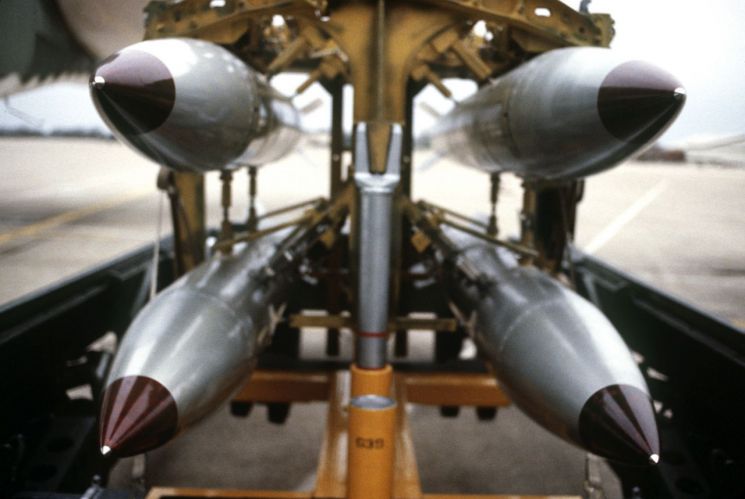
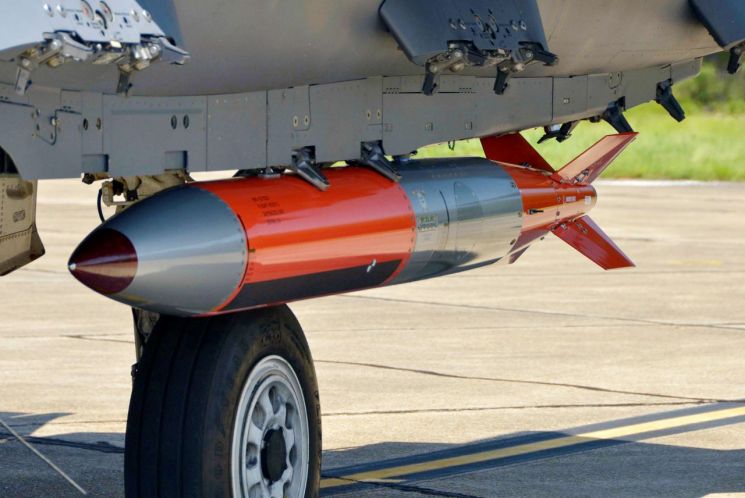
[Monthly Aviation Editor-in-Chief Kim Jae-han] The redeployment of tactical nuclear weapons on the Korean Peninsula has recently become a topic of public discussion in the National Assembly. This was mentioned by Representative Hong Joon-pyo of the National Defense Committee during the confirmation hearing of Defense Minister nominee Seo Wook on September 16.
▲ Tactical Nuclear Redeployment, Becoming an Issue Again = On that day, Representative Hong stated, “In the current situation where the military balance has been broken due to North Korea’s nuclear possession becoming a reality, the most important thing is the redeployment of tactical nuclear weapons,” adding, “In the United States, the issue of NATO-style tactical nuclear redeployment to the Korean Peninsula and Japan is being aggressively discussed.” In particular, Representative Hong revealed on his Facebook that “I received a response from nominee Seo Wook that they would consider maintaining the Korea-Japan GSOMIA and NATO-style nuclear sharing policy to strengthen the trilateral alliance of South Korea, the U.S., and Japan based on liberalism.”
The NATO-style tactical nuclear sharing mentioned by Representative Hong refers to Europe’s “Nuclear-Sharing Agreements.” Currently, U.S. tactical nuclear weapons are deployed in five NATO member countries?Belgium, Germany, Italy, the Netherlands, and Turkey?and under this agreement, member countries with authorized status can use these weapons in emergencies. During the height of the Cold War, thousands of tactical nuclear weapons were deployed in Europe, but since then, about 95% have been reduced, with approximately 150 to 240 weapons currently deployed in these five countries.
The redeployment of tactical nuclear weapons in South Korea was also an issue in 2017. At that time, North Korea’s nuclear and missile threats fueled the Trump administration’s “South Korea tactical nuclear deployment theory.” U.S. media reported that after President Donald Trump’s inauguration, two national security team meetings were held in the White House Situation Room, during which the option of redeploying tactical nuclear weapons to South Korea was discussed as a measure against North Korea.
Strategic nuclear weapons are nuclear weapons used as strategic means
Tactical nuclear weapons are small nuclear weapons used for tactical objectives
Interest grows as political circles discuss redeployment of tactical nuclear weapons
▲ Tactical Nuclear Weapons Can Also Be Mounted on Fighter Jets = Nuclear weapons are generally divided into strategic nuclear weapons and tactical nuclear weapons. Strategic nuclear weapons, as the name suggests, are nuclear weapons used as strategic means. They are mounted on intercontinental ballistic missiles (ICBMs), etc., with explosive yields reaching hundreds of kilotons (kt, where 1 kt equals the explosive power of 1,000 tons of TNT). The main delivery systems for strategic nuclear weapons include long-range bombers, ICBMs?which North Korea has continuously tested?and submarine-launched ballistic missiles (SLBMs). In contrast, tactical nuclear weapons are small nuclear weapons used to achieve tactical objectives. They have lower nuclear yields and shorter ranges than strategic nuclear weapons. Their delivery systems include not only bombers but also smaller fighter jets.
Tactical nuclear weapons were deployed in South Korea starting in 1958. By 1960, the number had increased to a maximum of 950, but was reduced to about 150 by around 1985. Amid this, in 1991, under the Bush administration, a declaration was made to withdraw overseas tactical nuclear weapons, and with the denuclearization declaration of the Korean Peninsula, all remaining tactical nuclear weapons were withdrawn. Since then, South Korea has relied on the rapid deployment of U.S. intercontinental ballistic missiles and B-2 strategic bombers without having tactical nuclear weapons that can respond immediately.
If the need for redeployment of tactical nuclear weapons is emphasized and a decision is made, the B61 is considered the tactical nuclear weapon that could be deployed in South Korea. The B61, known to be capable of striking North Korea’s underground nuclear facilities, is currently deployed in five NATO member countries?Belgium, Germany, Italy, the Netherlands, and Turkey?with a maximum explosive yield of about 340 kilotons. In March, the U.S. conducted a drop test of the latest version, the B61-12, using an F-15E.
Delivery systems include strategic bombers such as the B-2 and B-52, as well as fighter jets like the F-16, F/A-18, F-22, and Tornado. Currently, NATO member countries mainly operate F-16 and Tornado fighter jets as delivery systems, and these are expected to be replaced by fifth-generation fighters such as the F-35 in the future.
Each time the redeployment of tactical nuclear weapons on the Korean Peninsula becomes an issue, domestic public opinion is divided. Supporters argue that nuclear balance can prevent North Korea’s miscalculations and increase the possibility of negotiations for denuclearization, while opponents contend that even tactical nuclear weapons could legitimize North Korea’s nuclear development claims. Amid this, as the National Assembly discusses the redeployment of tactical nuclear weapons, attention is focused on the future policy direction of the Ministry of National Defense.
© The Asia Business Daily(www.asiae.co.kr). All rights reserved.
![Clutching a Stolen Dior Bag, Saying "I Hate Being Poor but Real"... The Grotesque Con of a "Human Knockoff" [Slate]](https://cwcontent.asiae.co.kr/asiaresize/183/2026021902243444107_1771435474.jpg)

















