Seoul Apartment Prices Rise 0.01% for 4 Consecutive Weeks
Market Caution Deepens but No Negative Shift Yet
Jeonse Prices Also Up 0.09%... 64 Weeks of Continuous Increase
Sejong Apartment Jeonse Prices Jump from 0.87% to 2.15%
[Asia Economy Reporter Moon Jiwon] Seoul apartment prices have shown a 0.01% increase for four consecutive weeks. Although the government maintains that the real estate market is gradually stabilizing, the recently surged housing prices have been reluctant to turn negative. The jeonse prices, which have risen significantly since the implementation of the Lease Protection Act, also increased by 0.09% this week, continuing an upward trend for 64 consecutive weeks.
According to the Korea Real Estate Board's weekly apartment price trend for the second week of September on the 17th, Seoul apartment prices rose by 0.01% as of the 14th. After rising 0.11% in the first week of July, the increase rate has gradually decreased but has not fallen below 0.1% in the past four weeks.
The Korea Real Estate Board analyzed, "Due to the effects of the 7·10 measures, 8·4 supply measures, expansion of pre-subscription volumes for the 3rd new town, and concerns over economic contraction caused by the resurgence of COVID-19, a wait-and-see stance continues, with prices slightly rising mainly in areas under 900 million KRW and newly built complexes."
In the Gangnam 4 districts, buying demand has weakened and a wait-and-see mood has deepened due to increased property tax burdens. Gangnam-gu (0.01%) rose mainly in newly built areas such as Suseo-dong, and Gangdong-gu (0.01%) increased mainly in areas under 900 million KRW, but Songpa-gu (0.00%) and Seocho-gu (0.00%) maintained a stable trend with mixed rises and falls by complex.
Gwanak-gu (0.02%) rose due to large complexes in Bongcheon-dong, Gangseo-gu (0.01%) increased in small-sized units in Banghwa, Yeomchang, and Gayang-dong, and Guro-gu (0.01%) rose mainly in areas under 600 million KRW in Guro and Gaebong-dong. Yongsan-gu (0.02%) increased in older complexes in Ichon-dong, Dongdaemun-gu (0.02%) rose in station-area complexes in Jeonnong and Dapsimni-dong, and Seodaemun-gu (0.02%) increased mainly in newly built areas in Namgajwa and Hongje-dong.
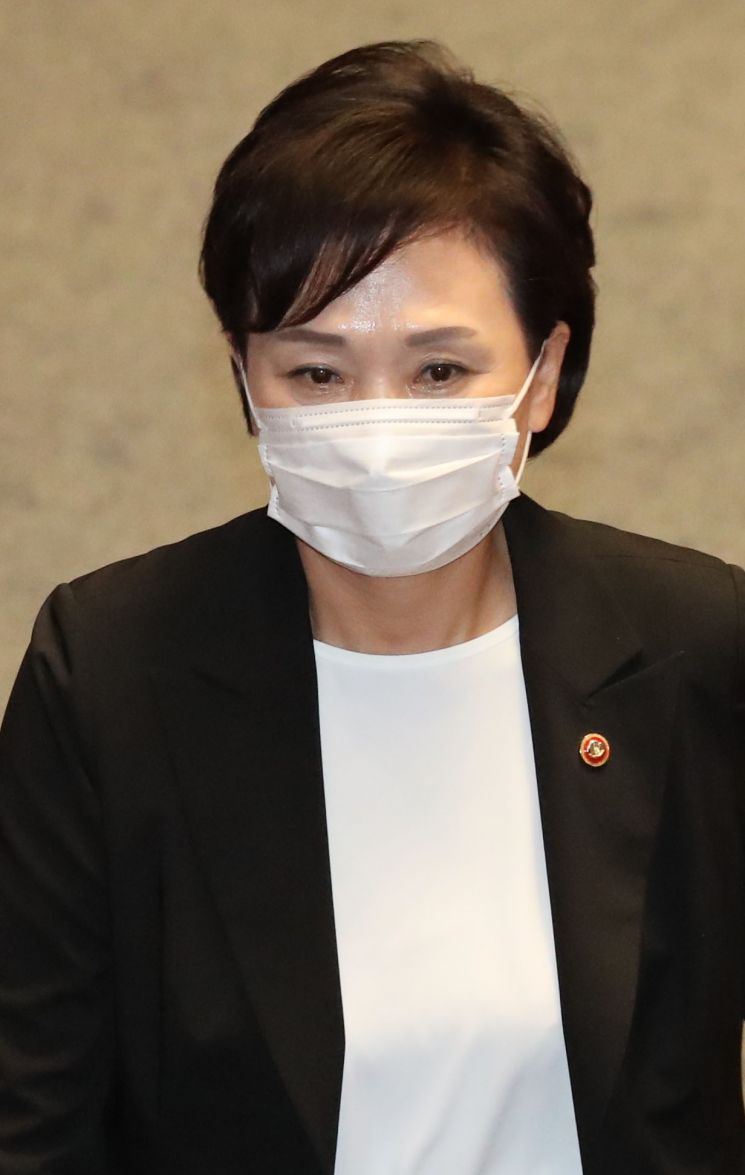
Kim Hyun-mi, Minister of Land, Infrastructure and Transport, said at the National Assembly's government questioning session the day before, "There has been a slight change in the market trend after the 7·10 and 8·4 measures," adding that the real estate price increase rate in Seoul has been about 0.01% for 4 to 5 weeks according to the Korea Real Estate Board statistics, and the upward trend in the Gangnam 4 districts has stopped." This implies that the effects of successive government measures are appearing. However, since apartment prices have continued to rise even a month after the 8·4 measures, some argue that it is still too early to mention the effectiveness of the measures.
In particular, Seoul apartment jeonse prices have been rising for 64 consecutive weeks since July last year. Seoul has shown a 0.09% increase rate for three consecutive weeks recently. The Korea Real Estate Board explained, "Due to the implementation of the rent ceiling system and the right to request contract renewal, strengthened residency requirements, and the autumn moving season, prices rose mainly in areas with relocation demand from redevelopment projects or with good transportation and residential conditions."
In fact, jeonse prices rose in almost all autonomous districts, including Mapo-gu (0.11%), Seongbuk-gu (0.11%), Seongdong-gu (0.10%), Yongsan-gu (0.09%), and Jungnang-gu (0.09%). Especially, Gangdong-gu (0.13%), Songpa-gu (0.12%), and Gangnam-gu (0.12%) have steadily increased prices mainly in neighborhoods with good location and school districts.
Hong Nam-ki, Deputy Prime Minister and Minister of Economy and Finance, said at the 6th Real Estate Market Inspection Ministerial Meeting on the 8th, "The rate of increase in apartment jeonse prices has slowed for four consecutive weeks," but the slowdown in the rising trend seems to have stalled for two consecutive weeks since then.
Meanwhile, the apartment price increase rate in Gyeonggi-do rose from 0.09% last week to 0.10% this week. Relatively clear upward trends were seen in Yongin Giheung (0.27%), Suji-gu (0.23%), Goyang Deogyang-gu (0.23%), and Gwangmyeong-si (0.22%). Paju-si (-0.02%) continued to see demand decline mainly in aging old downtown areas, and Ansan Sangnok-gu (-0.03%) also saw an expanded decline.
Gyeonggi-do apartment jeonse prices recorded the same 0.21% increase rate as last week. Areas such as Hanam-si (0.34%) and Suwon Paldal-gu (0.32%), where pre-subscription is scheduled for next year, showed high increase rates due to concentrated jeonse demand. In Sejong, jeonse prices showed a significant increase from 0.87% last week to 2.15%. The Korea Real Estate Board stated, "While the shortage of listings continues, the upward trend persisted mainly in relatively low-priced complexes such as Geumnam-myeon, Goun, and Dodam-dong."
© The Asia Business Daily(www.asiae.co.kr). All rights reserved.
![Clutching a Stolen Dior Bag, Saying "I Hate Being Poor but Real"... The Grotesque Con of a "Human Knockoff" [Slate]](https://cwcontent.asiae.co.kr/asiaresize/183/2026021902243444107_1771435474.jpg)















