"Bithumb and Coinbit Investor Deception"
Police Conduct Successive Raids
Capital Market Act Not Applied Unlike Stock Market
Practice of 'Wash Trading' in Virtual Currency
Upbit Acquitted in First Trial, Comid Guilty in Supreme Court
Recent Rulings Diverge on Legality
Penalizing Acts Without Criminal Intent
Concerns Over New Industry Shrinkage Like 'Tada'
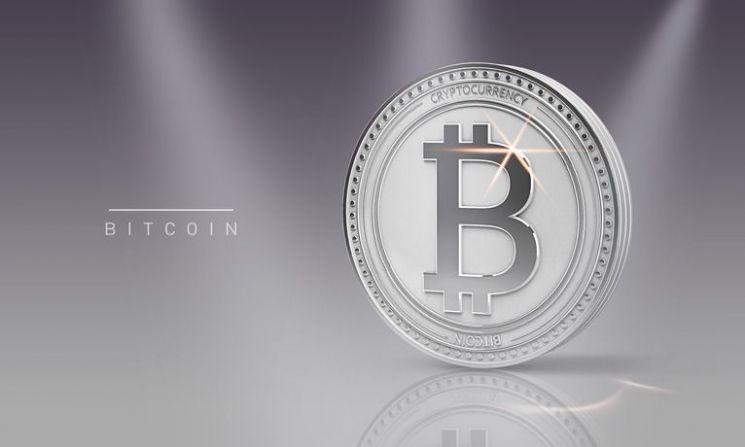
[Asia Economy Reporter Lee Gwan-ju] As the police recently conducted raids to examine internal trading data of 'Bithumb' and 'Coinbit,' the first and third largest virtual currency exchanges in Korea, the virtual currency market has once again been placed on the boundary between 'illegal and legal.'
According to the police on the 8th, the Seoul Metropolitan Police Agency's Intelligent Crime Investigation Unit recently conducted consecutive raids on the virtual currency exchanges Coinbit and Bithumb. Coinbit is suspected of inflating trading volume through wash trading, while Bithumb is suspected of pre-selling the virtual currency BXA under the pretense of listing it but failing to actually list it. Although the specific charges differ, the police believe that they 'deceived investors.'
The core of the controversy surrounding virtual currency exchanges lies in wash trading. Wash trading is the act of the same person or parties who have pre-agreed placing buy and sell orders at the same price and quantity to match each other. While strictly prohibited in the stock market, virtual currency exchanges, which are not subject to the current Capital Markets Act due to the different nature of stocks and virtual currencies, have used it as a customary practice.
Regarding this, virtual currency exchanges emphasize that it is an unavoidable choice to grow the market size and supply liquidity. In fact, Upbit, which was indicted on wash trading charges, argued in the first trial that "the scale of wash trading was uniform" and "all other exchanges were also conducting (wash trading), so it was unavoidable even for defensive purposes." They claimed that wash trading was conducted within the balance range to supply liquidity and that there was no criminal intent or purpose. The Criminal Division 12 of the Seoul Southern District Court (Presiding Judge Oh Sang-yong) accepted these arguments and acquitted all three Upbit executives. The court held that wash trading by virtual currency exchanges, which did not cause actual harm to investors or lead to crimes such as embezzlement or breach of trust, could not be punished. The fact that current laws do not regulate wash trading by virtual currency exchanges also played a role.
While the first trial ruling for Upbit seemed to provide some relief for virtual currency exchange operations, a recent Supreme Court ruling has brought a new crisis. The Supreme Court's full bench confirmed the appellate court's guilty verdict last month against four executives of the virtual currency exchange Komid. The Supreme Court particularly judged that if virtual currency balances that do not actually exist were input into the system to inflate trading volume, it could be considered a 'forgery' under criminal law. Essentially, wash trading itself was regarded as an illegal act.
Some have pointed out that this could stifle new industries, comparing it to the 'Tada incident' in the ride-sharing service sector. Attorney Kim Min-gyu of EunYul Law Firm said, "There is a natural market mechanism, but in the absence of clear laws and government guidelines, it has been defined as illegal," expressing concern that "punishing acts without criminal intent will inevitably shrink new industries." Ultimately, the fate of the virtual currency market has been handed over to investigative agencies and the judiciary. The Upbit appeal trial starting on the 16th and the results of the Coinbit investigation are expected to be significant turning points determining the survival of domestic virtual currency exchanges.
© The Asia Business Daily(www.asiae.co.kr). All rights reserved.
![Clutching a Stolen Dior Bag, Saying "I Hate Being Poor but Real"... The Grotesque Con of a "Human Knockoff" [Slate]](https://cwcontent.asiae.co.kr/asiaresize/183/2026021902243444107_1771435474.jpg)















