[Asia Economy Reporter Jeong Dong-hoon] On the 27th of last month, inside a train passing through Dangsan Station on Seoul Subway Line 2, a male passenger demanded a man in his 50s to wear a mask, which suddenly triggered an assault. The man in his 50s took off his slippers he was wearing and indiscriminately slapped the cheeks of two male passengers, and seemingly still angry, even strangled one passenger's neck. A video of the incident taken by a witness at the scene spread through social networking services (SNS), prompting comments like 'Another Oryuknam.'
The novel coronavirus disease (COVID-19) has become an accelerator of generational conflict. Cluster infections centered on the middle-aged and older generations have continued, and some have shown uncooperative attitudes toward government quarantine measures, deepening the rift as younger generations mock the older ones. This contrasts with the criticism focused on the younger generation during the cluster infections originating from Itaewon clubs in May. The dissatisfaction toward the youth seems to have shifted to the middle-aged generation.
According to health authorities on the 6th, confirmed cases among those aged 50 and above have been increasing recently, especially in the metropolitan area. The Sarang Jeil Church, the origin of the metropolitan cluster infections, had 671 out of 1,007 confirmed cases (62%) aged 50 or older as of the 1st. Led by Pastor Jeon Kwang-hoon, many church members attended the August 15 Gwanghwamun rally, which triggered the nationwide spread of COVID-19, placing the middle-aged generation under scrutiny for their role in the spread of the infectious disease.
Violations of mask-wearing, a basic COVID-19 prevention measure, were also concentrated among those aged 50 and above. According to the Seoul Metropolitan Police Agency, from May 13, when mask-wearing became mandatory on public transportation, until the 25th of last month, 141 incidents involving conflicts over mask non-compliance on public transport were reported, resulting in 151 arrests. Among those arrested, 39% (45 people) were aged 60 or older, the highest proportion, followed by 38 people in their 50s. Those aged 50 and above accounted for more than half (54%) of the arrests.
Among the younger generation, the slang term 'Oryukdo,' originally meaning 'working until 56 is a thief,' has been repurposed to mean 'people in their 50s and 60s disrupted quarantine again.' Additionally, terms like 'Oryuknam,' meaning 'men in their 50s and 60s are the problem,' have been created to mock these generations.
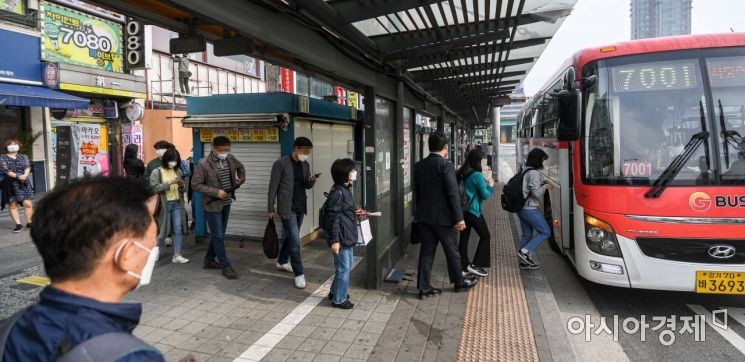
 On the morning of the 27th of last month, a man in his 50s not wearing a mask caused a disturbance by using violence against passengers who requested him to wear a mask on a train passing near Dangsan Station on Seoul Subway Line 2. [Image source=Yonhap News]
During the cluster infections centered around Itaewon clubs in May, criticism was heavily directed at the younger generation. Most club visitors were young people with high activity levels and wide movement ranges, raising concerns that they could transmit COVID-19 to the middle-aged and older generations with higher fatality rates. Moreover, epidemiological investigations showed that 30% of Itaewon confirmed cases were asymptomatic. Criticism also focused on personal hygiene, as they were accused of enjoying drinking and partying without wearing masks.
Experts analyze that the generational conflicts embedded throughout society have been expressed due to COVID-19. The younger generation, born in an era of low economic growth, harbors resentment toward the older and established generations who fail to recognize generational changes, expressing blame for the spread of infectious diseases through extreme hatred.
In fact, young people in the United States recently called COVID-19 the 'Boomer Remover.' This term combines 'Boomer,' referring to the Baby Boomer generation, and 'Remover,' meaning to eliminate, implying that COVID-19 is a disease that removes the older generation aged 60 to 70 and above.
According to the Central Disease Control Headquarters, as of the 1st, the age group with the highest number of confirmed cases is people in their 20s with 4,388 cases (21.46%). Those in their 50s (3,732 cases, 14.98%) and 60s (3,064 cases, 14.98%) follow, but confirmed cases aged 50 and above account for 44.69%, less than half. Professor Yoo Hong-sik of the Department of Media Communication at Chung-Ang University said, "Young people also often neglect personal quarantine, so we should not solidify prejudice against a particular generation based solely on recent quarantine disruption behaviors."
© The Asia Business Daily(www.asiae.co.kr). All rights reserved.
![Clutching a Stolen Dior Bag, Saying "I Hate Being Poor but Real"... The Grotesque Con of a "Human Knockoff" [Slate]](https://cwcontent.asiae.co.kr/asiaresize/183/2026021902243444107_1771435474.jpg)

















