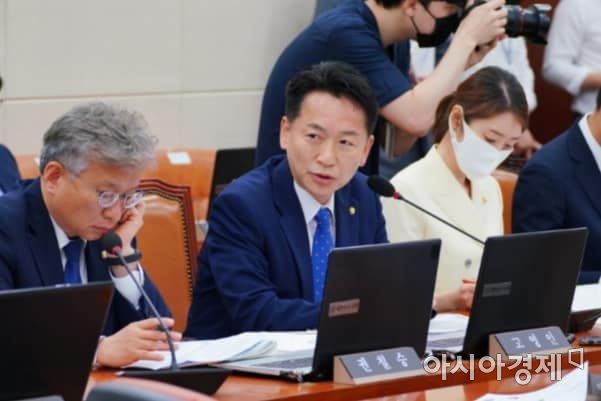
[Asia Economy Reporter Wondara] Go Young-in, a member of the Democratic Party of Korea, appealed, "The establishment of public medical schools and the introduction of the regional doctor system will not intensify competition among doctors in the metropolitan area," urging, "Please reconsider." He also pointed out that the recruitment rate of doctors in unpopular specialties such as thoracic surgery, as well as infectious disease management medical personnel, is only 50%, and that the number of doctors per 1,000 people in non-metropolitan areas is only 1.4.
Go, a member of the National Assembly's Health and Welfare Committee, stated this on the 14th in a post titled 'Doctors, please calm your anger' on his Facebook page.
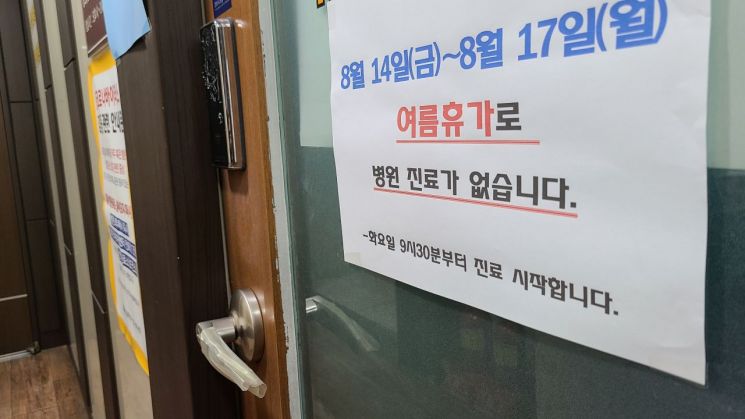
Go said, "Today, about 25% of nationwide clinic-level medical institutions reported closures. It seems that doctors are protesting because they believe that expanding the number of doctors and promoting the establishment of public medical schools make hospital operations difficult and do not help the Korean medical community. I feel sorry."
Regarding concerns that establishing public medical schools would increase the number of doctors, he explained, "It will train doctors in unpopular specialties and expand public health doctors for infectious disease response. Also, it does not increase the existing medical school quota. It is a method of increasing the quota of the closed Seonam University medical school."
In response to criticism that the regional doctor system will not help expand regional doctors, he said, "Many worry about so-called 'muktwi'?doctors who obtain their license and then return to Seoul or other metropolitan areas. This is a valid concern." He added, "Therefore, if the public medical school and regional doctor system quotas fail to complete a 10-year service period, the medical license will be revoked, and all benefits such as medical school scholarships must be returned."
He also emphasized, "The mandatory 10-year service at the relevant regional medical institution means that competition with currently practicing doctors in Seoul and other metropolitan areas will not immediately materialize."
Go also stressed that Korea's medical reality is concentrated in the metropolitan area and popular specialties. He said, "The OECD average number of doctors per 1,000 people is 3.4, but in regions like Gyeongbuk, Chungnam, and Chungbuk, it is about 1.4, so elderly people in rural areas sometimes have to send the whole family just to visit a hospital." He pointed out, "The recruitment rate for so-called popular specialties like dermatology is 100%, while for unpopular specialties like thoracic surgery, it is around 50%."
He continued, "There is also a shortage of personnel in infectious disease prevention and vaccine development fields," adding, "This shows how important it is to expand medical personnel." He called it "the minimum measure to overcome the public medical personnel shortage," and said, "Multiple layers of safeguards have been put in place. Please reconsider."
Go said, "We all respect the doctors who have protected the public safely on the front lines of the novel coronavirus infection (COVID-19) response," and added, "As a member of the Health and Welfare Committee, I will strive not only to expand regional doctors but also to protect doctors' rights."
The Korean Medical Association, led mainly by private clinic doctors, has defined the expansion of medical school quotas, establishment of public medical schools, coverage of herbal medicine patches, and promotion of telemedicine as the 'four major evil medical policies' and entered a one-day collective strike demanding the withdrawal of these policies. According to the Ministry of Health and Welfare, as of 6 p.m. the previous day, 8,365 out of 33,836 nationwide clinic-level medical institutions (24.7%) reported closures under the association's directive. Separate from closures, many hospitals announced closures due to summer vacations, so the actual closure rate is expected to be higher.
© The Asia Business Daily(www.asiae.co.kr). All rights reserved.
![Clutching a Stolen Dior Bag, Saying "I Hate Being Poor but Real"... The Grotesque Con of a "Human Knockoff" [Slate]](https://cwcontent.asiae.co.kr/asiaresize/183/2026021902243444107_1771435474.jpg)

















