Health Insurance Pros and Cons <Part 1> Role as a Social Safety Net
[Asia Economy Reporter Choi Dae-yeol] The National Health Insurance Service (NHIS) estimated that the average medical cost per COVID-19 patient was about 10 million KRW. For mild cases, the treatment cost ranged from 3 to 4 million KRW, while for severe cases, it increased to around 70 million KRW. However, patients did not bear these costs. According to regulations, 80% of the treatment expenses were covered by health insurance, and the remaining portion was borne by the government and local authorities. In the United States, which has the highest number of patients worldwide, the average treatment cost per person reached 43 million KRW, with most of the cost borne by the patients themselves. Some patients had to pay hundreds of millions of KRW in medical bills. Compared to the U.S., our health insurance system clearly played a role as a social safety net.
◆ Patients and hospitals endured disasters with health insurance = While alleviating the burden of medical expenses, health insurance also played a significant role in maintaining frontline hospitals and clinics. As the number of visitors to hospitals decreased, many medical institutions faced financial difficulties. To prevent the collapse of the healthcare system, the government proactively responded by advancing the payment schedule for health insurance benefits, which was originally planned for a later date. The usual payment period of about 22 days was shortened to 10 days, allowing 92,623 medical institutions to receive 22.2343 trillion KRW in benefits earlier than scheduled.
For medical institutions in the Daegu and Gyeongbuk areas, where patient numbers surged, health insurance benefits were prepaid starting in early March. Based on last year's performance, 90-100% of the amount was initially provided to medical institutions and then settled afterward. The prepayment system expanded nationwide to all medical institutions by late March and extended to pharmacies in April. A total of 5,514 institutions nationwide received 2.5333 trillion KRW in advance over about four months, helping them endure financial difficulties. The amount of health insurance premiums reduced for vulnerable groups in the special disaster areas declared in Daegu and Gyeongbuk reached 911.5 billion KRW.
An NHIS official explained, "If people had to bear hospital bills during an economic crisis, their purchasing power would decrease, leading to reduced consumption and potentially triggering another economic crisis. We aimed not only to support medical expenses but also to temporarily reduce insurance premiums by up to 50% for low-income groups to establish a foundation for stable consumption."
◆ Consensus on "Strengthening the safety net with 4,000 KRW per month" = As health insurance acted as a buffer to reduce the shock during the infectious disease disaster of COVID-19, perceptions regarding insurance premiums also changed. According to a recent survey conducted by the NHIS on 2,000 adults nationwide, 87% believed it was worthwhile to pay an appropriate level of insurance premiums to enjoy the benefits of Korea's health insurance system. Additionally, 95% responded positively to statements such as "I felt reassured because health insurance existed during a national disaster" and "The health insurance system was maintained because citizens faithfully paid their premiums."
Compared to similar past surveys conducted by the NHIS, where people generally had a positive view of health insurance itself but were negative about premium increases, this represents a significant change. In a recent health insurance perception survey conducted by the Korea Employers Federation, although to varying degrees, nearly half (46.8%) of respondents thought it appropriate to raise the insurance premium rate next year. Considering that the Federation, as an employers' organization, has always opposed premium increases, this is unusual.
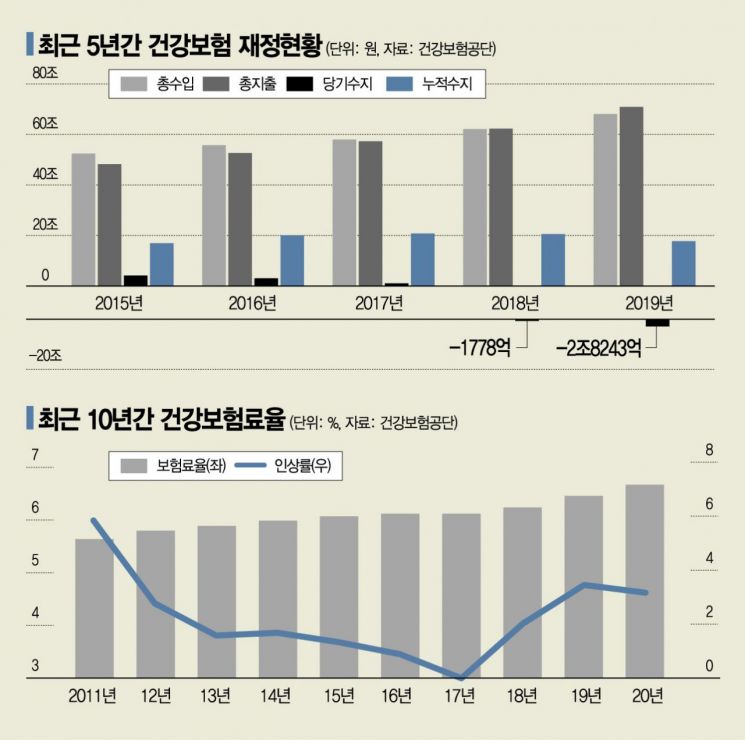
The health insurance premium rate for next year will be decided at the Health Insurance Policy Deliberation Committee meeting scheduled for the end of this month. Although public opinion has grown in favor of strengthening health insurance finances as COVID-19 enters a prolonged phase, opposition to premium increases remains, so debates are expected. This year, the health insurance premium rate is 6.67%. For workplace subscribers, the average personal premium burden is 116,018 KRW, and for regional subscribers, it is 89,867 KRW per household. This represents a 3.2% increase from last year, amounting to about 3,600 KRW and 2,800 KRW increases, respectively. The government has stated that it will not exceed the low 3% range, which corresponds to the average annual increase rate over the past 10 years. If next year's health insurance premium rises by the same 3.2% level as this year, the burden will increase by 3,000 to 4,000 KRW.
© The Asia Business Daily(www.asiae.co.kr). All rights reserved.
![Clutching a Stolen Dior Bag, Saying "I Hate Being Poor but Real"... The Grotesque Con of a "Human Knockoff" [Slate]](https://cwcontent.asiae.co.kr/asiaresize/183/2026021902243444107_1771435474.jpg)
















