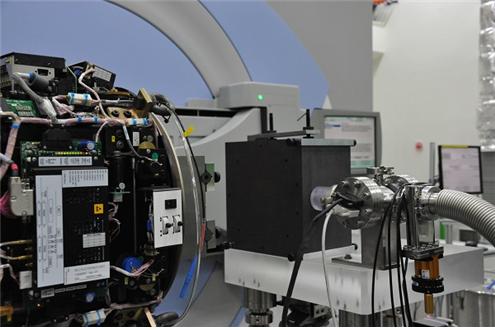
[Asia Economy Reporter Junho Hwang] A measurement standard technology that can reduce the differences in radiation doses used for cancer treatment, which varied from hospital to hospital, has been developed in Korea. As Korea becomes the seventh country in the world to secure this technology, it is expected that the quality gap in radiation therapy among hospitals will be significantly reduced.
The Dose Measurement Standard Team of the Radiation Standards Group at the Korea Research Institute of Standards and Science (KRISS) announced on the 13th that they have developed a measurement standard technology that can improve the accuracy of radiation therapy.
Radiation therapy is a treatment that uses high-energy radiation to kill cancer cells. It is a widely used cancer treatment method along with surgery and drug therapy, and more than 30% of cancer patients in Korea receive this treatment.
Radiation therapy requires skilled medical staff and advanced treatment equipment. In particular, it is important to deliver the desired amount of radiation to the desired location.
However, in Korea, the reference radiation used to adjust the radiation dose of treatment devices and the reference radiation used in the treatment devices themselves were different. This posed a problem in that different radiation doses could be delivered depending on the hospital and the treatment device.
The research team developed a technology that absolutely determines the dose of therapeutic radiation regardless of the energy of the radiation. Since it is an absolute measurement rather than a relative comparison, it allows for much more precise measurement than existing methods.
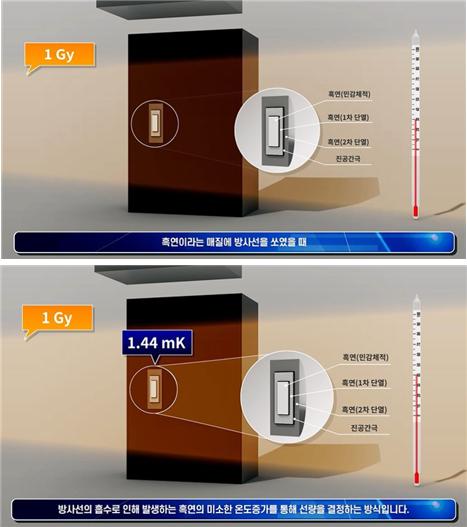
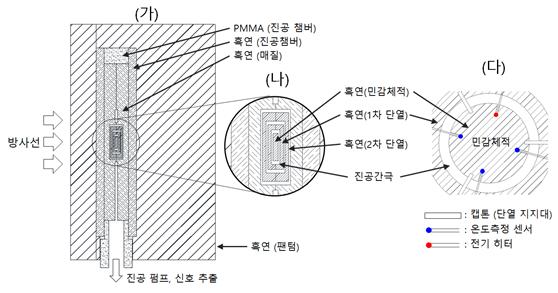
The research team developed a device that measures the dose by measuring the temperature rise of graphite when irradiated with radiation.
In this device, the temperature of the graphite is measured and multiplied by the specific heat capacity, and a dose conversion factor between graphite and water obtained through precise Monte Carlo computational simulation research was applied. Through this, the accurate dose for water, the substance most similar to the human body, was determined.
Kim Injoong, principal researcher at KRISS, stated, "Currently, calibration services for calorimeter technology are being provided, and by using this, the uncertainty of the dose measured in hospitals can be reduced to about half of the existing level," adding, "We will continue to actively participate in quality assurance of dose measurement in domestic and international hospitals."
© The Asia Business Daily(www.asiae.co.kr). All rights reserved.
![Clutching a Stolen Dior Bag, Saying "I Hate Being Poor but Real"... The Grotesque Con of a "Human Knockoff" [Slate]](https://cwcontent.asiae.co.kr/asiaresize/183/2026021902243444107_1771435474.jpg)

















