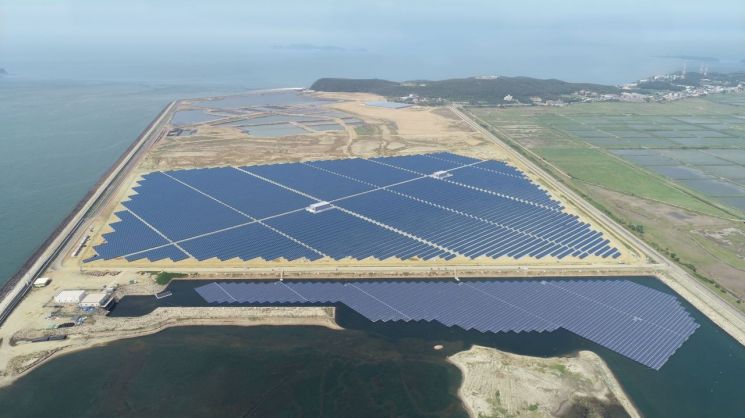
[Asia Economy Reporter Kim Bo-kyung] Korea Electric Power Corporation (KEPCO) is set to revive plans to allow direct operation of new and renewable energy power generation projects. If the related legislation passes the National Assembly, KEPCO will be able to engage in direct electricity production for the first time in 20 years.
According to the National Assembly Legislative Information System on the 8th, Song Gap-seok, a member of the Industry, Trade, Small and Medium Enterprises Committee and the Democratic Party's ranking member, recently introduced a bill to amend the Electric Utility Act. The bill allows KEPCO to directly operate new and renewable energy facilities such as solar and wind power plants and produce electricity.
The amendment permits market-type public enterprises to engage in two or more types of electricity businesses only when conducting new and renewable energy power generation projects as prescribed by presidential decree. Here, the market-type public enterprise effectively refers to KEPCO.
Among the nine market-type public enterprises engaged in electricity business, eight companies including Korea Hydro & Nuclear Power have already obtained permits for power generation and can operate new and renewable energy projects. According to the amendment, the only market-type public enterprise newly allowed to engage in new and renewable energy power generation is KEPCO, which is an electricity sales business operator.
Rep. Song stated, "To transition to renewable energy, systematic large-scale renewable power projects such as offshore wind farm development are necessary. However, due to the large initial investment and the need to build power grid infrastructure, it is difficult for private companies alone to make such investments."
He added, "It is necessary to systematically foster an industrial ecosystem where large-scale renewable power infrastructure is established centered on public enterprises and private companies participate."
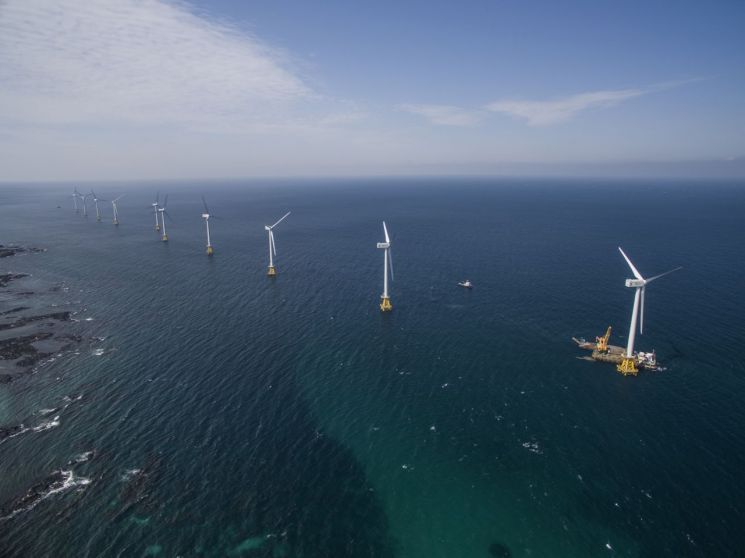
Since the restructuring of the power industry in 2001, KEPCO has been prohibited from simultaneously engaging in power generation and electricity sales. It has participated in renewable energy projects only indirectly and within limited scope through special purpose companies (SPCs). If the amendment passes, KEPCO will be able to directly operate large-scale solar and wind power facilities and produce electricity.
This amendment was introduced twice in the previous National Assembly sessions but was stalled due to opposition from opposition parties and eventually discarded.
At that time, concerns were raised that if KEPCO directly engaged in power generation, small and medium power producers could be harmed, and that KEPCO’s direct production, combined with its near-monopoly on power distribution, could undermine network neutrality.
Currently, KEPCO monopolizes not only electricity sales but also the construction and operation of transmission and distribution networks. If it also participates in new and renewable energy power generation, there are concerns that it could exercise its existing dominance to hinder fair competition and suppress small and medium-sized renewable power projects.
When the amendment was first proposed, the government opposed it for these reasons but conditionally agreed during the second proposal. Conditions included limiting KEPCO’s trading of Renewable Energy Certificates (REC) to prevent price volatility and establishing measures to prevent network neutrality violations.
An official from the Ministry of Trade, Industry and Energy said, "Since the bill must go through deliberations between ruling and opposition parties, it remains to be seen whether the law will actually be amended."
© The Asia Business Daily(www.asiae.co.kr). All rights reserved.
![Clutching a Stolen Dior Bag, Saying "I Hate Being Poor but Real"... The Grotesque Con of a "Human Knockoff" [Slate]](https://cwcontent.asiae.co.kr/asiaresize/183/2026021902243444107_1771435474.jpg)
















