Actively Utilizing Online Voting (e-Voting) to Maintain Social Distancing... Expanding Consensus on Village Democracy and Accelerating Grassroots Autonomy and Decentralization
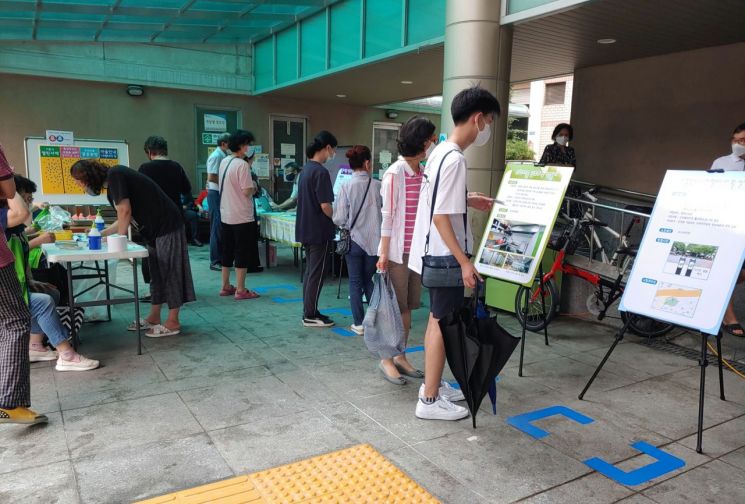
[Asia Economy Reporter Jongil Park] Seodaemun-gu (Mayor Moon Seok-jin) announced on the 6th that neighborhood resident assemblies for selecting the ‘2021 Resident Participatory Budget Projects’ have recently been held one after another both online and offline, communicating with residents throughout the villages.
The Hongje 3-dong Resident Participatory Budget Committee gathered residents' opinions on ▲Creating a shared kitchen in our village ▲Installing a digital information board for village guidance ▲Creating a mobile open library ▲Repairing the entrance road to Hongsim Mineral Spring and creating a rose tunnel project.
These four projects were decided through resident proposals, discussions and public deliberations in local meetings, and reviews by related departments of the district office.
Voting was conducted online using ‘mVoting’ to maintain social distancing in daily life, and on-site resident assemblies were held in parallel for residents unfamiliar with the system.
A total of 269 people participated, with 131 in mVoting and 138 in on-site voting, and the votes were cast in the order of shared kitchen, mineral spring entrance road and rose tunnel, digital information board, and mobile open library.
In Hong Eun 2-dong, the resident assembly was conducted through village visits and operation of the Naver Band ‘Hong Eun 2-dong Talk Square.’ They promoted the dong’s resident participatory budget projects such as ‘Installation of smart warning boards to prevent illegal dumping of garbage’ and ‘Creation of a neighborhood resident rest area,’ and collected residents’ opinions.
In Bukgajwa 1-dong as well, residents voted to prioritize projects including the creation of a well-being health acupressure path, operation of children’s playgrounds, and film screenings as part of the resident participatory budget projects, while Hongje 2-dong gathered residents’ opinions on the ‘Inwangsan Mugunghwa Hill Environmental Creation Project’ through mVoting and street voting.
These resident assemblies, where residents take the lead in expressing opinions on village projects and budgets, are evaluated as the foundation for expanding resident participation through mutual communication such as on-site promotion of resident-proposed projects and listening to opinions.
The projects selected through the neighborhood resident assemblies will go through the budget reflection process and are scheduled to be implemented next year under resident leadership.
Moon Seok-jin, Mayor of Seodaemun-gu, stated, “I hope that the process in which ideas proposed and selected by residents are actually implemented as projects will spread empathy for village democracy and accelerate grassroots autonomous decentralization.”
The resident autonomy committees, which have been operating in five pilot dongs of Seodaemun-gu including Cheonyeon-dong, Yeonhui-dong, Hongje 1-dong, Namgajwa 1-dong, and Bukgajwa 1-dong, are expected to expand to all 14 dongs this year, and the 2021 resident participatory budget projects are anticipated to be promoted more dynamically.
© The Asia Business Daily(www.asiae.co.kr). All rights reserved.
![Clutching a Stolen Dior Bag, Saying "I Hate Being Poor but Real"... The Grotesque Con of a "Human Knockoff" [Slate]](https://cwcontent.asiae.co.kr/asiaresize/183/2026021902243444107_1771435474.jpg)















