Ministry of Justice Announces Legislative Notice for Civil Code Amendment Removing 'Parental Disciplinary Rights'
Citizens Welcome "Ban on Child Corporal Punishment" vs. Debate Over "Clear Difference Between Abuse and Punishment"
Experts Say "Many Parents View Punishment as a Form of Discipline"
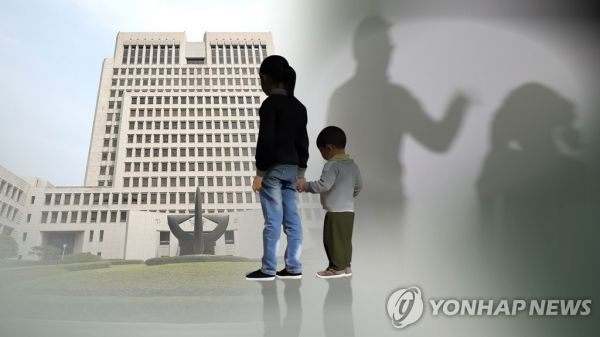
[Asia Economy Reporter Kim Suwan] The Ministry of Justice has finalized its decision to completely remove the parental disciplinary rights explicitly stated in the Civil Code and has announced a legislative amendment, sparking ongoing controversy. Among citizens, there are claims that the legal revision could reduce cases of child abuse within families, while others express concerns that it might hinder child discipline.
Experts pointed out that societal perceptions need to improve, moving away from viewing children as parental property rather than as independent individuals.
The Ministry of Justice announced a legislative amendment to delete the disciplinary rights specified in the Civil Code to clearly prohibit corporal punishment of children.
Article 915, established when the Civil Code was enacted in 1958, stipulates that guardians may administer necessary discipline to protect and educate the child or, with court approval, entrust the child to reform or correctional institutions. If this bill passes the National Assembly, parental disciplinary rights over children will be abolished after 62 years of enforcement.
In other countries, starting with Sweden in 1979, Nordic countries such as Finland and Norway have codified bans on corporal punishment of children. To date, 59 countries have legally prohibited corporal punishment. In Japan, an amended Child Welfare Act banning corporal punishment of children also came into effect in April this year.
The Ministry of Justice judged that the provision is often misunderstood as legalizing parental corporal punishment and has little practical effect, thus offering no benefit in maintaining it.
The Ministry stated, "Recently, numerous serious abuse cases resulting in child deaths due to parental corporal punishment have occurred," and explained, "To clarify the prohibition of corporal punishment under the Civil Code, we decided to delete the disciplinary rights clause in Article 915."
The Ministry of Justice's 'Committee for Legal Improvement for an Inclusive Family Culture' recommended in April to delete the disciplinary rights clause in the Civil Code and explicitly prohibit parental corporal punishment of children. The Ministry has accepted this recommendation and proceeded with the legislative amendment.
The Ministry's Civil Code amendment will undergo a legislative notice period until the 14th of next month before being sent to the National Assembly.
Since its first enforcement in 1960, parental disciplinary rights have been a subject of ongoing debate. Opinions have been divided between those advocating for a complete ban on corporal punishment to eradicate child abuse and those asserting that corporal punishment is unavoidable in disciplining children.
According to a survey conducted by Save the Children last year targeting 10,000 adults aged 20 to 60 nationwide during their campaign to amend Article 915 of the Civil Code, 51.1% supported revising the provision to prohibit parental corporal punishment even for educational purposes (13.8% strongly agree, 37.3% agree), while 48.9% opposed it (41.4% oppose, 7.5% strongly oppose), showing a closely divided opinion.
 The stepfather (wearing a hat) involved in child abuse in Changnyeong appeared at the Miryang branch of Changwon District Court on the morning of June 15 for a warrant hearing (pre-arrest suspect interrogation). The stepfather is accused of abusing his stepdaughter with chains and other means. Photo by Yonhap News
Meanwhile, despite child abuse being a clear crime, abuse disguised as discipline or home education under the so-called 'love's rod' continues unabated.
Recently, numerous horrific abuse cases have occurred, including child deaths caused by parental corporal punishment. Particularly, perpetrators have claimed their abusive acts were disciplinary corporal punishment, sparking public outrage.
In Changnyeong, Gyeongnam Province, a 9-year-old child was found after escaping cruel abuse, including being chained by the neck with a metal chain by the parents.
The Changnyeong Police Station booked the stepfather (35) and biological mother (27) without detention on charges of habitual child abuse against their 4th-grade daughter (9) in early June.
The victim child was found on the evening of May 29 around 6:20 PM, running away on the road wearing pajamas and adult slippers, discovered by a passing resident.
When police arrived following the resident's report, the child had bruises all over, including the eyes, a bleeding head wound, and severely burned fingers.
During the police investigation, the victim stated, "I have been abused by my parents for two years," while the stepfather accused of abuse claimed, "The child lied, so I disciplined her."
In Cheonan, Chungnam Province, a child died after being confined in a travel suitcase. The stepmother, A (43), locked her 9-year-old stepson in a travel carrier for about seven hours, leading to his death.
The stepmother stated during police questioning, "I did it for disciplinary purposes because my son lied."
Moreover, reports of child abuse have increased annually. In many abuse cases, abusive parents have repeatedly disguised their violent acts as 'discipline.'
According to statistics compiled by the Ministry of Health and Welfare, reports of child abuse increased from 17,791 cases in 2014 to 41,389 cases last year, more than doubling in six years. Among perpetrators of child abuse, 75.6% (as of 2019) were parents. Additionally, among perpetrators who reoffended within the last five years, 94% were parents.

Consequently, some welcome the Ministry of Justice's deletion of the corporal punishment clause. They argue that the disciplinary rights provision could mistakenly lead to perceiving children as parental property or mere subjects of corporal punishment. B, a 30-year-old office worker, said, "Upon hearing the news, I thought it was really good. There have been too many child abuse incidents recently. Until now, parental corporal punishment has been justified under the name of 'love's rod.' I think the problem lies in the perception that 'because it's my child, I can do as I please.' I hope this legal amendment will help eradicate such abuse."
On the other hand, some express concerns that the amendment could hinder necessary discipline that inevitably occurs in child-rearing. B, a 43-year-old housewife raising two elementary school children, said, "Child abuse is violence; how can it be equated with disciplinary corporal punishment?" and expressed frustration, "It's not because disciplinary rights exist that abuse occurs."
She added, "Often, children cannot be educated by mere verbal reprimands. Sometimes, strict scolding and, if necessary, 'love's rod' are needed. We should strengthen punishment for those unfit to be parents and improve the reporting system. Changing the law recklessly like this could cause many side effects."
Experts pointed out that many parents consider corporal punishment as a means of discipline.
Professor Hwang Okkyung of the Department of Childcare at Seoul Theological University said, "In cases of child abuse within families, most parents claim that corporal punishment was used as a method of disciplining their children when abuse is revealed," adding, "This perception makes it difficult to recognize corporal punishment itself as an abusive act." She emphasized, "Parents must recognize that corporal punishment is a violent act and that it can constitute abuse."
© The Asia Business Daily(www.asiae.co.kr). All rights reserved.
![Clutching a Stolen Dior Bag, Saying "I Hate Being Poor but Real"... The Grotesque Con of a "Human Knockoff" [Slate]](https://cwcontent.asiae.co.kr/asiaresize/183/2026021902243444107_1771435474.jpg)













