Damage to over 830 stores in 23 markets nationwide
Support for damage recovery by Ministry of SMEs and Startups and SBA
Typhoon 'Hagupit' approaching may increase damage
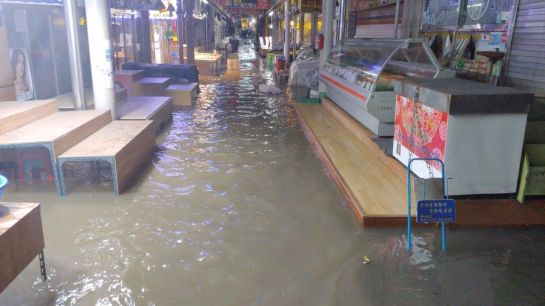
[Asia Economy Reporters Daeseop Kim, Hyewon Moon, Heeyoon Kim] "This is the first time in 40 to 50 years that we have experienced such flooding."
Merchants at Juksan Market in Anseong, Gyeonggi Province, are bewildered by the recent flooding of their shops caused by heavy rain. Although heavy rains have poured every monsoon season, they never imagined such an event would occur.
Despite struggling with weakened consumer sentiment due to the COVID-19 pandemic, they endured with hope, but now, with the flooding added to their troubles, they are unable to operate their businesses for the time being. They are making every effort to recover by removing soil that entered the shops and drying wet goods, but they are worried as more heavy rain seems imminent.
One market merchant appealed to government and local government officials who visited the market to assess the damage, saying, "The market was flooded due to a natural disaster, causing damage. Please find a way to provide support."
On the 2nd, Juksan Market was flooded within about 10 minutes due to backflow from a nearby drainage channel caused by heavy rain. The damage was worsened by the inflow of soil. All 40 shops out of 40 were seriously flooded.
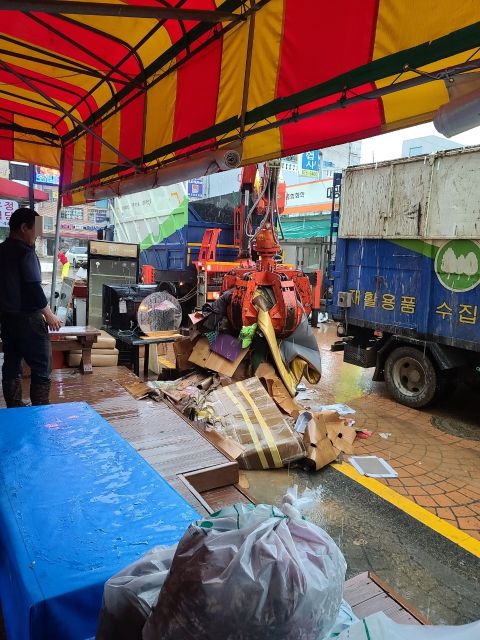 Due to flooding, trash piled up outside the stores at Juksan Market in Anseong, Gyeonggi Province, is being cleaned using machinery.
Products displayed inside shops such as rice cake stores, clothing stores, and dishware shops were soaked, and items placed outside for sale were swept away in an instant. Shops that also had living spaces inside lost household items as they were washed away by the water.
Currently, heavy machinery is being deployed to remove soil and recovery efforts are underway, but with the approach of Typhoon Hagupit (Typhoon No. 4) and continued heavy rains, it is expected to take more time before normal business operations can resume.
On the 4th, officials from Gyeonggi Province, the Gyeonggi Regional Small and Medium Business Administration, and the Small Enterprise and Market Service Gyeonggi-Incheon Regional Headquarters visited Juksan Market to inspect the damage. Hwang Mi-ae, head of the Small Enterprise and Market Service Gyeonggi-Incheon Regional Headquarters, said, "The damage to Juksan Market is severe. We plan to promote support measures such as emergency management stabilization funds and disaster funds."
According to the Small Enterprise and Market Service, since the 24th of last month, flooding damage has been occurring continuously in traditional markets nationwide due to heavy rain. So far, 23 traditional markets have been affected, including 11 markets in the Busan area, 3 in Daejeon, and 9 in Gyeonggi and Chungcheong areas. Approximately 830 shops have been flooded. The estimated damage amount identified so far is about 2 billion KRW.
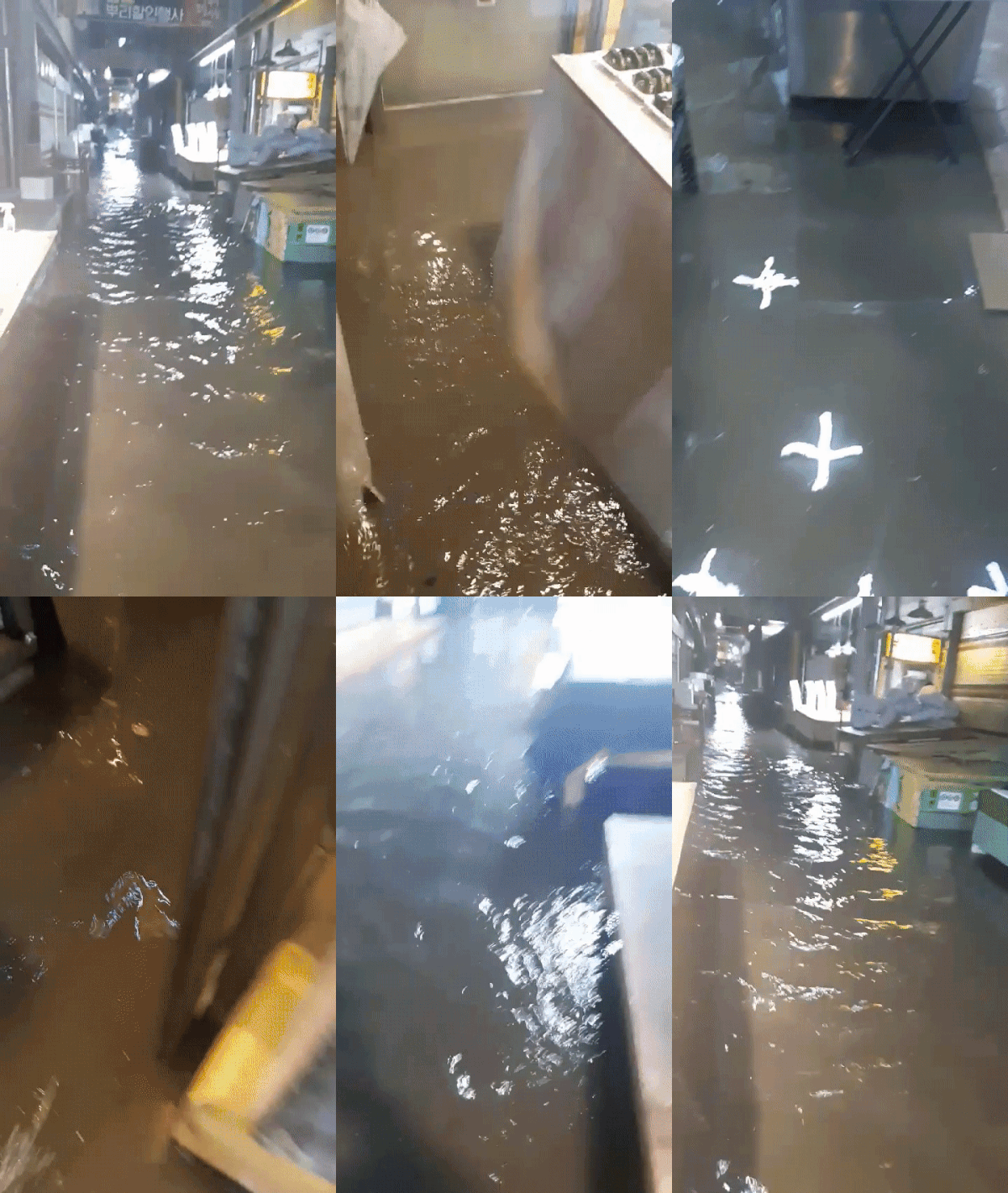
Daejeon Sanseong Traditional Market also suffered flooding damage to all 50 shops due to heavy rain at the end of last month. Merchants who were unprepared for the monsoon season are in a state of shock from the sudden heavy rain damage. Although most recovery work has been completed, some severely damaged shops are still unable to operate.
Kim Tae-sung, chairman of the Sanseong Traditional Market Merchants Association, explained, "The floodwaters rose to knee level during the heavy rain, submerging shops and causing significant property damage to the market. Food stores had refrigerators and other equipment damaged by flooding, and since compensation is not provided, the impact is severe." He added, "Because the area has not yet been designated a disaster zone, the costs for appliance repairs and replacements have fallen entirely on the small business owners."
The Ministry of SMEs and Startups is actively developing measures to support recovery from heavy rain damage. Since the 3rd, a disaster situation room has been established at the headquarters and regional SME offices to build a rapid reporting system. They are assessing damage in each region and cooperating with related organizations to strengthen prevention activities in vulnerable areas, support facility damage recovery, and provide policy fund support guidance to affected businesses.
An official from the Ministry of SMEs and Startups said, "We will implement various policies to revitalize the local economy, such as policy fund loans and online and offline sales exhibitions of local specialties. We plan to support a swift return to normal operations."
Some markets have already completed rapid damage recovery and resumed business through the combined efforts of the government, local governments, related organizations, and merchants' associations.
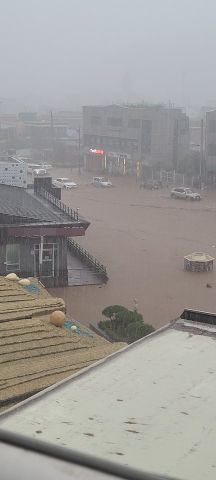 Flooding scene at Yesan Permanent Market, Chungnam (Photo by Ministry of SMEs and Startups)
At Yesan Permanent Market in Chungnam, 30 out of 110 shops were flooded due to heavy rain on the 2nd and 3rd. Torrential rain and river water overflowed into the market, submerging goods displayed in shops. Jo Se-je, chairman of the Yesan Permanent Market Merchants Association, said, "The waterway in front of the market, a covered stream, could not withstand the heavy rain and flooded, causing significant damage to shops at the entrance. We worked on pumping out water, scraping soil, and cleaning manholes to fully restore and reopen business."
Affected small business owners who need guarantees can visit the local Credit Guarantee Foundation to receive a special guarantee certificate and then apply for loans at local commercial banks to receive disaster funds (up to 70 million KRW per business, 2.0% interest rate, 2-year grace period, 3-year repayment). Those who do not require guarantees can bring a disaster confirmation certificate and apply for loans at regular commercial banks.
Jo Bong-hwan, director of the Small Enterprise and Market Service, said, "Recent record-breaking heavy rains have caused significant flooding damage to traditional markets. The Service will support nationwide traditional market safety management through the formation of disaster recovery crisis support teams at regional headquarters."
© The Asia Business Daily(www.asiae.co.kr). All rights reserved.



















