Smartphone Battery Lifespan Decreases with Heat
Battery Function Affected by Lithium Buildup at Just 40℃
[Asia Economy Reporter Junho Hwang] The correlation between temperature and lifespan of lithium-ion batteries used in smartphone batteries has been revealed. The study found that even mild heat generated during the operation of electronic devices causes structural changes in the battery, shortening its lifespan. The research team expects that reducing the impact of heat could lead to the development of more stable batteries.
A joint research team including Hyuntaek Hwan, Director of the Nanoparticle Research Division at the Institute for Basic Science (Distinguished Professor at Seoul National University), Deputy Director Young-Eun Sung, and Professor Seungho Yoo from the Department of Chemical and Biological Engineering at Korea University observed structural changes in lithium-ion battery electrode materials according to temperature and identified the fundamental cause of battery degradation, the team announced on the 5th. This study was published the same day in the Journal of the American Chemical Society.
Smartphones: Battery Arteriosclerosis Even Under Mild Heat
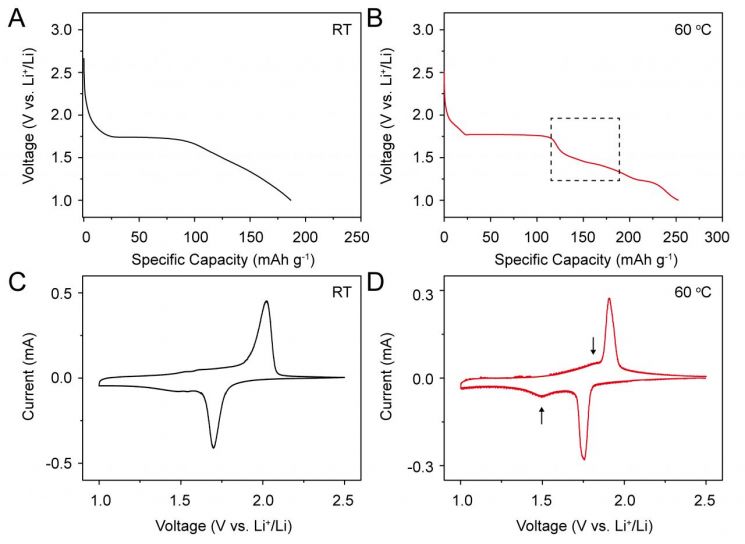
First, the research team fabricated a lithium-ion battery replacing the anode with titanium dioxide. Typically, graphite is used for the anode, but this substitution was made to examine the reaction with titanium dioxide. Then, by varying the temperature during charging and discharging, they observed changes in the electrode structure of titanium dioxide using X-ray diffraction analysis.
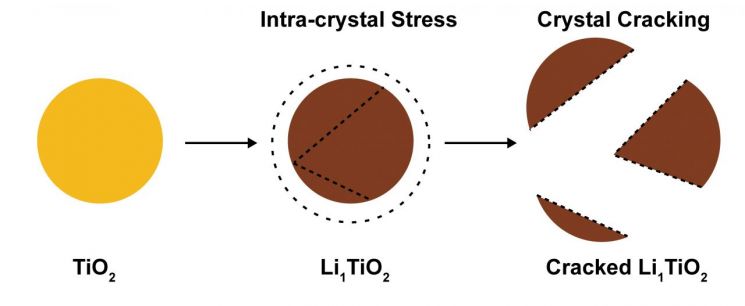
As a result, they confirmed that as the operating temperature increased, a new lithium storage phenomenon occurred that did not happen at room temperature. Even a 20?30℃ increase above room temperature triggered an additional secondary phase transformation (Li1TiO2) following the primary phase change. This means that unexpected additional phase changes occur even under mild heat conditions around 40℃ generated during electronic device use. Previously, it was known that when charging the battery, lithium ions (Li+) move to the anode and react with titanium dioxide, causing a phase change (Li0.55TiO2).
Severe Cases Lead to Irreversible Damage
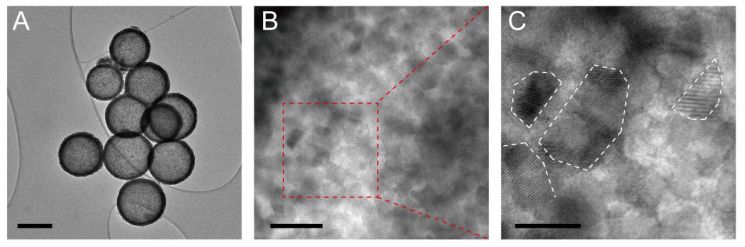
The research team used electron microscopy to observe structural changes in the electrode due to the secondary phase transformation and found that this transformation raises the energy barrier, making it difficult for lithium ions to move inside the titanium dioxide electrode. Similar to arteriosclerosis, lithium ions accumulate within the electrode, and repeated charging and discharging eventually cause defects in the titanium dioxide lattice structure, leading to irreversible damage.
Professor Seungho Yoo explained, "Temperature is one of the most important factors to consider in battery design for energy devices that generate heat. We confirmed that higher temperatures cause additional phase changes that degrade battery performance and lifespan."
Deputy Director Young-Eun Sung added, "With the recent surge in demand for electric vehicles, developing battery materials with excellent performance has become crucial. If the effects of heat can be minimized, it will be possible to design next-generation batteries that have high capacity, stability, and long service life."
© The Asia Business Daily(www.asiae.co.kr). All rights reserved.
![Clutching a Stolen Dior Bag, Saying "I Hate Being Poor but Real"... The Grotesque Con of a "Human Knockoff" [Slate]](https://cwcontent.asiae.co.kr/asiaresize/183/2026021902243444107_1771435474.jpg)

















