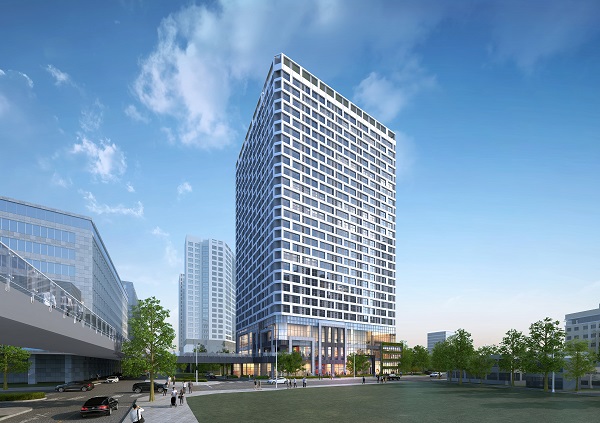
The average subscription competition rate for apartments in Seoul has risen to 23 to 1, making it increasingly difficult to win a new apartment subscription in Seoul. As a result, demand is flocking to ‘Jupjup’ complexes, where applicants with low subscription scores and existing homeowners can realistically secure their own homes.
‘Jupjup’ differs somewhat from the typical subscription process. It supplies leftover units, which arise due to issues with the eligibility or financing of subscription winners, through a lottery without any restrictions. Anyone aged 19 or older residing in the metropolitan area can apply regardless of whether they have a subscription savings account, and there are no subscription-related regulations such as point systems or requirements for being a non-homeowner, which has attracted even greater interest.
In fact, during the non-priority subscription application held on the day of the June 17th measures announcement for the Xi Apartments in Deok-eun District, Goyang City, Gyeonggi Province, 35,862 people applied for 263 units. According to the real estate industry, the surge in Jupjup supply was due to many subscription winners giving up their units because they could not expect capital gains from the high sale prices. Nevertheless, demand concentrated on Jupjup subscriptions because it was an opportunity outside of the subscription system to obtain new apartments in Deok-eun District, which is close to Seoul.
In May, the ‘Acro Seoul Forest’ in Seongsu-dong 1-ga, Seoul, held a non-priority subscription for ultra-high-priced homes over 1.5 billion KRW with no loan availability. Despite only three units being offered, 264,625 people applied, marking the largest crowd ever in the Jupjup market and demonstrating the popularity of new apartments in Seoul.
A real estate expert said, “As real estate regulations have tightened, subscription eligibility has become more stringent, causing existing homeowners and applicants with low subscription scores to flock to Jupjup complexes that do not require subscription savings accounts. Since moving into new apartments in Seoul through subscriptions is extremely difficult and Seoul apartment prices continue to rise, demand is concentrating in the Jupjup apartment market.”
Meanwhile, in the last large-scale redevelopment site inside the Four Great Gates of Seoul, the Seun District, Daewoo Construction’s ‘Seun Prugio Hericity’ is supplying leftover units from disqualified applicants on a first-come, first-served basis, attracting the attention of so-called ‘Jupjup’ demanders.
This complex consists of 614 small-sized apartments ranging from 24 to 42 square meters, with 9 basement floors and 26 above-ground floors. The current supply scale is 293 units.
Located in Seun 6-3-4 District, ‘Seun Prugio Hericity’ is situated at 151-1, Inhyeon-dong 2-ga, Jung-gu, Seoul, an area with exceptional quadruple subway station accessibility beyond a simple station zone. It is near Euljiro 4-ga Station, a transfer station for subway lines 2 and 5, and also close to Euljiro 3-ga Station (lines 2 and 3) and Chungmuro Station (lines 3 and 4).
Right in front of the complex is the Eulji Twin Tower, where Daewoo Construction relocated its new headquarters last year, further solidifying its position in the central business district. In particular, with about 1,500 Daewoo Construction headquarters employees and planned tenants such as BC Card and KT affiliates, an additional 1,000 employees will work in the area, strengthening the demand base.
‘Seun Prugio Hericity’ was excluded from the June 17th regulatory measures. The complex held official contracts from June 18 to 19, and some leftover units are currently being sold. A sales official stated that contracts have continued steadily even after the recent real estate policy announcements, and the closing is imminent.
Although it is a small urban-type apartment complex, units located on the top floors above the 16th floor enjoy excellent views. Balcony expansions are provided as a standard, increasing the usable area by 30 to 40%. Inside the units, premium imported wooden flooring, finishing materials, built-in furniture, and appliances are all offered as free options, while the main unit prices range from 400 million to mid-500 million KRW, making it competitively priced.
© The Asia Business Daily(www.asiae.co.kr). All rights reserved.
![Clutching a Stolen Dior Bag, Saying "I Hate Being Poor but Real"... The Grotesque Con of a "Human Knockoff" [Slate]](https://cwcontent.asiae.co.kr/asiaresize/183/2026021902243444107_1771435474.jpg)















