This year, user-centered gardens such as small patch gardens, rooftop gardens, and school gardens are created to lower barriers to urban agriculture... A total of 16 urban agriculture communities are active in the area, with a joint brand 'Jongno Honeybee' planned for future beekeeping promotion.
[Asia Economy Reporter Jong-il Park] Jongno-gu (District Mayor Kim Young-jong) has completed the establishment of 14 urban gardens this year to allow residents to participate in urban agriculture, enjoy emotional stability, and share the joy of abundant harvests.
It is expected to relieve the fatigue accumulated from prolonged social distancing and bring vitality to weary daily lives.
The creation of urban gardens in Jongno-gu dates back over 10 years. Despite the lack of cultivation space in the city center, since 2011, the district has steadily discovered leftover land, cleared spaces previously occupied by household waste, and transformed them into urban gardens.
They have also utilized neglected rooftop spaces of public buildings as gardens, and even without land, provided box gardens to residents and organizations wishing to cultivate urban agriculture easily in living spaces such as balconies. They have continuously operated horticultural programs for social welfare facilities and held related education sessions to provide information and promote urban agriculture.
By 2019, the district had established a total of 129 urban gardens (16,745㎡) and added 14 more sites (1,200㎡) in 2020, creating an environment where more residents can experience urban agriculture.
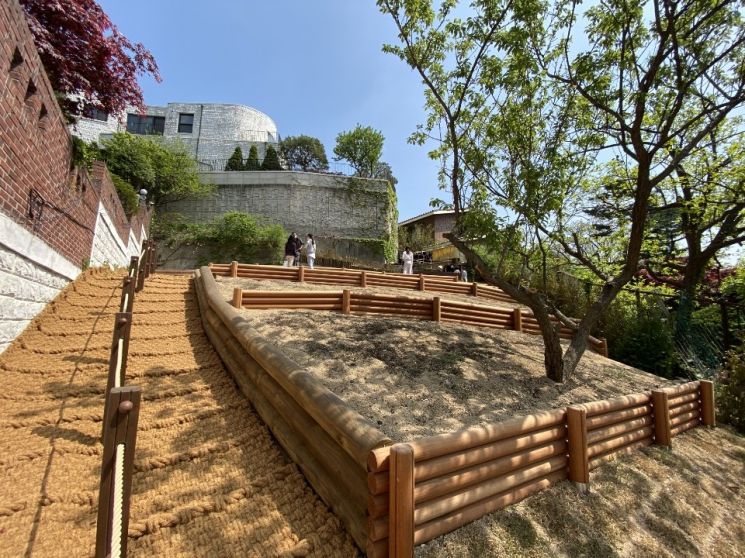
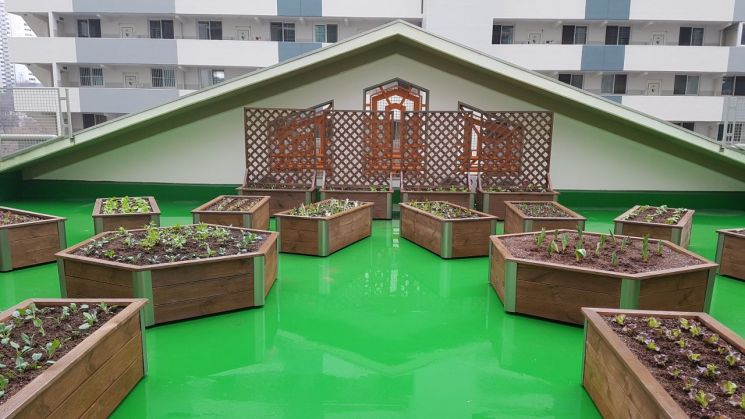
The newly created gardens this year include ▲ four ‘Leftover Gardens’ utilizing abandoned idle spaces (Jungang Villa in Sinyeong-dong, Shinhan Villa in Pyeongchang-dong, Muak-dong Garden, Mugyewon) ▲ two ‘Rooftop Gardens’ using building rooftops (Hyehwa Police Station, Jongno Cultural Foundation) ▲ four ‘Fresh Gardens’ installed at social welfare facilities (Cheongun Nursing Home, Muak Daycare Center, Donghwa Children’s Daycare Center, Haesong Regional Children’s Center) ▲ and four ‘School Gardens’ (Unhyeon Elementary School, Doknipmun Elementary School, Gyeongbok High School, Sejong Kindergarten).
In particular, among the leftover gardens, the Shinhan Villa in Pyeongchang-dong and Jungang Villa in Sinyeong-dong were spaces that had been neglected for nearly 20 years, which were rediscovered and newly developed for residents.
Additionally, the Cheongun Nursing Home urban garden was carefully designed as a Barrier-Free (BF) environment by securing ample space and adjusting the height of box gardens so that even those with physical disabilities can experience urban agriculture in wheelchairs. This user-centered garden aims to lower the entry barriers to urban agriculture.
Currently, Jongno-gu has a total of 16 urban agriculture communities engaged in various activities such as gardening, insect raising, and beekeeping. These communities hold meetings to promote community activation and friendship and actively participate in festivals to promote urban agriculture to residents.
In September last year, the ‘Jongno Urban Agriculture Festival’ was held at Marronnier Park, offering hands-on programs such as wooden pen and beeswax candle making that beginners could easily participate in, receiving positive responses. To help citizens feel familiar with urban agriculture, related item exhibitions and small garden concerts were also held. In November, urban agriculture communities came together in Muak-dong to make kimchi for kimjang and donated it to neighbors, contributing to the spread of a culture of sharing.
They plan to create and use a joint brand called ‘Jongno Honey Field’ to promote the activation of the urban beekeeping community in the future.
District Mayor Kim Young-jong stated, “Jongno-gu has steadily expanded urban gardens, registered new urban agriculture communities, and secured over 1,000 members on the Seoul Farmer Portal, achieving the grand prize in the ‘Autonomous District Urban Agriculture Best Practice Evaluation’ hosted by Seoul City last year.” He added, “We will continue our efforts to revitalize urban agriculture so that all residents can enjoy emotional stability through urban agriculture, creating a sustainable healthy city.”
© The Asia Business Daily(www.asiae.co.kr). All rights reserved.
![Clutching a Stolen Dior Bag, Saying "I Hate Being Poor but Real"... The Grotesque Con of a "Human Knockoff" [Slate]](https://cwcontent.asiae.co.kr/asiaresize/183/2026021902243444107_1771435474.jpg)
















