Interview with Future Salon CEO Song Gi-hyun, Founder of Shared Hair Salon 'ShareSpot'
FuturePlay's First Startup Embarks on 'Two-Track Strategy' for Investment and Entrepreneurship
 Song Ki-hyun, CEO of Future Salon and founder of the shared hair salon Share Spot, said, "Deep learning and AI were already feasible technologies, but no one had applied them to the beauty industry, so I took on the challenge myself," adding, "While technology is important, the ultimate goal is offline innovation." Photo by Yoon Jin-geun, PD
[Asia Economy Reporter Kim Heeyoon] "We record and dataize when customers visit, what treatments they received, and how much of which products or medicines were used. Then, when the customer returns and wants the same style as before, even if a different designer takes over, it becomes possible to recreate that style."
There is no front desk at the shared hair salon 'ShareSpot.' There are no staff members asking which designer (hairdresser) you are looking for. By selecting your desired hairstyle and treatment method on the kiosk at the entrance, a designer suitable for you is recommended. When the designer who received the message comes to greet you, you are guided to a space composed of private rooms.
Although it is a hair salon sharing facilities and space, ShareSpot’s operating system is closer to an information technology (IT) company. Song Kihyun, CEO of Future Salon, which created ShareSpot, explained, "The conviction that offline inconveniences can be improved through technology led to the founding of the shared hair salon." Future Salon is the first startup created by the startup accelerator FuturePlay, and it became their first challenge as a 'company builder' who decided to establish a company directly if there was a market but no startups.
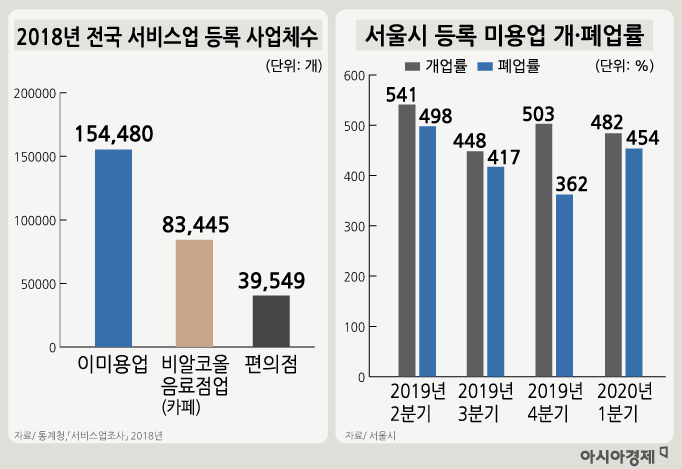 The number of beauty salons nationwide is approximately 150,000, exceeding that of cafes (80,000) and convenience stores (40,000). The closure rate is also similar to the opening rate, indicating fierce competition and a challenging market structure. Graphic by Jin-kyung Lee, Designer
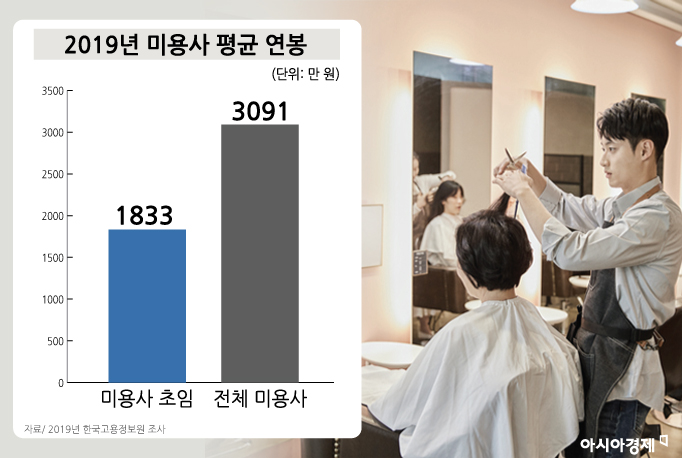
The number of hair salons nationwide is about 150,000 (as of 2018), and the number of workers in the hairdressing industry reaches 230,000. The number of stores, which is two to three times more than cafes (80,000) and convenience stores (40,000) that customers can visit daily, indicates fierce market competition. The closure rate within one year is 17.6% in Seoul, and nearly half close after three years. The poor conditions also affect wages. According to a survey by the Korea Employment Information Service last year, the average annual salary of all hairdressers was 30.91 million KRW, and the average starting salary for hairdressers was only 18.33 million KRW.
Starting a business requires a lot of money, and the burden of rent is high, so one-person hair salons have no choice but to open stores away from prime commercial areas. The structure requires hairdressers to be responsible for all operations and promotions outside of hairdressing work. This is a cause of the high closure rate. According to the Seoul City Our Neighborhood Store Commercial Area Analysis Service, the quarterly closure rate of hair salons over the past year has steadily increased at a level similar to the opening rate.
Future Salon, focusing on the distorted structure and low-wage labor issues in the hairdressing industry, challenged these problems by combining technology and the sharing economy. Along with operating a hair salon that shares facilities and space, the introduction of a solution that quantifies and manages customer data is a differentiator from other shared hair salons. CEO Song said, "Customer treatment data includes detailed information such as hair and scalp condition, color immediately after treatment, and curl size," adding, "Quantitative data becomes a clue to providing the same service to customers even in changed environments later." The accumulated customer data will be applied to an advanced solution through machine learning analysis.
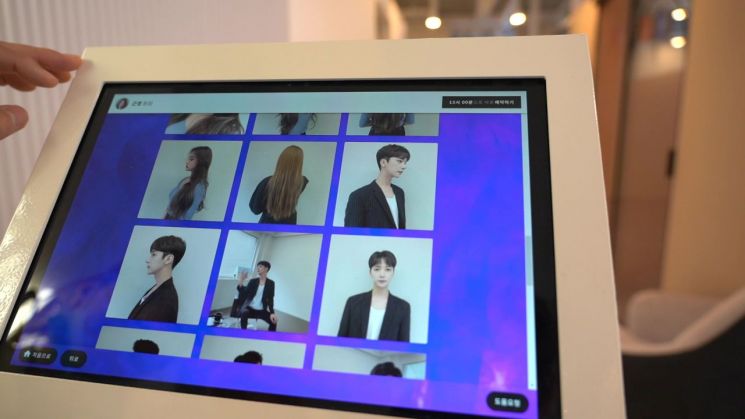 At the entrance kiosk of ShareSpot, when you enter your desired hairstyle, portfolios of designers are provided with photos. If you select a style you like, artificial intelligence (AI) recommends a designer that matches it. Photo by Yoon Jin-geun PD
Artificial intelligence (AI) has been introduced to match the strengths and specialties of each designer with the treatments customers want. The process of concretizing the positioning of designers, who have not yet organized their awareness of their own strengths, based on data, and matching them according to customer demand is carried out more precisely through AI.
The personnel issue related to customer service was solved with kiosks. CEO Song said, "The kiosk acts as a tool to greet customers, recommend designers, and select treatments, enabling unmanned operations beyond designers," adding, "By reducing labor costs through kiosks and establishing a reservation system, we are creating a structure where working hours are reduced, allowing people to work less but increase sales."
CEO Song said, "The goal of ShareSpot is to innovate how much more convenient the customer experience in offline spaces can be," and "Deep learning and AI were already possible technologies, but no one applied them on-site, so we took on the challenge ourselves." ShareSpot, which applies solutions using deep learning and AI, is about to open its second branch in Hannam-dong.
© The Asia Business Daily(www.asiae.co.kr). All rights reserved.



















