Technical and Managerial Measures Target Services Unclear
Detailed Performance Evaluation Criteria Must Be Disclosed
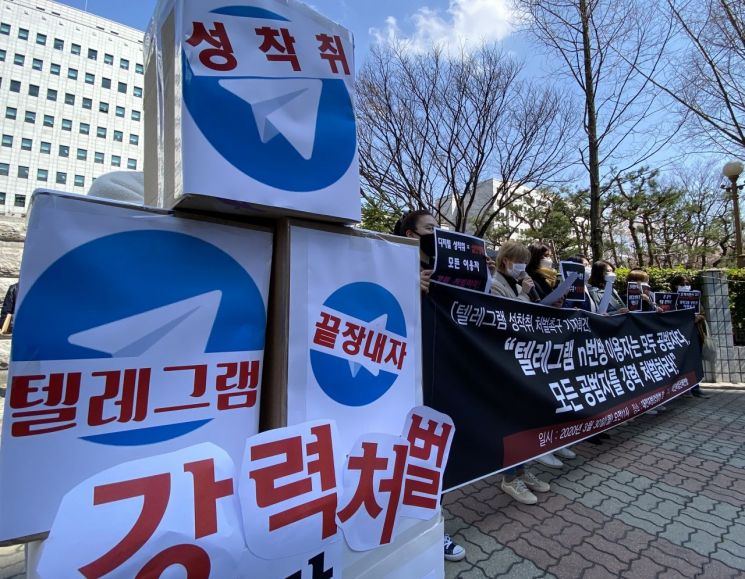
[Asia Economy Reporter Koo Chae-eun] As the enforcement decree of the Nth Room Prevention Act, which strengthens the function to prevent the distribution of illegal internet filming materials, has been announced, the industry is concerned about the "devil in the details." There are many detailed issues that need to be clearly defined in subordinate notifications and legal interpretations.
According to the industry on the 23rd, concerns have been raised regarding the ambiguity of the services subject to technical and administrative measures in the revised enforcement decree announced by the Korea Communications Commission the previous day. Internet service providers offer a variety of services such as email, blogs, messengers, bulletin boards, cafes, and open chat rooms, and the level of public access varies greatly for each service.
There is criticism that the core issue of which services are subject to regulation is missing. For example, in the case of Naver Cafe or KakaoTalk open chat rooms, some operate with membership upgrades, invitations, or password entry to allow limited participation, but there are also public bulletin boards open to anyone. Under the current enforcement decree, it is unclear whether these services fall under the scope of regulation.
The Korea Communications Commission announced on the 22nd a revised enforcement decree mandating internet service providers with annual sales exceeding 1 billion KRW or daily users exceeding 100,000 to prevent the distribution of illegal filming materials. The core is technical and administrative measures, specifically requiring ▲ the establishment of a constant reporting function, ▲ restrictions on search results such as banned words, and ▲ filtering measures.
Regarding this, an industry official said, "The ambiguity about which services are subject to application could become a contentious issue related to user privacy protection and private censorship controversies that were problems in the early stages of legislation," and added, "It must be clearly defined in the next notification." The Korea Communications Commission has stated that the law will be enforced only for "services where users can post and share information in a publicly accessible form," based on the value of privacy protection and the Telecommunications Privacy Protection Act, but criticism remains that the target services are still ambiguous.
It is also pointed out that detailed criteria for the 'performance evaluation' required to apply search restrictions and filtering technology have not yet been released. The enforcement decree stipulates that 'filtering measures' must be taken to block illegal filming materials, and that filtering measures must apply technology that has passed performance evaluation, but the detailed criteria are unclear. An industry official said, "At least rough standards or a public schedule for the performance evaluation should be announced so that filtering measures can be prepared accordingly," and added, "These issues must be clearly resolved in subordinate notifications and legal interpretation manuals."
© The Asia Business Daily(www.asiae.co.kr). All rights reserved.
![Clutching a Stolen Dior Bag, Saying "I Hate Being Poor but Real"... The Grotesque Con of a "Human Knockoff" [Slate]](https://cwcontent.asiae.co.kr/asiaresize/183/2026021902243444107_1771435474.jpg)
















