Government Allows Low-THC Hemp Cultivation and Industrialization for Medical Use Despite Opposition from MFDS
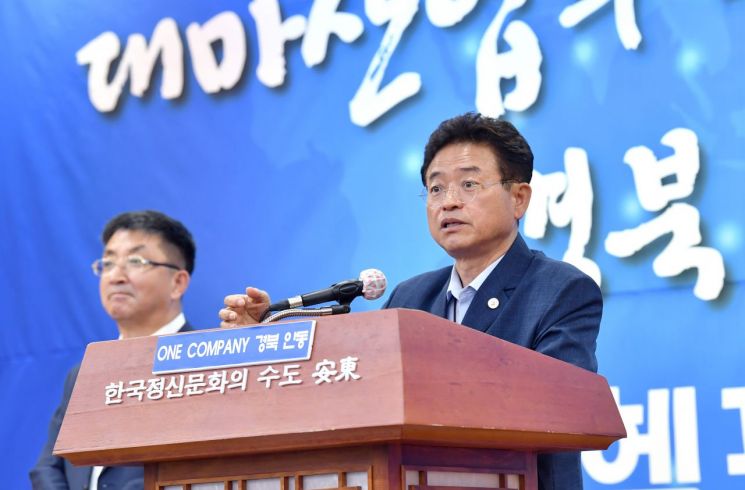 Governor Lee Cheol-woo of Gyeongbuk holding a press briefing regarding the designation of the 'Hemp Industrialization Regulatory Free Zone'.
[Asia Economy Yeongnam Reporting Headquarters Reporter Dongwook Park] The 'Industrial Hemp Regulatory Free Zone,' which has been promoted to utilize a type of hemp with weak narcotic components called HEMP as medical and bio materials, will be established in the areas of Imha-myeon and Pungsan-eup in Andong City, Gyeongbuk Province.
With the government's designation of the 'Industrial Hemp Regulatory Free Zone,' Andong is expected to become the mecca of Korea's hemp industry, and the hemp industry will play a key role in the northern region's bio-industry alongside the vaccine cluster in the new provincial government era.
Governor Lee Cheol-woo announced at a press conference on the 7th that Gyeongsangbuk-do was finally designated as the 'Industrial Hemp Regulatory Free Zone' at the 3rd Regulatory Free Zone Committee meeting chaired by the Prime Minister on the 6th.
This free zone holds great significance in that it has opened the door to the bio-industrialization of hemp, which had been regulated under the Narcotics Control Act for over 70 years. Previously, the hemp industry was only allowed for fiber and seed cultivation, but with this designation, the industrialization of medical hemp will create a high value-added bio-material market, significantly expanding the region's industrial scope.
Hemp is basically classified into marijuana and HEMP. Among these, HEMP is a low-narcotic variety with less than 0.3% THC (tetrahydrocannabinol), which has hallucinogenic properties. It is widely used overseas as a raw material for medical hemp products. Experts believe that Korea's Cheongsamjong is also classified as HEMP, a low-narcotic variety developed for fiber use.
Gyeongbuk Province plans to attract smart farm companies to the 'Industrial Hemp Regulatory Free Zone' in Imha-myeon and Pungsan-eup, Andong, over two years from 2021 to 2022, to safely cultivate industrial hemp using ICT convergence technology and establish facilities to extract and refine high-purity CBD components used as pharmaceutical raw materials. CBD is known to be useful in reducing pain and inflammation, controlling epileptic seizures, and treating mental illnesses and addiction.
This designation of the free zone places a heavy responsibility on Gyeongsangbuk-do and Andong City to establish an institutional foundation through the free zone project due to the special nature of hemp. Until now, companies faced many difficulties, such as going overseas to do business or remaining at the basic research level to challenge the hemp market, which has been growing by more than 20% annually.
Practically, concerns about public health cannot be ignored, making this a long-debated project. While it has business potential, it also carries risks. In fact, due to the nature of hemp being managed as a narcotic, the Ministry of Food and Drug Safety had considerable negative opinions, according to Gyeongbuk Province.
Considering this, Gyeongsangbuk-do and Andong City plan to announce a 'Comprehensive Development Plan for the Hemp Industry Cluster' by the end of July, presenting a blueprint and organizing for the regulatory free zone project starting next year. The working planning team is already preparing strategies and receiving consulting from domestic experts to establish concrete plans.
Governor Lee Cheol-woo emphasized, "Gyeongsangbuk-do and Andong are the first regions to attempt industrialization using hemp, which has been strictly regulated for over 70 years," adding, "This regulatory free zone has a special meaning different from existing zones in that it seeks a rational industrialization method for hemp, which is a narcotic."
© The Asia Business Daily(www.asiae.co.kr). All rights reserved.
![Clutching a Stolen Dior Bag, Saying "I Hate Being Poor but Real"... The Grotesque Con of a "Human Knockoff" [Slate]](https://cwcontent.asiae.co.kr/asiaresize/183/2026021902243444107_1771435474.jpg)
















