Allowing Union Membership for Dismissed and Unemployed Workers
Simultaneous Promotion with Labor 3 Laws Processing Within the Year
Concerns Over Adverse Factors Such as Business Difficulties Due to COVID-19 and Deterioration of Labor-Management Relations
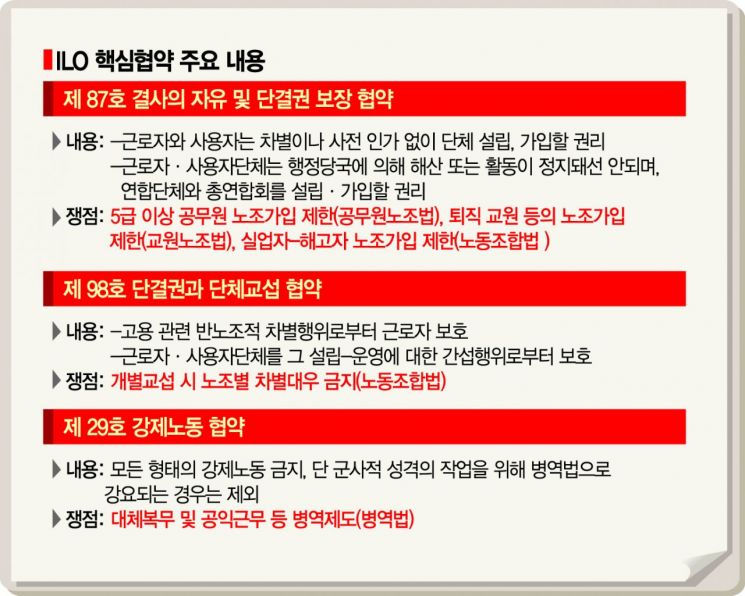
[Asia Economy reporters Kiho Sung and Bokyung Kim] As the government simultaneously pushes for the ratification of the International Labour Organization (ILO) core conventions and the Labor 3 Acts, a path has opened for dismissed workers and the unemployed to join labor unions. The business community expressed concerns that this could add the adverse factor of "deteriorating labor-management relations" to the already challenging corporate management environment caused by the COVID-19 pandemic.
Government: "Simultaneous Ratification and Legislation in the National Assembly Within the Year"
The ratification proposals for three ILO core conventions?No. 29, 87, and 98?approved at the Cabinet meeting on the 7th will be submitted to the National Assembly later this month after presidential approval. Convention No. 87 stipulates the voluntary and free establishment, membership, and activities of labor organizations, while Convention No. 98 guarantees free collective bargaining and prohibits disadvantages against union activities. In this regard, the government has submitted a labor law amendment bill to the National Assembly reflecting the allowance of union membership for dismissed and unemployed workers. Convention No. 29 prohibits all forms of forced labor. Relatedly, a revision to the Military Service Act has been submitted to grant service choice rights to supplementary service level 4 personnel.
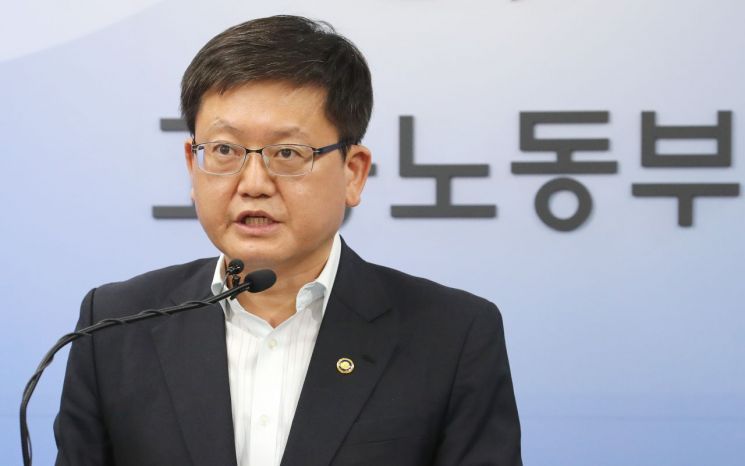
The Labor 3 Acts, which the government is revising to ratify the ILO core conventions, were originally prepared based on recommendations made by labor and management experts within the Economic and Social Labor Council. However, the business sector opposes the content as "biased toward labor," while labor groups complain that the government's proposal is "insufficient." Initially, labor groups advocated for "ratification first, legislation later" to urge ratification of the core conventions. However, ratifying first could create conflicts with the existing labor laws before amendments. Therefore, the government has decided to handle ratification and legislation simultaneously within this year. Im Seo-jung, Vice Minister of Employment and Labor, explained, "If the ratification proposal is processed before the legislation, it could cause various confusions on the ground and create contradictory legal relationships. The law should be organized first, then proceed with the ratification proposal, or at least both should proceed together. The ratification and legislation should be resolved simultaneously."
Business Community: "At Least Defensive Rights Are Necessary"
The business community expressed bewilderment as the government deliberated and approved the three ILO core convention ratification proposals. They worry that if the ratification and related law amendments proceed as the government plans, the strengthening of labor union collective bargaining rights and collective action rights will inevitably exacerbate corporate difficulties. With the prolonged COVID-19 crisis making management conditions tough, companies could face a "double burden" with intensified labor-management conflicts. There are also voices that the ratification of the ILO core conventions could become an obstacle in the government's efforts to promote reshoring policies (encouraging overseas companies to return to Korea) in the post-COVID era. On the other hand, since Korea and the European Union (EU) have entered dispute resolution procedures under the Free Trade Agreement (FTA) concerning the ILO core conventions, some argue that hastening ratification would benefit national interests.
The business sector is particularly sensitive to Conventions No. 87 and 98, which guarantee freedom of association and the right to organize, strengthening labor unions' collective bargaining and collective action rights. They fear that if the related bills pass the National Assembly as is, corporate conditions will worsen compared to now. Allowing dismissed workers to join unions would effectively neutralize the employer's disciplinary authority. Additionally, companies with multiple unions would have to negotiate separate collective agreements with each union, which is expected to cause considerable controversy.
Accordingly, the business community emphasizes the need for at least minimal defensive rights for companies against union strike actions. Jang Jung-woo, head of the Labor Policy Department at the Korea Employers Federation, stressed, "Ratification of the ILO core conventions must be accompanied by institutional improvements such as permitting replacement labor and addressing unfair labor practices from the perspective of 'basic rights to defend production activities.'" Professor Lee Seung-gil of Ajou University Law School pointed out, "With the increased uncertainty in the business environment due to the COVID-19 crisis, there is concern that defining regulations through the core conventions and labor relations law amendments could create gaps with the rapidly changing management environment."
There are also calls for broader opinion gathering during the National Assembly discussions. Professor Hong Ki-yong of Incheon National University’s Department of Business Administration said, "It is difficult to say that the current ILO core convention ratification process is being carried out with sufficient social consensus. Since ratification of the core conventions and amendments to labor relations laws directly affect the entire population, thorough discussions, diverse opinions, and public debates should be conducted during the National Assembly deliberations."
© The Asia Business Daily(www.asiae.co.kr). All rights reserved.
![Clutching a Stolen Dior Bag, Saying "I Hate Being Poor but Real"... The Grotesque Con of a "Human Knockoff" [Slate]](https://cwcontent.asiae.co.kr/asiaresize/183/2026021902243444107_1771435474.jpg)
















