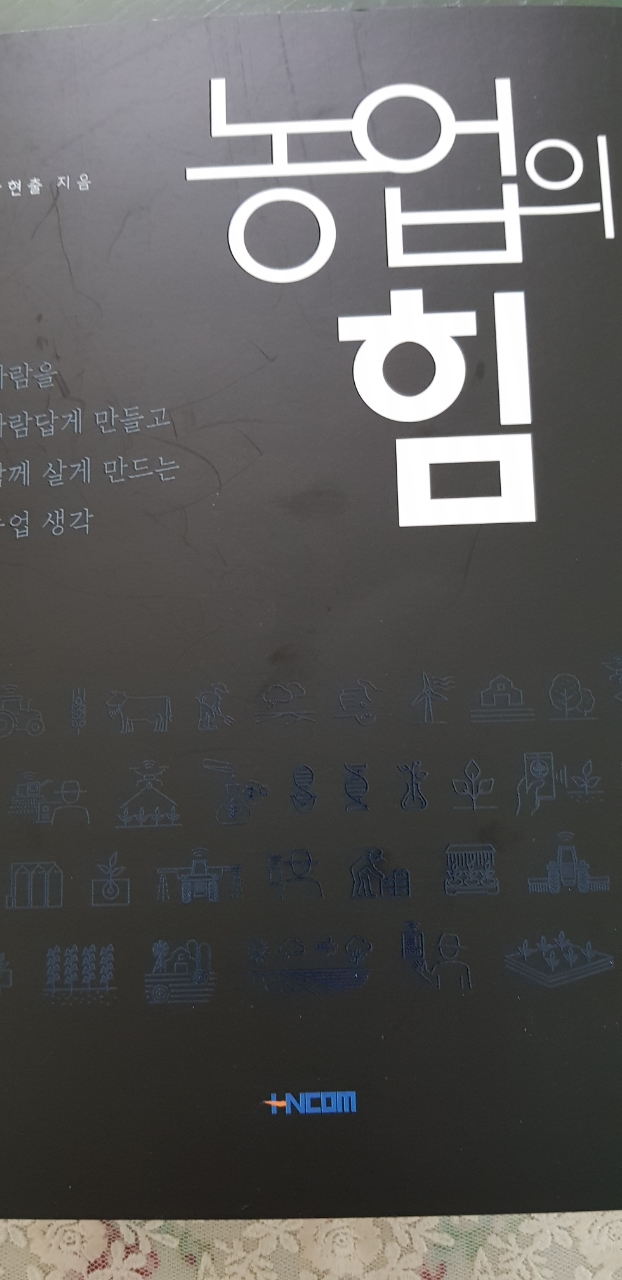
In "The Power of Agriculture," authored by Park Hyun-chul, former President of Seoul Agro-Fisheries & Food Corporation and former Administrator of the Rural Development Administration, he argues that while the Philippines, which was much better off than Korea at liberation, failed to implement land reform, Korea's land reform enabled many farmers to own land, cultivate their own fields, educate their children, produce the talent needed for modernization, and ultimately achieve the Miracle on the Han River.
[Asia Economy Reporter Park Jong-il] “The most decisive driving force behind Koreans being able to receive a high level of education was the land reform. The reason that education was possible was thanks to the land reform. Through education, a large number of talented individuals who could adapt to an industrial society were produced, and the current state of our country is the result of those talents working tirelessly.”
This is a claim made by Park Hyun-chul, former President of the Seoul Agricultural and Marine Products Corporation (and former Administrator of the Rural Development Administration), in his recently published book, The Power of Agriculture.
At the time of liberation in 1945, the Republic of Korea was one of the poorest countries in the world, truly a symbol of poverty. The country was divided into North and South, and most of the people were small tenant farmers struggling to survive day by day.
In this situation, the background that allowed Korea to grow rapidly into one of the world’s top economic powers, astonishing the global community, was precisely the land reform.
Considering that about 80% of the Korean population at liberation were agricultural workers and their family members, and that approximately 86% of farm operators were tenants, Park wrote that without land reform, it is doubtful whether the children of farmers could have been sent to school.
Park, who passed the 25th Administrative Examination, served in key positions at the Ministry of Agriculture, Food and Rural Affairs including Director General of Agricultural Policy Bureau, Director General of Food Industry Policy Office, and Director General of Planning and Coordination Office, and also served as Administrator of the Rural Development Administration, a vice-ministerial position.
He also served as President of the Seoul Agricultural and Marine Products Corporation, laying the foundation for the modernization project of Garak-dong Market.
He argued, “No matter how high the educational enthusiasm of Koreans was, if the land reform process had not distributed land to farmers, they would not have even dared to send their children to school.”
Comparing this with the experience of the Philippines, which was much wealthier than Korea at the time but failed to implement land reform and thus could not sustain growth momentum, Park emphasized that land reform was a truly tremendous driving force that brought about a major change in Korean history.
From the perspective of farming households that received land through land reform, although the land was not sufficient, having “their own land” gave them pride and relief, which became a real motivation to work “as if they did not know death.”
Park stated, “The Miracle on the Han River was truly the result created by ‘excellent Korean talents,’ and those excellent talents could be nurtured thanks to land reform.”
Indeed, land is an essential condition for survival, providing food and shelter to humans. For our ancestors, who had no special occupation other than farming, land was no different from life itself.
Park also explained the theme, “How long will the abundant table continue?” noting that although humans have lived with hunger as a fate for a very long time, some people might think that our ancestors lived as abundantly as we do today, taking a rich table for granted. He points out that humanity has only recently escaped from food shortages in historical terms.
As the Chinese proverb says, ‘식위천’ (食爲天), meaning “the people regard food as heaven,” the book explains that food is an essential condition for human survival.
Park wrote in an easy-to-understand manner about the relationship between humans and agriculture, focusing on major themes such as ▲Agriculture as the starting point of civilization ▲Concentration of land ownership and the birth of power ▲Agricultural and marine products that changed history ▲Explosive food production in the 19th and 20th centuries ▲Food supply and demand outlook for 2050 ▲The old future?the revival of agriculture and rural areas, using various examples.
In particular, he draws attention by proposing alternatives to challenges facing Korean agriculture, such as whether another food crisis will come, the path to the revival of Korean agriculture, and how to utilize agriculture and rural areas in the era of artificial intelligence.
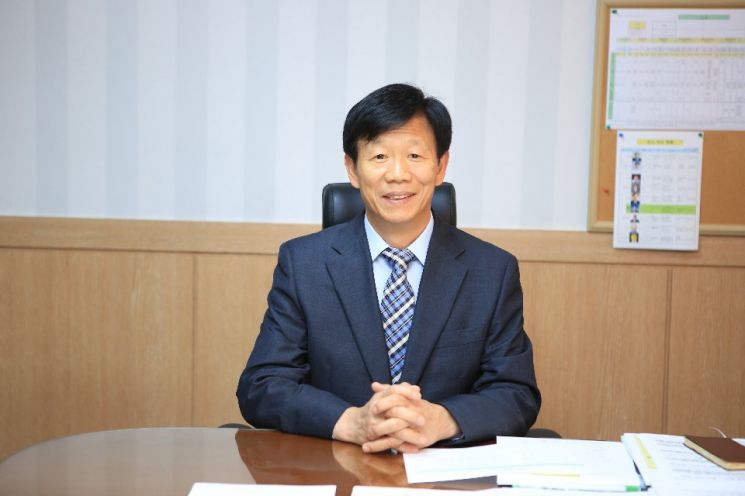
Park emphasized, “The reality that we have to import 75% of the food we eat from overseas is truly a precarious situation. Considering the future of the nation, we can no longer neglect the current situation. Now, we must have more realistic discussions about agriculture and food issues.”
© The Asia Business Daily(www.asiae.co.kr). All rights reserved.
![Clutching a Stolen Dior Bag, Saying "I Hate Being Poor but Real"... The Grotesque Con of a "Human Knockoff" [Slate]](https://cwcontent.asiae.co.kr/asiaresize/183/2026021902243444107_1771435474.jpg)

















