Decrease in Public Transportation Usage... Transport Companies Delay New Vehicle Purchases
Impact Reaches Bus Manufacturers... Daewoo Bus Announces Withdrawal from Domestic Market
Truck Sales Decline Due to Construction and Transport Industry Downturn
Commercial Vehicle Domestic Sales Down 15% from January to May This Year
[Asia Economy Reporter Su-yeon Woo] As the number of citizens using public transportation has decreased due to the novel coronavirus infection (COVID-19), the domestic commercial vehicle market, including buses, is rapidly shrinking. The spread of remote work and social distancing has reduced the number of passengers traveling, and the economic downturn has worsened the transportation and construction industries, causing bus and truck transportation companies to postpone plans to purchase new commercial vehicles.
According to the Korea Automobile Manufacturers Association on the 3rd, domestic sales of domestically produced commercial vehicles (Hyundai Kia Motors, GM Korea, Renault Samsung, Daewoo Bus, Tata Daewoo) from January to May this year totaled 94,188 units, a 15% decrease compared to the previous year. The contraction in the market was led by buses. During the same period, trucks sold 75,243 units, down 9% year-on-year, while buses sold 18,945 units, a sharp decline of about 32%.
Hyundai Kia Motors’ commercial vehicle sales in the first half of this year also decreased to a similar level. In the first half, Hyundai Kia Motors sold 109,297 units domestically, down 12% from the previous year. Among them, bus sales were 4,275 units, showing a significant decrease of 19%.
Since the importance of quarantine has been emphasized after COVID-19, sales of private passenger cars have increased this year, but bus sales have declined as public transportation usage decreased. According to Seoul city public data, the daily number of passengers (boarding basis) on Seoul metropolitan, city, and village buses in May this year was 3.88 million, a 28% decrease compared to the same month last year (5.37 million). With air routes blocked, the number of passengers using airport buses has naturally decreased as well.
The situation is similar in the provinces. From February to May this year, the bus industry sales in Jeonnam province decreased by 43% compared to the previous year, and if this situation continues until the end of the year, the cumulative loss is estimated to reach 100 billion KRW. The sales of five intercity bus companies in Chungnam province also plummeted by more than 40% in the first half of this year.
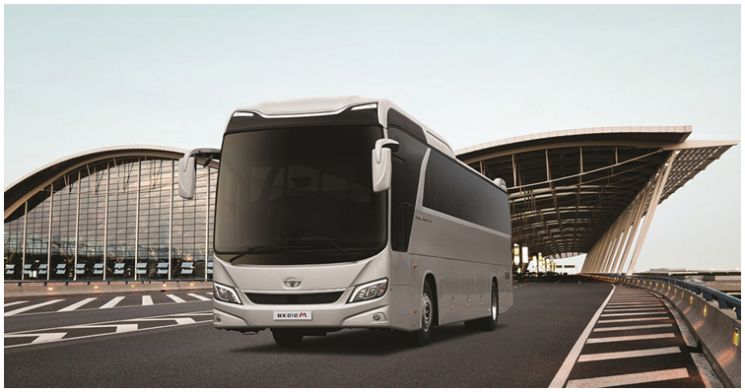
As the management difficulties of bus transportation companies deepen, new bus purchases driven by replacement demand are inevitably postponed. Amid ongoing deficits, it is almost impossible to even dream of new vehicle demand due to route expansion. The decrease in passengers caused by COVID-19 has exacerbated the management difficulties of transportation companies, and these hardships are now spreading to bus manufacturers.
Ultimately, Daewoo Bus Commercial Vehicles, a domestic bus manufacturer, recently notified the labor union that it will close its Ulsan plant and import buses from its Vietnam plant for domestic sales. Daewoo Bus has begun the process of winding down its domestic production line after 65 years and announced voluntary retirement. Until just before the financial crisis, Daewoo Bus’s annual production exceeded 6,000 units, but last year it fell below 2,000 units.
The truck market, which serves as a barometer of the economic situation, is also going through a long tunnel of stagnation. Demand for 1-ton trucks linked to self-employed workers and dump trucks directly connected to the construction industry is declining overall. The 1-ton truck Porter even launched an electric vehicle earlier this year to try to turn the market around, but sales in the first half of this year decreased by 13% compared to the previous year.
An industry official said, "As more people avoid face-to-face contact due to COVID-19, passenger car sales have increased this year, but the commercial vehicle market, which is directly affected by the downturn in the construction industry and passenger and freight transportation markets, has inevitably been hit," adding, "If the economic situation does not improve, the sluggishness in the commercial vehicle market will continue for some time."
© The Asia Business Daily(www.asiae.co.kr). All rights reserved.
![Clutching a Stolen Dior Bag, Saying "I Hate Being Poor but Real"... The Grotesque Con of a "Human Knockoff" [Slate]](https://cwcontent.asiae.co.kr/asiaresize/183/2026021902243444107_1771435474.jpg)















