One Year of Boycotting Japanese Products... 76% of Citizens Say "Will Continue Boycott"
Some Advocate 'Selective Boycott'... "Can't Live Without 'Animal Crossing'"
Experts Say "Consumers May Buy Japanese Products as Needed... Should Avoid Harsh Criticism"
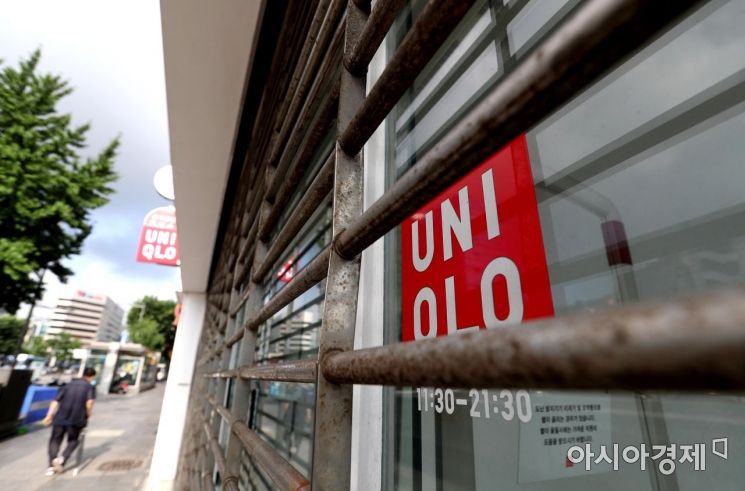
[Asia Economy Reporter Heo Midam] The boycott movement against Japanese products, triggered by Japan's export restrictions in July last year, has reached its one-year mark. Experts commonly agree that the boycott of Japanese products such as beer, automobiles, and clothing has taken root and has been effective. However, conflicts arising from coercion to participate in the boycott were not uncommon. So-called 'UNIQLO paparazzi,' who secretly filmed people entering and exiting UNIQLO stores and posted the footage online, also appeared. Recently, conflicts over the boycott have intensified around Nintendo's console game 'Animal Crossing.' Experts advised that harshly criticizing those who purchase Japanese products is inappropriate.
The enthusiasm for the boycott remains strong even after one year. According to a survey conducted by the public opinion research institute Data Research on the 29th of last month, targeting 700 men and women aged 18 and over nationwide, 75.9% of respondents said they intend to continue participating in the boycott. Additionally, 70.2% of respondents gave a positive evaluation of the boycott.
One of the representative companies hit hard by the boycott is UNIQLO. FRL Korea, which operates the UNIQLO brand in South Korea, recorded sales of 974.9 billion KRW last year, a decrease of more than 30% compared to the previous year. This marked the first time in five years that sales fell below 1 trillion KRW.
However, consumer boycott activity temporarily slowed down last November when UNIQLO held a 'Heattech free giveaway' event. At that time, citizens lined up in front of UNIQLO stores to get the so-called 'free thermal underwear.' In some stores in Seoul and the metropolitan area, customers flocked so much that the daily prepared stock was completely sold out.
Some netizens criticized this by posting photos of people lining up in front of UNIQLO stores on social networking services (SNS) such as Twitter, questioning, "Is the boycott already over?"
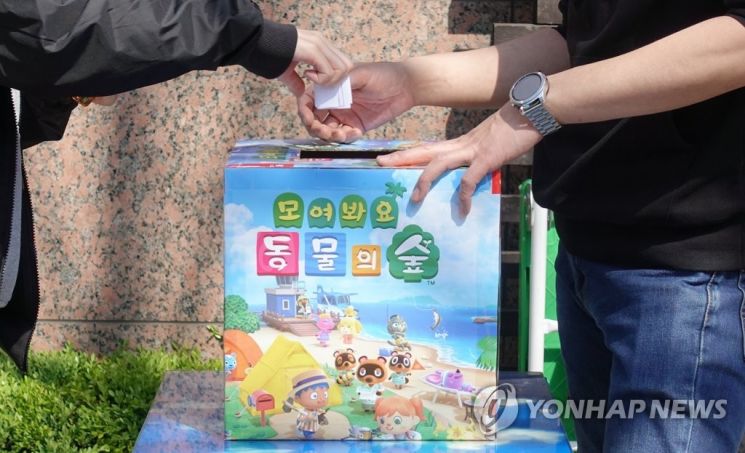 In front of Sindorim Technomart in Guro-dong, Guro-gu, Seoul last April, a citizen is entering a lottery to purchase the Nintendo Switch Animal Crossing edition.
 [Image source=Yonhap News]
Recently, conflicts have continued over 'Animal Crossing.' The game, released by Japanese game company Nintendo in March, is about moving to an island with animal neighbors and living by decorating a house.
The game gained attention as a 'healing game,' causing nationwide shortages, and hundreds of people lined up at stores to buy it, leading to a purchasing frenzy.
The domestic sell-out situation was even reported by Japanese media. Local outlets such as JB Press reported, "While South Korea is implementing social distancing, more than 3,000 people flocked to purchase Nintendo products." Upon seeing this news, Japanese netizens mocked through article comments and SNS, saying things like "'No Japan'? Where did that go?" and "'NO JAPAN' can't even last a day."
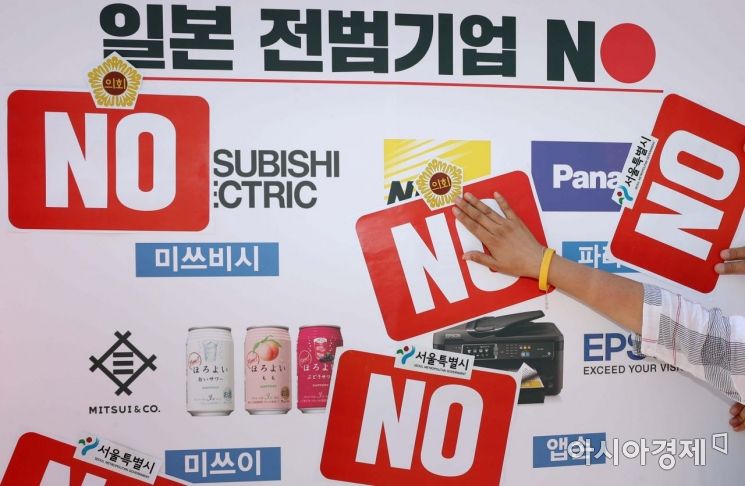
Some criticized that the boycott against Japan, which has continued since last year, has effectively lost its meaning.
A 27-year-old office worker, A, said, "Until last year, everyone was actively participating in the boycott against Japan. People criticized those who used Japanese products or traveled to Japan, but recently it seems to have cooled down. I see more people going to UNIQLO than before, and just look at 'Animal Crossing'?it's sold out everywhere."
He added, "It's only been a year since the boycott started, but it seems to have become lax, which is disappointing. Life isn't impossible without the game, so I hope people think more carefully."
Meanwhile, many consumers expressed fatigue over the boycott, as excessive criticism was often directed at those who did not participate.
Another office worker, B, aged 28, who revealed purchasing 'Animal Crossing,' said, "There are substitutes for beer or clothes, but there isn't a suitable alternative for 'Animal Crossing.' Using Japanese products isn't a crime. Buying or boycotting is a personal choice, but forcing people not to buy is too much."
Experts pointed out that forcing others to participate in the boycott infringes on consumer rights.
Professor Lee Eun-hee of Inha University's Department of Consumer Studies said, "The momentum of the boycott has decreased compared to last year. The main boycott targets are ▲UNIQLO ▲automobiles ▲beer. Apart from these three symbolic items, consumers sometimes purchase Japanese products according to their needs. The case of people lining up to buy 'Animal Crossing' is a representative example."
She continued, "It is inappropriate to excessively criticize others for purchasing Japanese products. While persuasion regarding others' purchasing behavior is possible, infringement is not. To avoid violating consumer rights, harsh criticism should be restrained."
© The Asia Business Daily(www.asiae.co.kr). All rights reserved.
![Clutching a Stolen Dior Bag, Saying "I Hate Being Poor but Real"... The Grotesque Con of a "Human Knockoff" [Slate]](https://cwcontent.asiae.co.kr/asiaresize/183/2026021902243444107_1771435474.jpg)

















