Confirmation of False Confession, Coercion to Write False Statements, and False Official Document Creation
Lee Chun-jae Investigated Three Times but Failed to Arrest Due to Lack of Decisive Evidence
Insufficient Scientific Technology and Investigation Techniques at the Time Also Affected the Incomplete Investigation
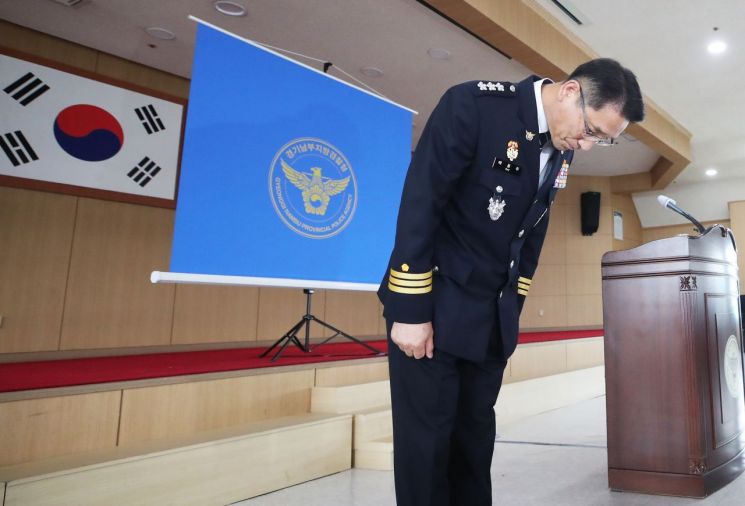
[Asia Economy Reporters Byungdon Yoo, Jeongyun Lee] The Lee Chun-jae serial murder case, which remained the worst long-unsolved violent crime in South Korea's history, has been revealed to have originated from the police's reckless and inadequate investigation. The police expressed their apologies for the numerous injustices that occurred, not only to the victims and their families but also to those who were wrongly accused as perpetrators.
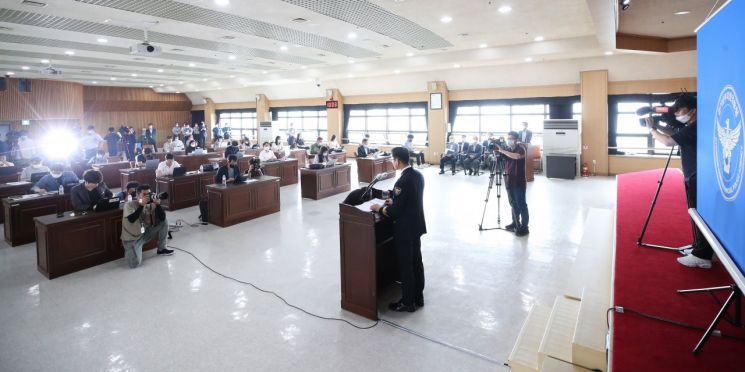
The Lee Chun-jae Serial Murder Case Investigation Headquarters of the Gyeonggi Nambu Provincial Police Agency announced the results of a year-long investigation on the morning of the 2nd. The investigation headquarters stated that all 14 murder cases and 9 rape cases were committed by Lee Chun-jae and that they plan to transfer the case to the prosecution. Along with this, the police acknowledged that illegal acts were confirmed during the investigation process at the time of the incidents, and that there were problems with the police investigation, such as failing to prove the true culprit despite having Lee Chun-jae as a suspect.
On July 15 of last year, the police requested the National Forensic Service to analyze some evidence from the 9th case, and on August 9 of the same year, they were notified that Lee Chun-jae's DNA was detected while he was incarcerated. Accordingly, the Gyeonggi Nambu Police Agency formed an investigation headquarters consisting of 57 members, including the deputy chief of the 2nd division as the head, the cold case investigation team, the metropolitan investigation unit, the victim protection team, the testimony analysis team, the legal review team, and external experts, to continue a comprehensive investigation.
Illegal Acts by Police and Prosecutors Involved in the Investigation Confirmed
Baeyongju, Chief of the Gyeonggi Nambu Provincial Police Agency, who directly announced the investigation results that day, said, “We confirmed facts such as false confessions due to assault and harsh treatment during the investigation process, coercion to write false statements, and fabrication of false official documents by the investigators involved at the time.”
Accordingly, the police have booked eight individuals, including police officers and prosecutors involved in the investigation at the time, on charges such as abuse of authority and unlawful detention. However, since the statute of limitations has expired, the case was initially transferred with a 'no prosecution' opinion.
The elementary school student murder case is a similar situation. A resident who participated in the search testified that they found “both hands' bones bound with a jump rope,” which matched Lee Chun-jae's confession, but the police ignored this. Although two officers, including the then head of the detective division, who concealed part of the victim's remains, were booked on charges of concealment of a corpse and evidence tampering, the case is expected to be transferred with a 'no prosecution' opinion due to the expiration of the statute of limitations.
Insufficient Investigation Techniques and Scientific Technology... Reasons for Remaining Unsolved
Regrets about the investigation process were also confirmed. Due to the nature of the crimes, it was difficult to secure clues such as fingerprints or witnesses at the scene to identify the perpetrator, and there were clear limitations in the poor investigative environment and forensic technology at the time. The police's judgment to treat each case individually at the beginning and only form an investigation headquarters after the 4th case, recognizing the seriousness belatedly, remains a point of regret.
Even considering these points, the human rights violations and even inadequate police investigations conducted at the time are expected to be difficult to excuse. Illegal acts by police officers, such as unjust physical detention and coercion of confessions of suspects, were confirmed, and these issues were not addressed in procedures after the police investigation stage. As mentioned earlier, the failure to inform the families about the discovery of the missing victim's belongings was also pointed out as a problem.
Lee Chun-jae Investigated Three Times... Police Missed the True Culprit Right Before Their Eyes
The fact that Lee Chun-jae was excluded from the suspect list despite being investigated is also one of the reasons the police are blamed for the serial murders. The police investigated Lee Chun-jae three times. The first was after the 6th case on May 26, 1987. At that time, the police identified Lee Chun-jae as a suspect in another elementary school rape case that occurred in August 1986 but stopped the investigation due to lack of concrete evidence.
While investigating the 8th case that occurred on September 16, 1988, the police started a reinvestigation, citing the first investigation's insufficiency, and requested the National Forensic Service to analyze Lee Chun-jae's pubic hair. However, the police received the forensic result that the pubic hair found at the scene and Lee Chun-jae's pubic hair differed in blood type and morphological characteristics and could not proceed further. The pubic hair found at the scene was identified as blood type 'B,' which led to Lee Chun-jae, who was blood type 'O,' being excluded from the suspect list. The National Forensic Service had stated that “in the case of hair, blood group antigens exist in extremely small amounts, and the forensic techniques at the time could be influenced by differences in antigen secretion and hair characteristics.”
Regarding the elementary school student's disappearance case on July 7, 1989, the police also investigated Lee Chun-jae around January 1990 but excluded him from the suspect list because the suspect's shoe size (255mm) identified in the 6th case did not match Lee Chun-jae's shoe size (265mm).
Regarding this, a police official explained, “Although we investigated Lee Chun-jae at the time, we had difficulty finding evidence to prove his guilt and could not arrest him early. We deeply reflect on and apologize for the fact that many victims occurred due to the police's significant mistakes.”
© The Asia Business Daily(www.asiae.co.kr). All rights reserved.
![Clutching a Stolen Dior Bag, Saying "I Hate Being Poor but Real"... The Grotesque Con of a "Human Knockoff" [Slate]](https://cwcontent.asiae.co.kr/asiaresize/183/2026021902243444107_1771435474.jpg)
















