Announcement on the Introduction Status of Working Hour Reduction System for Over 300 Employees
Public Sector Part-Time Conversion Status to be Announced by the End of This Month
Work-Life Balance Job Incentives Supported for 1,156 Places (3,991 People)
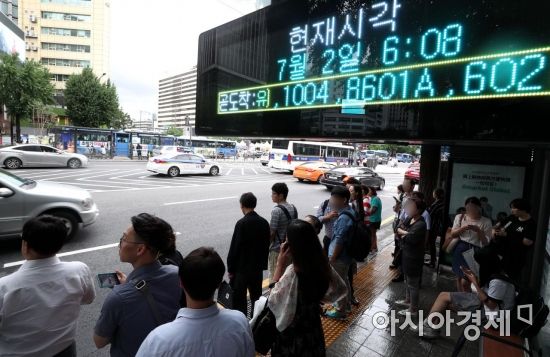 Since the implementation of the 52-hour workweek system, on the first working day, the 2nd, citizens are waiting for the bus home at a bus stop near Gwanghwamun Intersection in Seoul. Photo by Hyunmin Kim kimhyun81@
#. Mr. A, who works at a coffee franchise company, works only four days a week and spends one day attending vocational training and language studies. This is thanks to the government's 'Life Cycle-Based Working Hours Reduction System.' After consulting with the HR manager, Mr. A started reduced working hours in March. Having the opportunity for self-development has greatly increased his job satisfaction.
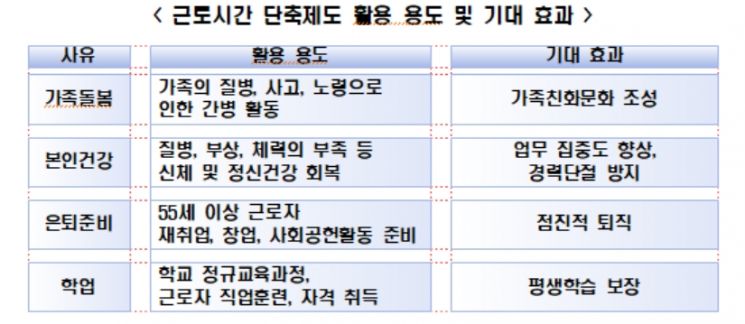
As in Mr. A's case, employees of private companies with 300 or more workers and public institutions can reduce their weekly working hours to 15?30 hours for reasons such as education, personal health, family care, and retirement preparation.
This follows the revision of the 'Act on Gender Equality in Employment and Work-Family Balance Support' last year, which led to the implementation of the life cycle-based working hours reduction system starting January this year.
Workers can apply for a reduction in working hours for up to three years (one year for education) if they have a valid reason, and employers must allow it unless there are circumstances causing significant disruption to business operations.
Even if a system is not in place, workers can apply for reduced working hours by law, but if a system is introduced, it can be utilized more conveniently.
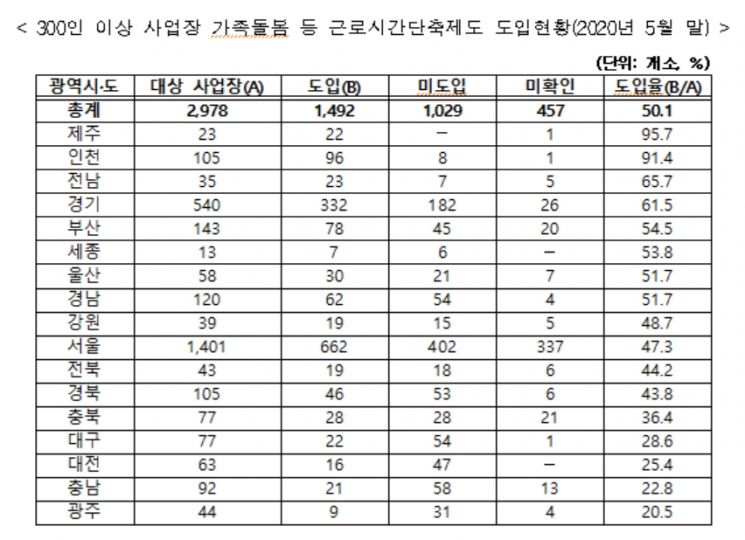
On the 2nd, the Ministry of Employment and Labor announced that, according to a survey of workplaces with 300 or more employees (excluding public institutions) subject to the law this year, 50.1% (1,492 out of 2,978 workplaces) have introduced a working hours reduction system in their employment rules or collective agreements.
In January this year, the working hours reduction system was introduced for public institutions and workplaces with 300 or more employees. From January next year, it will apply to workplaces with 30 to 300 or more employees, and from January 2022, it will apply to all workplaces with one or more employees.
An official from the Ministry of Employment and Labor stated, "We plan to closely monitor the establishment of the working hours reduction system to promote not only work-life balance but also the spread of quality part-time jobs, and to devise incentives for system adoption."
Companies utilizing reduced working hours can receive support through the Work-Life Balance Job Incentive System, including indirect labor costs, wage reduction compensation, and support for hiring replacement personnel. As of the end of May, 1,156 workplaces (3,991 people) have received the Work-Life Balance Job Incentive.
The Ministry of Employment and Labor plans to announce the performance of part-time conversion to encourage a leading role of the public sector in work-life balance.
Based on the second quarter of this year, the utilization performance of work-life balance systems such as part-time conversion will be announced at the end of this month for central government agencies, local governments, public institutions, and local public enterprises.
More detailed information about the life cycle-based working hours reduction system and the Work-Life Balance Job Incentive can be found on the Work-Life Balance website (www.worklife.kr).
© The Asia Business Daily(www.asiae.co.kr). All rights reserved.
![Clutching a Stolen Dior Bag, Saying "I Hate Being Poor but Real"... The Grotesque Con of a "Human Knockoff" [Slate]](https://cwcontent.asiae.co.kr/asiaresize/183/2026021902243444107_1771435474.jpg)
















