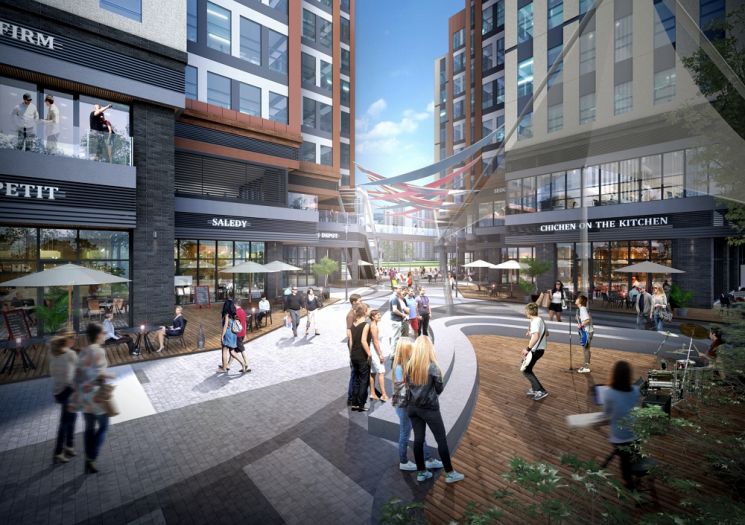
On June 17, the Ministry of Land, Infrastructure and Transport announced its 21st real estate policy. This includes designating the entire metropolitan area as a regulated area, adding new speculative and speculative overheating zones, and sequentially applying a price ceiling system on pre-sale prices starting in August. Restrictions on resale upon ownership transfer, mandatory residence requirements, and loan limitations will also be strengthened.
Following the announcement of this policy, confusion arose due to the broad comprehensive measures, and concerns for actual homebuyers have been pouring in. The key points of the June 17 housing market stabilization measures are ▲additional designation of regulated areas and speculative overheating zones ▲two-year qualification and actual residence requirements for reconstruction association members ▲strengthening of comprehensive real estate tax on corporate-owned housing, among others.
In particular, to block the so-called ‘gap investment’ using jeonse (long-term lease deposits), which has been cited as a cause of rising house prices, all regulated areas now require actual residence within six months of purchasing a home with a mortgage loan, regardless of the housing price. This is considered a stronger measure compared to previous policies focusing mainly on loans and taxes.
However, concerns have grown since the policy announcement. Although the goal is to eradicate gap investment, which is seen as a major cause of rising house prices, there are clearly cases where actual residence is difficult due to personal reasons such as work or health. Moreover, no matter how much the government tries to curb housing prices, there is a significant risk of infringing on freedom of residence and individual property rights.
In the June 17 measures, four areas including Jamsil in Seoul?Samsung, Daechi, and Cheongdam?were designated as land transaction permission zones, and most cities in the metropolitan area were designated as speculative overheating zones or regulated areas. However, since Gimpo and Paju were excluded from this policy, Gimpo has been nicknamed ‘Geumpo,’ and real estate prices in Paju have surged significantly, coining a new term ‘Pajujise’ instead of ‘Pajukjise’ (unstoppable momentum).
For example, in Unyang-dong, Gimpo-si, the ‘Hangang New Town Lotte Castle’ with an exclusive area of 84㎡ was priced in the early 400 million KRW range earlier this month but now carries a premium of over 50 million KRW. In Geolpo-dong, the ‘Ostar Paragon 1st Complex’ with an exclusive area of 84㎡ saw house prices rise by more than 30 million KRW within a week. The ‘Hoban Verdiem 3rd Phase’ 71㎡ in Gurae-dong, Gimpo Hangang New Town, also showed an increase of 64.82 million KRW, proving that the real estate market in Gimpo is active.
In this market atmosphere, products not affected by housing market regulations are attracting attention. The ‘D1 City Signature Knowledge Industry Center’ supplied in Gurae-dong, Gimpo Hangang New Town, which was excluded from this policy, is also drawing significant interest. Unlike the housing market, which continues to face regulations, knowledge industry centers can enjoy various benefits supported by the government.
Knowledge industry centers allow up to 80% low-interest loans, unlike apartments, officetels, and commercial buildings. When moving from the metropolitan area’s overconcentration control zone to a growth management zone like Hangang New Town where D1 City Signature is located, benefits include 100% acquisition tax exemption, 100% corporate tax exemption for 4 years, and 50% exemption for the following 2 years. Additionally, according to government policy support funds, companies can receive up to 7 billion KRW per company in funding support such as small and medium enterprise development funds and startup support funds.
‘D1 City Signature’ is the largest knowledge industry center in Hangang New Town, including the first phase project ‘D1 City.’ It is located at 350 Gimpo Gold Line Yangchon Station (D1 City Station) and consists of 613 knowledge industry center units, 97 neighborhood living facilities, and 12 warehouses across three basement floors to ten above-ground floors. It is the only central commercial district in Hangang New Town, located a 4-minute walk away, and offers the first ‘concierge service’ in a knowledge industry center, creating an ideal environment for businesses.
Reflecting recent changes in corporate trends, it provides various specialized office facilities such as meeting rooms, healing rooms (including sleeping facilities), and powder rooms (including shower facilities). It also features various rest areas and an outdoor performance hall to enhance work efficiency, rest, and culture for resident workers.
Moreover, the commercial facilities are planned with a systematic MD composition to strengthen foot traffic attraction and customer gathering, including terrace specialization, outdoor rest facilities, separate commercial buildings, and floor fountain design. With a focus on beauty, medical, business support for residents, and food and beverage specialization, it heralds the birth of Hangang New Town’s first new-concept one-stop cultural complex space integrating shopping, leisure, and culture.
The promotional center is located at 310, Building B, 158, Gimpo Hangang 9-ro 75beon-gil, Gimpo-si, Gyeonggi-do. For related information and inquiries, please contact the main phone number.
© The Asia Business Daily(www.asiae.co.kr). All rights reserved.
![Clutching a Stolen Dior Bag, Saying "I Hate Being Poor but Real"... The Grotesque Con of a "Human Knockoff" [Slate]](https://cwcontent.asiae.co.kr/asiaresize/183/2026021902243444107_1771435474.jpg)















