[Asia Economy Reporter Junho Hwang] A deep learning algorithm that recommends gene scissors used for gene editing has been developed. It can identify variants that recognize specific target sequences for correction and predict editing efficiency. This is expected to open a new chapter in gene recombination and the treatment of various genetic diseases.
Hyungbeom Kim, a research fellow at the Institute for Basic Science (IBS) Nano Medicine Research Division and a professor in the Department of Pharmacology at Yonsei University College of Medicine, announced on the 25th that his research team developed a deep learning-based system called 'DeepSpCas9variants' that compares and analyzes the efficiency of 13 types of gene scissor variants and selects the optimal editing tool according to the target sequence.
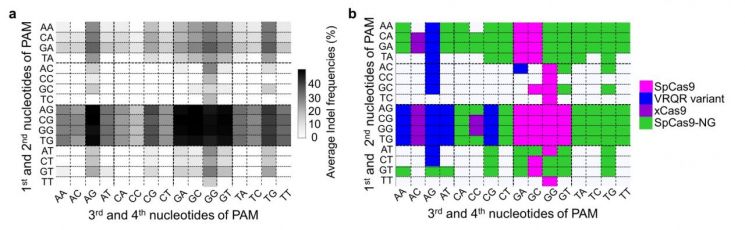
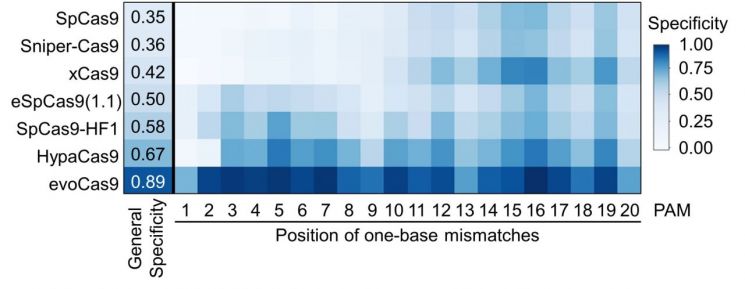
First, the research team measured the gene editing efficiency of nuclease variants within gene scissors under identical environmental conditions. By analyzing the editing efficiency of a total of eight variants, they concluded that four variants are suitable for editing human embryonic kidney cells. Among them, SpCas9-NG nuclease, evaluated as the most versatile, was found to have more targetable sites compared to other variants. Subsequently, among six variants with enhanced accuracy, the variant with the least off-target effects was also identified. evoCas9 showed an accuracy of 0.89, the highest rating. In contrast, SpCas9's accuracy was 0.35.
This study is significant in that it maximized the efficiency of CRISPR gene scissors (CRISPR-Cas9). This technology edits specific points in genes and consists of guide RNA containing the specific base sequence information of the target DNA and a nuclease that cuts the base sequence. SpCas9, derived from Streptococcus pyogenes, a bacterium frequently invading the human body, is the most widely used nuclease.
SpCas9 is highly efficient but frequently causes off-target cuts outside the intended target. To address this off-target issue, variants with improved accuracy have been developed. Alongside this, several PAM variants have been developed to enhance the versatility of gene scissors. The PAM sequence acts as a kind of signpost that helps gene scissors recognize the target DNA to be cut.
 Hyungbeom Kim, Research Fellow at IBS Nanomedicine Research Division (Corresponding Author)
Based on their research results, the team developed a deep learning-based algorithm that recommends the optimal gene scissors. Using this algorithm, one can identify variants that recognize specific target sequences for correction and also determine the editing efficiency.
Research fellow Hyungbeom Kim said, "This study systematically analyzed differences among various gene scissor variants that had not been previously revealed, providing guidelines for selecting precise gene editing tools. It will be possible to treat genetic diseases under optimal conditions using the most efficient tools while minimizing side effects such as mutations caused by off-target effects."
© The Asia Business Daily(www.asiae.co.kr). All rights reserved.
![Clutching a Stolen Dior Bag, Saying "I Hate Being Poor but Real"... The Grotesque Con of a "Human Knockoff" [Slate]](https://cwcontent.asiae.co.kr/asiaresize/183/2026021902243444107_1771435474.jpg)
















