[Asia Economy Reporter Kim Heung-soon] A mid- to long-term cultural cooperation plan to expand cultural and human exchanges with northern regions encompassing Northeast Asia, Central Asia, and Europe is being promoted.
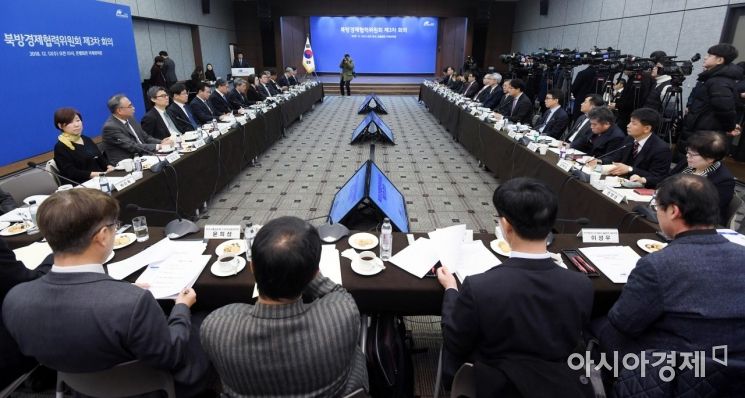
The Ministry of Culture, Sports and Tourism announced on the afternoon of the 23rd, through the 8th plenary meeting of the Presidential Committee on Northern Economic Cooperation, that it has prepared the "New Northern Culture and Human Exchange Expansion Plan."
To expand exchanges with northern region countries, the Ministry established four major strategies: ▲ enhancing national image ▲ driving growth of related industries ▲ strategic and systematic mutual exchanges ▲ fostering a cultural community. To this end, nine key tasks will be pursued.
To enhance the national image, online and non-face-to-face promotions will be activated, and the spread of New Hallyu culture will be promoted. Utilizing the achievements and best practices of K-quarantine against COVID-19, the advanced Korea image will be promoted, and virtual Korean travel-related content will be used to increase the appeal of traveling to Korea. The scope of Hallyu will also be expanded from the existing K-pop, dramas, and games to encompass Korean culture in general, including culture, arts, and sports.
To foster growth in related industries, support will be strengthened for content export companies at each stage of market entry?preparation, entry, and maturity?and consumer goods marketing linked to Hallyu content will be supported.
For strategic and systematic mutual exchanges, differentiated mid- to long-term cultural cooperation plans will be prepared by regional groups. The northern region will be divided into Northeast Asia (China’s three northeastern provinces and Mongolia), Central Asia (Uzbekistan, Kazakhstan, Turkmenistan, Kyrgyzstan, Tajikistan), and Europe (Russia, Belarus, Ukraine, Moldova, Azerbaijan, Georgia, Armenia), with major cooperation plans tailored for each country.
In Northeast Asia, considering the hinterland markets such as Russia and China and the dynamic population structure (average age 29.8 years), economic cooperation will be strategically expanded focusing on China’s northeastern region and Russia’s Primorsky Krai.
In Central Asia, cooperation will focus on healthcare, infrastructure development, expanded trade in agriculture, and support for corporate entry.
In Europe, leveraging the abundant domestic market, accessibility to Europe, and innovation potential, support will be strengthened in technology cooperation, startup and venture support, industrial technology and information and communication technology (ICT) cooperation, and healthcare, while promoting entry into agricultural sectors such as smart farms.
To foster a cultural community, multilateral organization cooperation and activation of cultural official development assistance (ODA) will be pursued. In collaboration with UNESCO, support will be provided for the development of the film industry in four Central Asian countries, and human capacity will be strengthened through training programs inviting government officials and experts in culture, tourism, and sports. Additionally, a foundation for mutual growth will be established through consulting on the construction and operation of related facilities.
The Northern Committee plans to hold the "2020 Northern Forum," a major event in the second half of this year, both online and offline, with participation from senior officials of northern countries to discuss new trade orders in the post-COVID-19 era, Eurasian financial cooperation issues, and cooperation on major projects with Central Asian countries.
Furthermore, it plans to proceed with signing a Memorandum of Understanding (MOU) and joint research on the establishment and support of the Korea-China International Cooperation Pilot Zone in Changchun, Jilin Province, China, and to continuously assist Korean companies’ northern expansion through support for the establishment of a "Korean-style industrial complex" in Russia’s Primorsky Krai.
© The Asia Business Daily(www.asiae.co.kr). All rights reserved.
![Clutching a Stolen Dior Bag, Saying "I Hate Being Poor but Real"... The Grotesque Con of a "Human Knockoff" [Slate]](https://cwcontent.asiae.co.kr/asiaresize/183/2026021902243444107_1771435474.jpg)















