Surge in Production of Bio and Pharmaceutical Products
Continuous Workforce Expansion in Semiconductor and Food Industries
[Asia Economy Singapore Seo Jumi, Guest Reporter] Signals of economic rebound are being detected in Singapore, which implemented strict lockdown policies centered on migrant workers due to the spread of the novel coronavirus infection. Some industries such as bio and pharmaceuticals have shown explosive growth in production during the COVID-19 crisis.
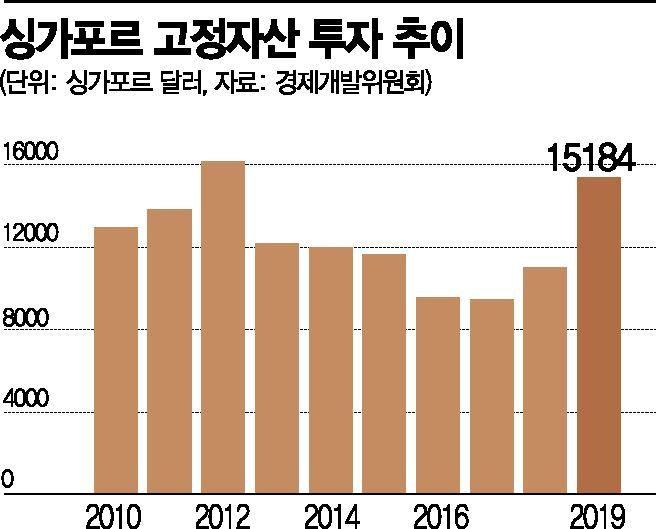
According to local media including The Straits Times on the 16th, the Singapore Economic Development Board (EDB) announced that it attracted investments worth 13 billion Singapore dollars (approximately 11.17 trillion Korean won) from January to April this year. This amount exceeds the initially expected annual investment of 10 billion Singapore dollars.
Singapore's economic reopening can be confirmed by rising employment. In particular, the US semiconductor company Micron is reported to plan to hire an additional 1,500 employees in Singapore alone in preparation for the surge in demand due to the global 5G network rollout. E-commerce platform companies such as Lazada and Shopee are also expected to expand their workforce in data analysis, business, and product development due to the special demand following the COVID-19 crisis. Lazada Singapore, a subsidiary of China's Alibaba, has seen a fourfold increase in grocery sales since April and recently hired more than 500 employees to handle the flood of orders. Additionally, due to the sharp increase in demand for COVID-19 diagnostic kits, multinational medical equipment company Thermo Fisher Scientific is increasing investment and strengthening hiring in Singapore for manufacturing technicians, field service engineers, quality assurance and control, and procurement.
However, concerns have arisen that large-scale construction projects will be delayed one after another due to a shortage of on-site workers in the construction sector. The Singapore-Malaysia rail (RTS) project, which was scheduled to start construction at the end of April, has also been postponed to the end of this year.
The EDB stated that although the negative impact of the COVID-19 crisis on the economy is expected to continue for some time, it attaches significance to the fact that companies are making long-term plans and participating in new projects. The EDB said these investments reflect continued confidence in the Singapore economy. Singapore lifted its strict lockdown after two months and began implementing phased easing policies from the 2nd of this month. While the full resumption of production has been allowed for most manufacturers, rules similar to those during the lockdown remain in place for work and personnel capable of telecommuting.
Meanwhile, regarding opinions that funds from politically unstable Hong Kong are moving to Singapore, the Monetary Authority of Singapore stated, "The total foreign currency non-bank deposits in the banking system stood at 781 billion Singapore dollars as of the end of April, an increase of 20% compared to a year ago."
© The Asia Business Daily(www.asiae.co.kr). All rights reserved.
![Clutching a Stolen Dior Bag, Saying "I Hate Being Poor but Real"... The Grotesque Con of a "Human Knockoff" [Slate]](https://cwcontent.asiae.co.kr/asiaresize/183/2026021902243444107_1771435474.jpg)















