Settling in the Market Without Seeking Change
Concerns Over Dilution of 'Locality' Value Immediately After M&A
Fears IPTV May Follow the Same Path

[Asia Economy Reporter Koo Chae-eun] With the emergence of Netflix and YouTube, cable TV is entering a decline. Since its first broadcast in 1995, it had been spotlighted as a multichannel platform supplying popular American dramas like 'CSI' and 'Sex and the City.' However, it failed to keep up with the era's shift toward mobile and subscription-based models, becoming a fully old media and is effectively considered 'dead' in the platform market.
According to the industry on the 13th, all of the big five cable TV companies are choosing acquisition by telecommunications companies as an exit strategy for survival. Following the sale of the market share leaders CJ HelloVision and second-place T-broad to LG Uplus and SK Telecom respectively, the third to fifth ranked companies have also begun sales processes.
Settling for the No.1 Paid Broadcasting Spot... Failure to Build Self-Sustainability Leads to Market Erosion

The reasons for cable TV's decline are cited as 'price competitiveness' and 'complacency in the market.' Until the mid to late 2000s, when telecom-based IPTV expanded its reach through free IPTV marketing by bundling devices and wired internet, cable TV complacently held onto its position as the No.1 paid broadcasting operator without any countermeasures. In particular, it failed to pursue content-level competitiveness in the market share battle with competing IPTV platforms and instead only demanded stricter regulations under the pretext of regional value, which is also seen as a cause of its obsolescence. An industry insider said, "Rather than aiming for equal competition with IPTV from the start, cable TV only sought 'banning bundled products' regulations or emphasized the public interest rationale of regional channels to buy time."
There are also concerns that the regional exclusivity issue, where the country was divided into 78 zones with exclusive rights, may collapse. It is uncertain whether the telecom capital acquiring cable TV through M&A will maintain regional broadcasting channels. Maintaining regional channels requires an annual investment of 40 to 50 billion KRW. Professor Choi Sung-jin of Seoul National University of Science and Technology said, "It will not be easy to preserve the value of cable TV's regionalism after acquisition," adding, "There are inevitable temporal and environmental factors. While localism expanded in forms like the Gyeongsang and Jeolla regions may be possible, maintaining the current zonal structure will be difficult." An industry insider predicted, "To prevent duplicate investments, the absorption of cable subscribers into IPTV can happen anytime. After M&A, cable TV's lifespan as a platform will rapidly shorten."
'Expanding Reach Through Price Competitiveness via Bundling, IPTV May Follow the Same Path
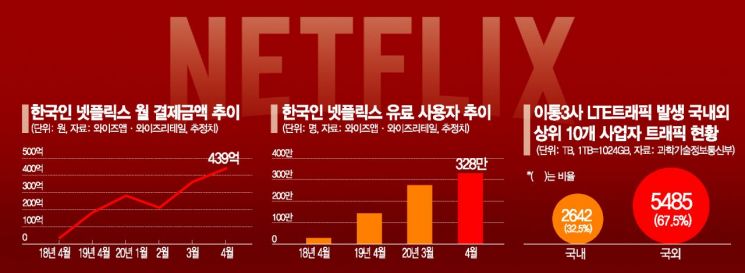
Experts warn that these changes in the platform environment could also apply to IPTV, which has absorbed cable TV. The user base that does not subscribe to IPTV but consumes all videos through YouTube and Netflix is expanding. An expert from the Democratic Party, Ahn Jung-sang, said, "IPTV's victory over cable TV was solely due to price competitiveness through bundled product sales," adding, "Since it did not gain superiority through content, it can easily lose market share to new media." In particular, Ahn pointed out, "With the current structure where profitability is based only on home shopping transmission fees or channel usage fees, IPTV could also follow cable TV's path."
Professor Choi Sung-jin of Seoul National University of Science and Technology said, "For a considerable period, IPTV and OTT will likely be complements rather than substitutes," explaining, "Since OTT's main device is mobile phones, watching content around 50 minutes per episode can be challenging, so there will be customer groups consuming content via fixed TV (IPTV) and mobile TV (phone-based OTT)."
© The Asia Business Daily(www.asiae.co.kr). All rights reserved.
![Clutching a Stolen Dior Bag, Saying "I Hate Being Poor but Real"... The Grotesque Con of a "Human Knockoff" [Slate]](https://cwcontent.asiae.co.kr/asiaresize/183/2026021902243444107_1771435474.jpg)


















