Legislation to Ban Parents' Corporal Punishment of Children Proposed
Reviewing Removal of Parents' 'Disciplinary Rights' from Civil Law
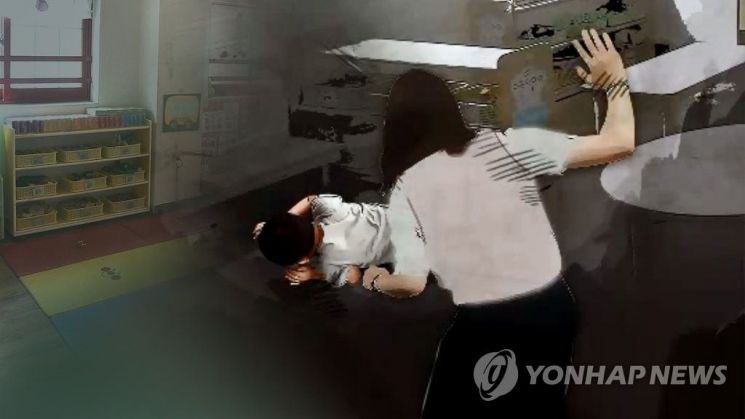
[Asia Economy Reporter Han Seung-gon] To fundamentally prevent child abuse arising from parental discipline, the Ministry of Justice is pushing for a clear legal provision banning corporal punishment under the Civil Act. However, some parents are opposing this, arguing that it is excessive for the state to restrict education within the home, sparking controversy. Some believe that punishment is already possible under the Child Abuse Punishment Act, while others worry that children might sue their parents if corporal punishment is banned.
The Ministry of Justice announced on the 10th that it plans to prepare a revision of the Civil Act to delete the parental disciplinary authority clause (Article 915 of the Civil Act) and explicitly prohibit corporal punishment.
This follows the recommendation made in April by the "Legislative Improvement Committee for an Inclusive Family Culture," under the Ministry of Justice, to delete the disciplinary authority clause in the Civil Act and replace it with the concept of discipline.
Article 915 of the Civil Act stipulates that parents may discipline their children when necessary for protection or education. However, there have been ongoing concerns that this provision could be misinterpreted as permitting corporal punishment by parents.
The Ministry of Justice is accepting the committee's recommendation and is currently promoting the revision of the Civil Act. On the 12th, it will hold a meeting with related organizations to gather opinions from child rights experts and youth representatives. Afterwards, it will prepare a detailed draft revision based on feedback from professors, lawyers, and other experts.
Based on this, the Ministry of Justice plans to finalize its proposal by July this year and submit the partial amendment bill of the Civil Act to the National Assembly as quickly as possible after going through procedures such as legislative notification in August.
Child abuse is widespread in our society. According to data from the Ministry of Health and Welfare, reports of child abuse increased by 105.2%, from 17,791 cases in 2014 to 36,417 cases in 2018.
In the past five years, 132 children have died due to abuse. Moreover, 78.6% of child abuse cases in the past five years were perpetrated by parents. This is why there is a push to completely ban corporal punishment by changing the law.
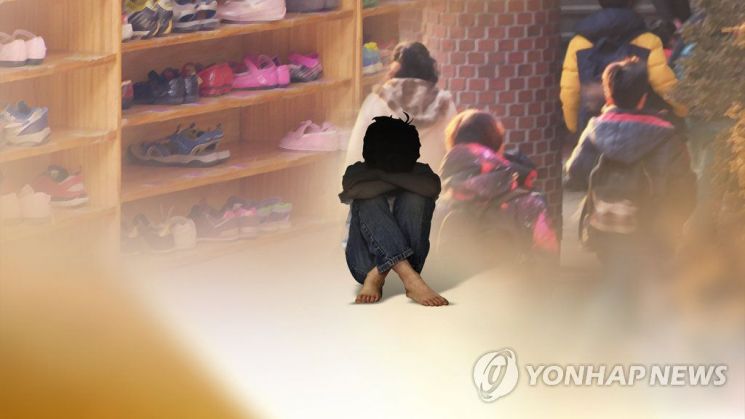
However, there are also concerns that the state might excessively interfere with parental education. A man in his early 40s, identified as A, who has two elementary school children aged 9 and 10, said, "Ultimately, it seems like part of home education is being restricted by law. I am also worried that children might sue their parents based on the law." He added, "I hope the government listens to various opinions before proceeding." He further noted, "Every law inevitably has pros and cons, and the drawbacks of this law should be carefully considered."
Another parent in their 50s said, "In the recent horrific cases, it was not corporal punishment but cruel acts," but added, "If discipline close to education is also considered corporal punishment, then education might become impossible. Punishment is already possible under the Child Abuse Act." They emphasized, "Because this is a sensitive law, we need to listen to many people and create regulations that fit the situation."
A parent in their 40s said, "I do not support corporal punishment, but parents feel very uncomfortable when they do it," and added, "If corporal punishment occurring during education is completely banned, I am somewhat worried." They also said, "I hope the opinions of the education sector are thoroughly considered."
A child rights expert emphasized that corporal punishment under the guise of education is violence. Nasangmin, a manager at Save the Children, stated, "There is no environment or condition where a child 'deserves to be hit,' and this principle should not be exempted for families or parents."
Regarding discipline as part of home education, he pointed out, "Parents say they punished children to discipline them, but for a long time, many children have lived in fear of abuse under the pretext of discipline."
He continued, "Children are not the property of their parents but rights holders, and parents have the responsibility and duty to support children to grow up healthy and safely. We must recognize and change the entrenched social norms and systems that tolerate corporal punishment and condone violence against children."
© The Asia Business Daily(www.asiae.co.kr). All rights reserved.
![Clutching a Stolen Dior Bag, Saying "I Hate Being Poor but Real"... The Grotesque Con of a "Human Knockoff" [Slate]](https://cwcontent.asiae.co.kr/asiaresize/183/2026021902243444107_1771435474.jpg)
















