President Moon's 'Korean Peninsula Initiative' Faces Dark Clouds, Risk of Further Deterioration... Inter-Korean Relations Cool Down Three Months After Leaders' Letter Exchange
[Asia Economy reporters Ryu Jeong-min, Son Seon-hee, Kim Dong-pyo] The vision of a "Korean Peninsula without the threat of war," regarded as an achievement of President Moon Jae-in, has been overshadowed. North Korea's announcement on the 9th to block and sever all inter-Korean communication channels symbolizes the possibility that inter-Korean relations may revert to the 'confrontational structure' of the Park Geun-hye administration era.
In particular, the content revealed by the North through the Korean Central News Agency aligns with the plan to block dialogue channels with the South while leaving room for negotiation with the United States, shifting the focus to a 'Tongmi Bongnam (通美封南)' strategy. At noon on that day, the North announced the blocking and dismantling of the inter-Korean government communication line, the East and West Sea military communication lines between the two Koreas, the inter-Korean communication test line, and the direct communication line between the Blue House and the headquarters building of the Workers' Party of Korea Central Committee.
The Blue House has sought solutions with a cautious attitude, stating that "dialogue channels remain open" whenever tensions in inter-Korean relations rise, but now such logic no longer applies. The Kaesong liaison office, whose closure was declared by the North, was a product of the 2018 summit between President Moon and North Korean State Affairs Commission Chairman Kim Jong-un, and its achievements may effectively be nullified.
The Korean Central News Agency reported, "We have reached the conclusion that there is no longer any reason to sit face-to-face or discuss issues with the South Korean authorities," calling it "the first step in completely sealing off all contact spaces with the South Koreans and eliminating unnecessary elements."
This means carrying out one by one the implementation plans revealed in a statement by Kim Yo-jong, the first deputy director of the Workers' Party, criticizing the leaflet distribution by defectors. Following Kim Yo-jong's statement, North Korea immediately took 'action plans,' making it highly likely that measures such as the closure of the inter-Korean liaison office and the complete dismantling of the Kaesong Industrial Complex will follow.
The news agency particularly emphasized the need to "thoroughly convert inter-Korean projects into anti-South projects." This is essentially equivalent to defining South Korea not as a dialogue partner but as an 'enemy.' Therefore, if North Korea cancels the September 19 military agreement, which has served as a safety buffer to prevent military clashes in the inter-Korean border area, as part of follow-up measures, the possibility of military provocations against the South will inevitably increase.
The military agreement includes a complete halt to artillery firing exercises and outdoor maneuvers at the regimental level or higher within 5 km of the Military Demarcation Line (MDL), designation of certain areas around the Northern Limit Line (NLL) in the East and West Seas as buffer zones, and the establishment of no-fly zones over the MDL.
The figure leading North Korea's recent intense anti-South criticism is Kim Yo-jong. Chairman Kim Jong-un has taken a step back here. Cha Doo-hyun, senior research fellow at the Asan Institute for Policy Studies, said, "Kim Yo-jong is taking the lead as the general manager of inter-Korean affairs, while Chairman Kim will symbolically handle direct dealings with the United States," adding, "North Korea views inter-Korean relations as secondary to North Korea-U.S. relations and has entrusted this to his younger sister."
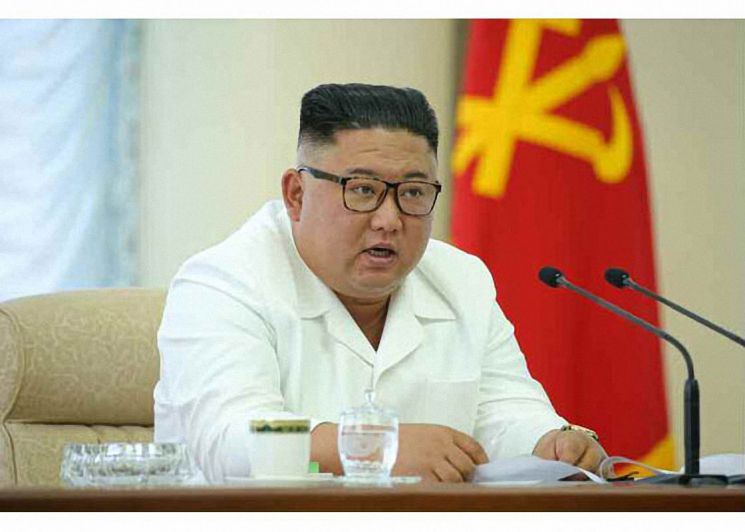
In fact, North Korea has been issuing high-intensity anti-South messages daily but has made no mention of the United States. Research fellow Cha diagnosed, "North Korea is leaving room for direct dealings with the U.S.," and "Given the uncertainty surrounding the U.S. presidential election schedule and the next U.S. administration, North Korea does not need to provoke the U.S. first through criticism." It is expected that the North will manage the situation at the current level and establish the direction of U.S. relations accordingly.
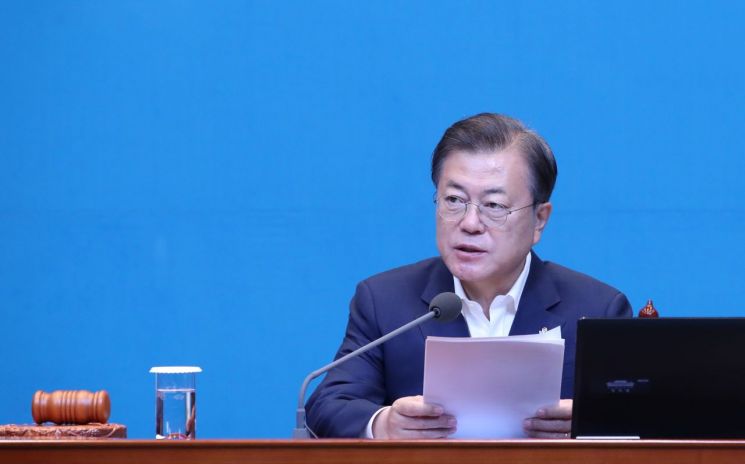
Since his inauguration in May 2017, President Moon has devoted the most effort to improving inter-Korean relations, especially realizing a Korean Peninsula free from the threat of war. Historic mega-events followed, such as President Moon's visit to Pyongyang and the meeting between U.S. President Donald Trump and Chairman Kim at Panmunjom, raising expectations for an era of peace on the Korean Peninsula.
Earlier this year, President Moon expressed his willingness for Chairman Kim's visit to Seoul and pledged to take a leading role in improving inter-Korean relations. This plan aims to change the situation where North Korea-U.S. relations have not progressed due to variables in the international situation, such as the U.S. presidential election.
In his New Year's address earlier this year, President Moon stated, "To uphold the three principles of a war-free, mutually assured security, and joint prosperity Korean Peninsula peace, international solutions are necessary, but there are also things that can be done through cooperation between the two Koreas."
In this regard, the two Korean leaders exchanged letters in March during the early stages of the COVID-19 outbreak, conveying their sympathies. However, the North's stance changed within three months. Without a dramatic breakthrough, inter-Korean relations are likely to rapidly cool, and concerns about armed conflict will inevitably increase.
© The Asia Business Daily(www.asiae.co.kr). All rights reserved.


















