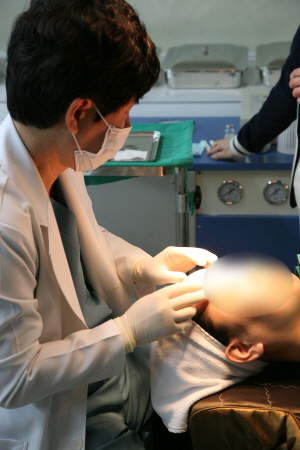
[Asia Economy Reporter Kim Heung-soon] A (36), a Chinese woman in her 30s living in Guangzhou, China, recently received remote consultations for skin and weight management in connection with a hospital in Gangnam-gu, Seoul. A had previously visited Korea twice for plastic surgery and skin care procedures and was satisfied with the results, planning to visit regularly. However, due to restrictions on entry and exit caused by the spread of COVID-19, she was introduced to remote medical consultations through a specialized company guiding Korean medical tourism services and experienced it.
When A asks questions about skin and body management to domestic medical staff via video call, a medical tourism professional interpreter conveys them to the doctor, and the medical staff provides appropriate consultations. The cost of remote medical consultations is paid by customers like A. In a situation where medical tourism, which generates revenue by attracting foreign patients or consultees, has become impossible due to COVID-19, remote medical consultations serve as a kind of breakthrough, providing services targeting major clients such as Chinese people.
◆ Medical tourism, which attracted 450,000 visitors annually, comes to a halt= Medical tourism is an industry that generates revenue by attracting foreign patients who require health checkups, hospitalization, or outpatient treatment to domestic hospitals. In Korea, after the revision of the Medical Service Act in May 2009 and January 2010, legal grounds were established for hospitals to attract foreign patients and for medical corporations to provide lodging as an ancillary business, leading to the implementation of this industry. Patients from countries with insufficient medical facilities or conditions can respond to diseases through examinations and treatments in countries with relatively skilled medical staff and superior infrastructure, and the countries attracting them can expect foreign currency earnings through medical services. Since not only patients but also their guardians visit, ancillary revenues increase as they use nearby accommodations and restaurants.
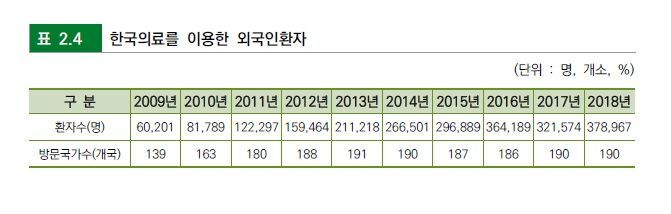
Until before the COVID-19 outbreak, Korea’s medical tourism industry grew rapidly at an average annual rate of about 23%. According to the status of foreign patient attraction compiled by the Ministry of Health and Welfare and the Korea Tourism Organization, the number of foreigners visiting Korean hospitals for hospitalization, outpatient care, and health checkups surged from 60,201 in 2009 to approximately 450,000 (estimated) last year. Total foreign patient medical revenue, which was 54.7 billion KRW in 2009, rose to 860.6 billion KRW in 2016, and the average medical expense per patient increased from 940,000 KRW in 2009 to 2.36 million KRW in 2016.
With strengthened quarantine measures such as mandatory two-week self-isolation for foreign entrants to prevent the spread of infectious diseases, this demand has completely stopped. According to the related industry, a dermatologist in Gangnam-gu who was dedicated to medical tourism said, "Sales in March this year decreased by more than 50% compared to the previous year, leading to measures such as layoffs and unpaid leave," adding, "With the prolonged COVID-19 situation, the management crisis is severe, and we are even considering temporary closure or business shutdown."
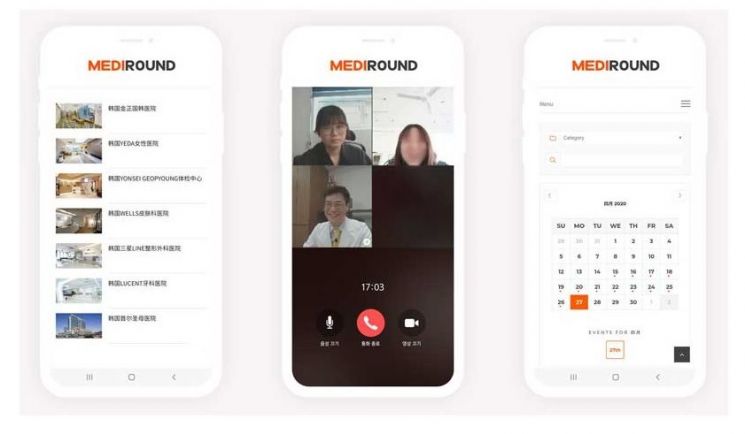 Medical tourism venture company Mediround provides mobile remote medical consultation service
 Photo by Mediround homepage capture
◆ Remote consultations toward the 'post-COVID-19' era= Mediround, a venture company that attracts foreign patients and provides medical tourism services in connection with domestic medical institutions, started remote medical consultation services targeting Chinese people in April. Initially planned for introduction by the end of this year, the timing was advanced due to the sharp decline in revenue from attracting foreign patients caused by the COVID-19 spread.
Operating a video consultation platform linked with 'WeChat,' a mobile messenger widely used by Chinese, Mediround guides Korean medical staff in fields desired by Chinese customers such as internal medicine, plastic surgery, and dermatology, and provides professional interpreters. Shin Young-jong, CEO of Mediround, said, "There is a daily demand for about 3 to 5 remote consultations."
According to the Korea Health Industry Development Institute, among the total 378,967 foreign patients who used medical tourism in Korea in 2018, Chinese accounted for 118,310 (31.2%), the largest proportion, with women making up 74.2%, and those in their 20s and 30s accounting for 59.6%. The main medical fields they sought were plastic surgery (21.4%), dermatology (17.8%), and integrated internal medicine (14.3%).
CEO Shin said, "Remote medical treatment and consultations are already common in China, so there is no resistance to consulting Korean doctors online," adding, "Although the number of remote medical consultations is still smaller compared to face-to-face treatment, we expect to secure potential customers considering the post-COVID-19 situation."
© The Asia Business Daily(www.asiae.co.kr). All rights reserved.
![Clutching a Stolen Dior Bag, Saying "I Hate Being Poor but Real"... The Grotesque Con of a "Human Knockoff" [Slate]](https://cwcontent.asiae.co.kr/asiaresize/183/2026021902243444107_1771435474.jpg)
















