[Monthly Defense Times Editor-in-Chief An Seung-beom] The Navy announced a mid- to long-term acquisition plan in 2019 to proceed with the construction of the large transport ship LPX-II (Korean aircraft carrier), which sparked various opinions inside and outside the military regarding the ship’s size, form, and carrier-based combat aircraft.
In particular, there were even discussions comparing whether to build it at a scale and hull similar to the 40,000-ton class LHD Wasp-class helicopter assault landing ship of the U.S. Navy or the Queen Elizabeth-class medium-sized aircraft carrier of the United Kingdom.
Specifically, the comparison was between the Wasp-class form equipped with a ramp door capable of launching air-cushioned landing craft, or the Queen Elizabeth-class which operates only carrier-based aircraft.
The construction and acquisition plan for the large transport ship LPX-II is included in the Ministry of National Defense’s mid-term plan for 2022?2026, with a schedule to commission the ship in 2033 after seven years of construction following basic and detailed design phases.
At the 2019 International Maritime Defense Industry Exhibition (MADEX 2019), Hyundai Heavy Industries unveiled a prospect rendering of the Queen Elizabeth-class form equipped with a ski-jump ramp, and a related British company shared their activities in Korea through interviews, allowing predictions about the future outlook of LPX-II.
The LPX-II, which can be called a Korean aircraft carrier, aims to procure not one but two ships to establish a 2+2 operational system together with two existing large transport ships.
According to known information, during the construction of LPX-II, the plan is to secure 15 to 20 F-35B vertical takeoff and landing stealth fighters, 2 search and rescue helicopters, and 26 large transport helicopters for maritime operations, concretizing a concept to airlift about 1,000 landing troops. Even if constructed in the traditional Essex-class form equipped with a ramp door, the acquisition of large transport helicopters is confirmed to proceed as scheduled.
Moreover, according to the mid-term defense plan, the Navy will establish an Air Command in 2022, and apart from fixed-wing maritime patrol aircraft, it is planned to equip large transport helicopters for maritime use as rotary-wing assets.
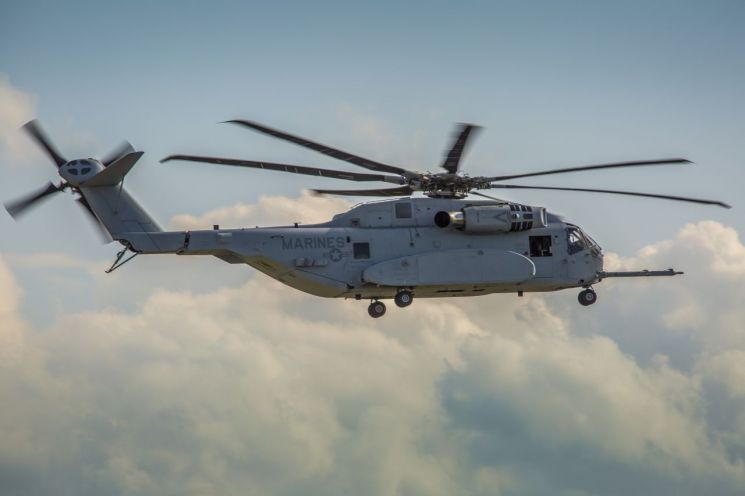
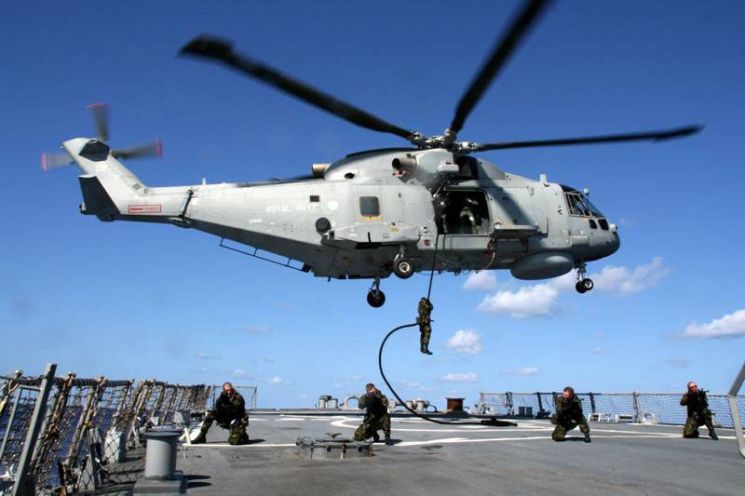
Currently, representative models of large maritime transport helicopters include the U.S. Lockheed Martin CH-53E and its expanded and upgraded version CH-53K, as well as the AW-101 jointly developed by the United Kingdom and Italy.
The CH-53E helicopter is an older model whose mass production has already been discontinued. Its successor, the CH-53K, has entered initial mass production, but its exorbitant price?comparable to that of the F-35 stealth fighter?makes it uncertain whether this model will be selected.
Another option is the MV-22 Osprey vertical takeoff and landing aircraft, but it is also known to have a high acquisition cost.
Meanwhile, the Army has finalized the direction for upgrading the performance of the large transport helicopter CH-47D Chinook and is awaiting the start of the project.
The upgrade to the new CH-47F Chinook specification will target only 17 of the existing aircraft, and major drivetrain components such as gearboxes extracted from these aircraft will be reused and applied to aircraft not undergoing the upgrade. The upgrade project will be carried out at a factory in Philadelphia, USA. Separately, a third project will proceed to newly purchase 12 CH-47F Chinooks and directly import an additional 10 for special operations transport.
© The Asia Business Daily(www.asiae.co.kr). All rights reserved.


















