No Response to Forced Mobilization Compensation Lawsuit, Public Notice Issued for Forced Asset Sale
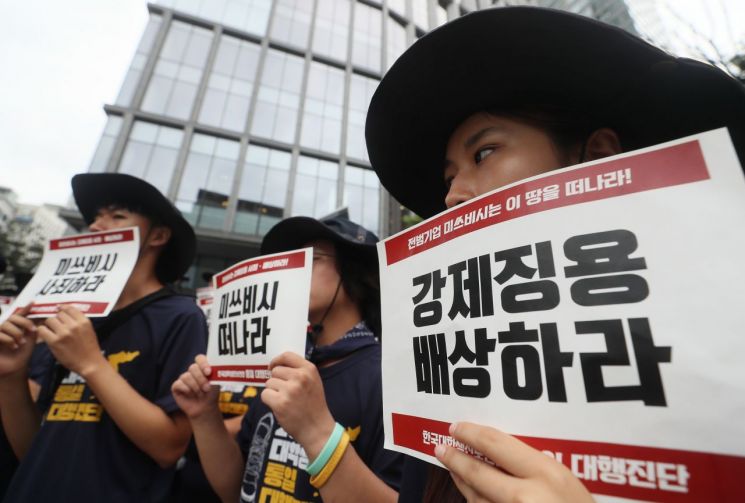
[Asia Economy Reporters Lim Cheol-young and Kim Hyung-min] As a South Korean court has decided to publicly notify for the compulsory sale (monetization) of domestic assets of Japanese companies responsible for forced labor during the Japanese colonial period, the already deteriorating Korea-Japan relations are plunging into deeper turmoil. The South Korean government, having previously resumed the World Trade Organization (WTO) dispute resolution process regarding Japan's export restrictions, has announced an active response, stating it will consider the termination of the Korea-Japan General Security of Military Information Agreement (GSOMIA) depending on the nature of discussions between the two countries.
According to the court on the 4th, the Pohang branch of the Daegu District Court issued a public notification order requiring Shinil Steel Corporation (currently Nippon Steel) to receive the decision on the attachment order of claims and other domestic delivery-related documents. This is the first time a public notification order has been issued concerning the asset sale procedures of a Japanese company.
Public notification is a system where, if the address of the opposing party in a lawsuit is unknown or if they refuse to accept documents and do not respond to the trial, the contents are posted on the court bulletin board or official gazette and are considered to have been delivered. According to the court's decision, the effect of delivery will take place on August 4. The court attempted to deliver the decision confirming the seizure of the perpetrator company's domestic assets to secure the compensation claims of forced labor victims, but the Japanese Ministry of Foreign Affairs, which received the overseas delivery request, returned the related documents without any explanation, prompting this measure.
This seizure case was filed by the plaintiffs after the Supreme Court's full bench ruling in October 2018 confirmed that Shinil Steel must compensate each forced labor victim 100 million KRW. Based on the compensation claims of five forced labor victims, 194,794 shares of PNR were seized in two rounds in January and March this year. The value of the seized shares is approximately 973 million KRW based on the face value of 5,000 KRW per share. A court official stated, "The seizure will take effect on August 4 due to the public notification, but a separate procedure is required to monetize the seized shares."
Lim Jae-sung, a lawyer at Law Firm Haemaru representing the forced labor victims against Nippon Steel, said in a phone interview that "the appraisal process for the seized shares is also underway" and added, "Since it has been one year and five months since the stock seizure decision, we hope the process proceeds swiftly." He also noted, "As the lawsuit has been prolonged, the accrued delay interest has significantly increased."
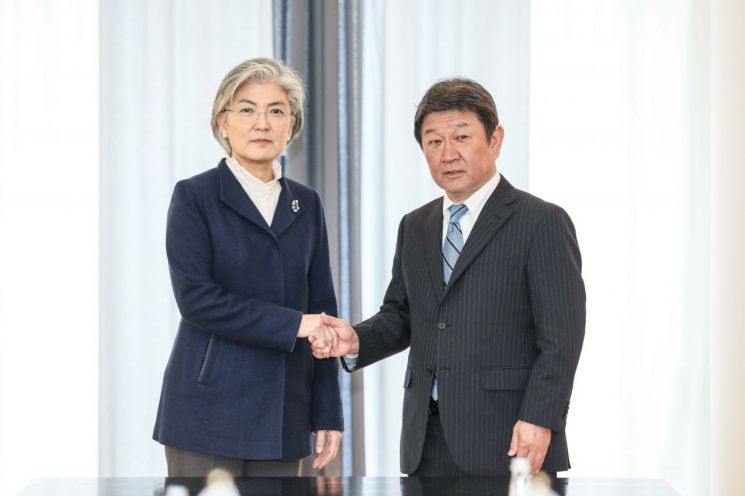
As expected, the Japanese government strongly protested. While Foreign Minister Kang Kyung-wha expressed strong regret over the maintenance of export restrictions the previous day, Japanese Foreign Minister Motegi Toshimitsu conveyed concerns about South Korea's resumption of the WTO complaint process and the seizure and monetization of Japanese companies' assets. Considering that the Japanese Ministry of Foreign Affairs has maintained that export restrictions and historical issues are separate, this reaction is unusual. In a phone call with Minister Kang, Motegi stated, "(The monetization of Japanese companies' assets in South Korea) would cause a serious situation and must be avoided to resolve the issue."
In response, the Ministry of Foreign Affairs stated that it respects the judiciary's decision and will seek a reasonable solution considering the rights of forced labor victims and Korea-Japan relations. A ministry official emphasized, "Compulsory execution is part of the judicial process following the Supreme Court ruling," and added, "The government will respect the judiciary's decision, realize victims' rights, and consider Korea-Japan relations while listening to diverse opinions from all sectors and will closely consult with the other side to find a resolution."
With the court's substantive decision on the issue that triggered the deterioration of Korea-Japan relations, diplomatic friction has become inevitable. The Japanese government is reportedly considering retaliatory measures such as seizing South Korean assets in Japan and raising tariffs on Korean products in response to the forced sale of Japanese companies' assets in South Korea.
© The Asia Business Daily(www.asiae.co.kr). All rights reserved.