[Monthly Defense Times Editor-in-Chief An Seung-beom] As the South Korean military has been aggressively pursuing performance upgrades and life extension projects for its main combat equipment introduced between the late 1980s and the 1990s, some parties involved have been comparing the cost-effectiveness of these projects with new equipment acquisition programs, resulting in delays in some cases.
The debate over whether it is more economical to upgrade the performance and extend the lifespan of existing equipment or to purchase new equipment has long existed, and due to the intertwined interests of various stakeholders, it remains a contentious issue without an easy conclusion.
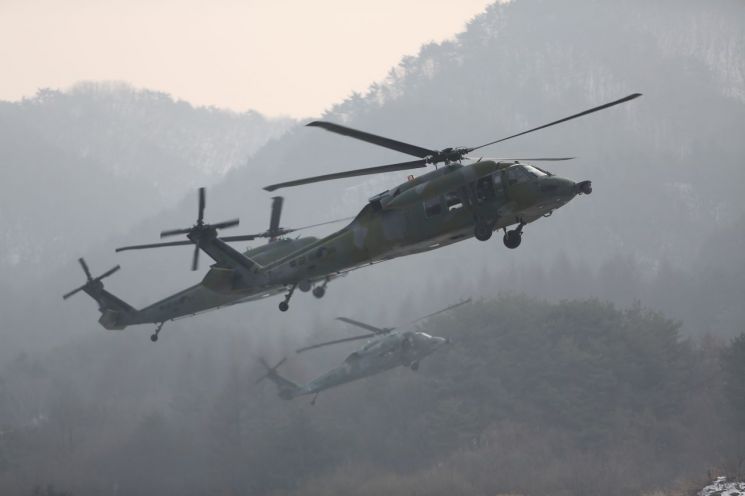
A representative performance upgrade target that the military authorities have yet to finalize is the UH-60P Black Hawk utility helicopter. The UH-60P Black Hawk, which was decided to be introduced through domestic licensed production in the late 1990s and completed final unit formation in 1999, has been procured in about 130 units. It has displaced the existing UH-1H Iroquois utility helicopter to the second line and has established itself as the main utility helicopter to this day. Of the approximately 130 units, the Army operates about 110, while the Navy and Air Force operate the remainder.
To replace the aging UH-1H utility helicopters, the South Korean military began to field the domestically developed KUH-1 Surion utility helicopter from May 2013. As of May 2020, the Surion is known to have about 120 units through three production batches, and it is planned to complete a fourth production batch in the early 2020s to secure about 220 units. Subsequently, the plan was to start the performance upgrade project for the UH-60P Black Hawk, which has been delayed by more than five years, but claims have emerged that it is more economical to additionally produce and acquire the domestically made KUH-1 Surion rather than upgrading the UH-60P Black Hawk, leading to a reconsideration of the project.
Those in favor of upgrading the UH-60P Black Hawk as scheduled argue that the airframe still has sufficient remaining life and that equipping a proven helicopter with the latest electronic equipment is a global trend. According to proponents of the upgrade, if the airframe life is 10,000 hours, the upgrade would allow operation for an additional 5,000 hours.
They also cite the example of the U.S. Army, stating that upgrading existing airframes is a cost-saving method, and since overhaul and maintenance are continuously performed domestically, it is economical. Utilizing domestic partner companies also creates jobs and economic ripple effects comparable to those of new helicopter production.
The main contents of the UH-60P performance upgrade include upgraded engines and rotor blades, navigation equipment, and digital flight control systems.
On the other hand, those advocating for additional production of the KUH-1 Surion after the fourth batch argue that it can quickly accommodate the performance improvement requirements of the user forces, and even if new development processes such as prototype design, manufacturing, and test flights are involved, performance can be enhanced.
The new follow-on KUH-1 Surion aircraft will be an improved version compared to the existing Surion, with an additional 100 to 130 units produced to fully replace about 100 UH-60P units. The remaining 24 UH-60P Black Hawks used for the Army’s special operations and 12 used by the Air Force for search and rescue would be upgraded only.
Currently, the Korea Institute for Industrial Economics and Trade is preparing the final report on the UH-60P upgrade project, which will be submitted to the Defense Acquisition Program Administration in June, awaiting a policy decision by July.
Ultimately, the decision will be made based on economic feasibility, and once decided, the project is expected to commence as early as after 2022.
© The Asia Business Daily(www.asiae.co.kr). All rights reserved.