[Monthly Aviation Editor-in-Chief Kim Jae-han] The global military aircraft market is always fiercely competitive. Among them, the fighter jet market is known to be the most competitive worldwide due to the highest demand and numerous manufacturers. Especially, as the global demand for fighter jets is gradually decreasing, the competition is intensifying even more. In short, it is a silent aerial battle.
▲ India embarking on mass fighter jet procurement = Currently, the country attracting the most attention in the global fighter jet market is undoubtedly India. The Indian Air Force is pushing to introduce 114 new fighter jets to replace its aging MiG fighters (MiG-21/23/27), Jaguars, and Mirage fighters. This is an unusually large quantity in the fighter jet market.
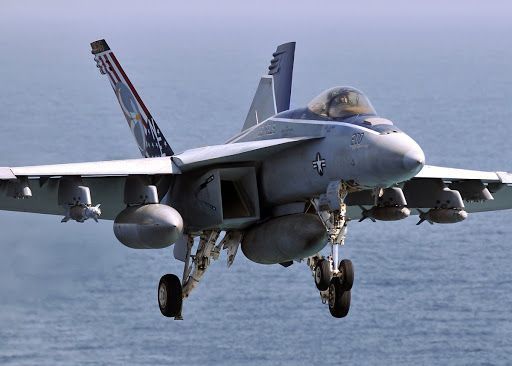
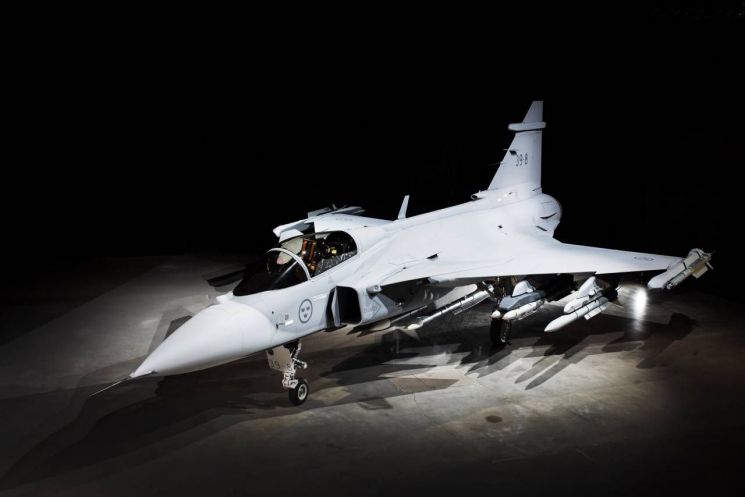
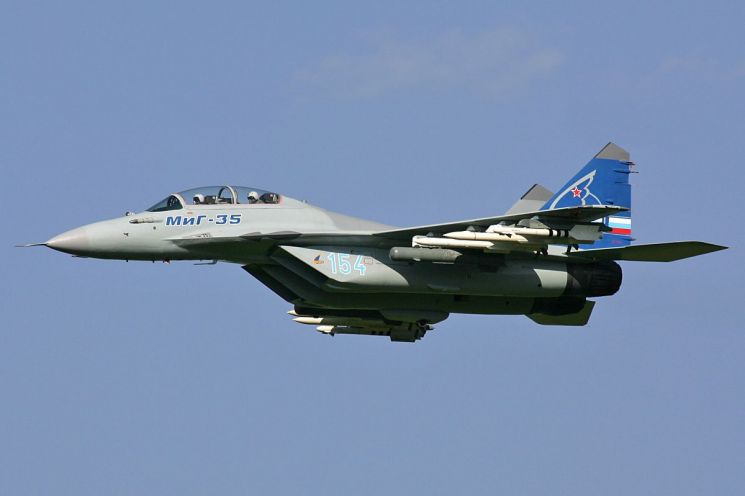
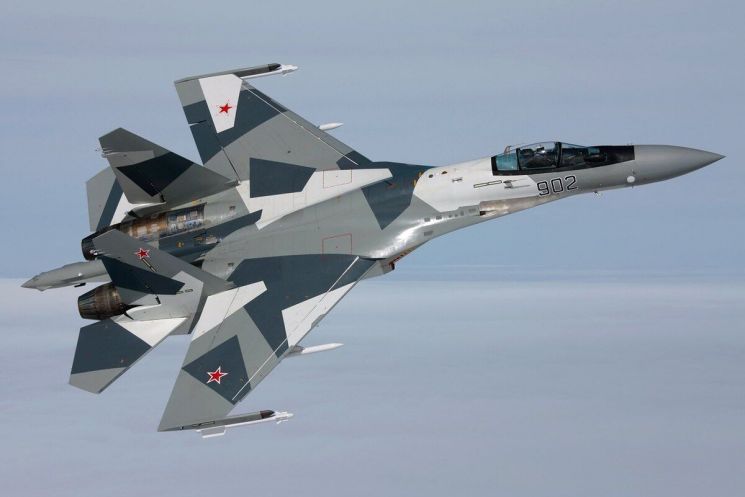
Given the large number, major Western fighter jet manufacturers such as Boeing F/A-18E/F, Dassault Rafale, Eurofighter Typhoon, Lockheed Martin F-21, Saab JAS 39E, as well as Eastern bloc manufacturers like Mikoyan MiG-35 and Sukhoi Su-35, are all participating in this project.
Alongside the Indian Air Force, the Navy is also expected to release a Request for Proposal (RFP) this year for a project to procure 57 new fighter jets. It is known that global fighter jet manufacturers are proposing various options including local production in India for this project as well.
▲ Canada deliberates over the F-35 = The Royal Canadian Air Force is pursuing a project to acquire a total of 88 new fighter jets to replace its aging CF-18 fighters. According to the Canadian Air Force, the plan is to select the model and finalize the contract by 2022 at the latest. Currently, three models?Boeing F/A-18E/F, Lockheed Martin F-35A, and Saab JAS 39E?are fiercely competing.
At one point, the F-35 was a likely choice, but due to regime changes and economic considerations, the F-35 acquisition became uncertain. The current Canadian Prime Minister Justin Trudeau pledged during the 2015 election not to purchase the F-35 but later put that pledge on hold. Conversely, the previous Conservative government led by Prime Minister Stephen Harper announced plans to purchase 65 F-35s but faced controversy over costs.
▲ The Japan Air Self-Defense Force plans to acquire 60 to 90 next-generation fighter jets to replace the F-2 support fighters. Instead of purchasing fighter jets from overseas, Japan aims to develop them domestically. To this end, Japan previously developed the X-2 stealth technology demonstrator to test stealth, flight control, and propulsion technologies necessary for next-generation fighter development.
Initially, Japan planned to develop an independent fighter based on the X-2, but after review, it decided to lead development domestically while collaborating internationally with the United States. If the plan proceeds as scheduled, Japan will operationalize the next-generation fighter by the mid-2030s.
Meanwhile, Japan currently operates about 280 fighter jets, including approximately 10 F-35A, 150 F-15J, 60 F-2A, and 50 F-4EJ, and has ordered 147 F-35A and F-35B jets.
▲ Finland prefers the F-35 fighter = The Finnish Air Force plans to invest about 11.4 billion euros (approximately 17.8 trillion won) to procure 64 new fighter jets between 2025 and 2029 to replace the existing F/A-18C/D Hornet fighters. Currently, Lockheed Martin F-35A, Boeing F/A-18E/F and EA-18G, Dassault Rafale, Eurofighter Typhoon, and Saab Gripen E/F are participating in the bidding. It is known that the Finnish Air Force prefers the F-35A and plans to select the final model around next year.
▲ Switzerland to decide on new fighter jet model this year = The Swiss Air Force, operating F/A-18C and F-5E, is also pursuing a new fighter jet procurement project. As part of the “Air 2030” project to modernize Swiss air power, the goal is to invest about 6.5 billion dollars (approximately 7.7 trillion won) to acquire up to 40 new fighter jets. Currently, five models?Eurofighter, Rafale, Gripen E, F/A-18E/F, and F-35A?are competing, and the plan is to select the final model this year and complete procurement by 2025.
▲ Germany excludes F-35A from candidate models = The German Air Force is pursuing the acquisition of new fighter jets to replace the Tornado fighters. Although Germany once included the F-35A as a candidate, it is currently evaluating only the Eurofighter Typhoon and Boeing F/A-18E/F. A key factor in this project is that the new fighter must be capable of delivering the U.S. B-61 tactical nuclear bombs under NATO’s nuclear sharing agreement. This is why the F-35A was excluded from the candidate list.
The candidates were narrowed down to the Typhoon and F/A-18E/F early last year. In January of last year, a German government official stated, “The candidates to replace the Tornado have been narrowed down to the Typhoon and Super Hornet.” According to foreign media, the German Air Force plans to replace 85 Tornado fighters with new fighters starting in the 2020s.
▲ Peru mentions FA-50 as a candidate model = The Peruvian Air Force, the only one in South America pursuing new fighter jet procurement, began studying next-generation fighter requirements in 2018. The plan is to acquire 24 new fighter jets to replace the currently operated Mirage 2000 and MiG-29. The candidate models currently mentioned include Dassault Rafale, Korea Aerospace Industries (KAI) FA-50, Lockheed Martin F-16, and Mikoyan MiG-35.
© The Asia Business Daily(www.asiae.co.kr). All rights reserved.