By December, 606 cafes, bakeries, and other food service establishments will write their business names and dates on transparent plastic bags before disposal for recycling into eco-friendly compost
[Asia Economy Reporter Jongil Park] Dongjak-gu (Mayor Changwoo Lee) is promoting a project to recycle coffee grounds as agricultural compost as part of measures to reduce household waste by 10% by December.
Coffee grounds are byproducts (residue) left after extracting coffee liquid from coffee beans, containing nitrogen, phosphorus, and other nutrients necessary for plant growth, but most are discarded as household waste.
Accordingly, since 2018, the district has been conducting a coffee grounds separate collection project targeting local cafes and restaurants. Approximately 164 tons were collected by last year, and recycling them as agricultural compost saved about 20 million KRW in disposal costs.
This year, the project targets 606 cafes and bakeries, prioritizing those located in areas with high foot traffic such as subway stations and main roads within the district.
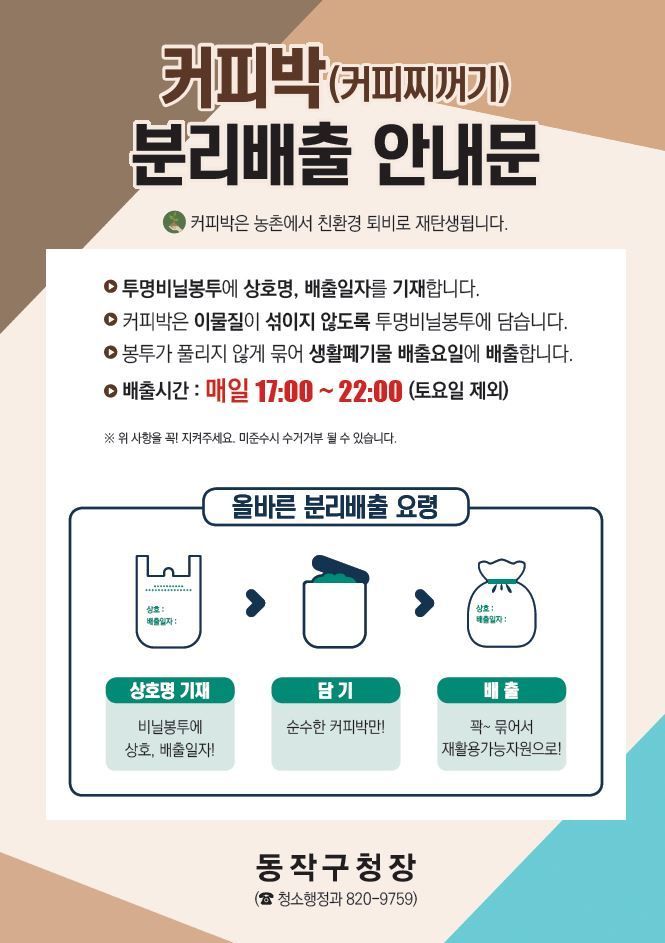
The district proceeds by having the cafes and restaurants write their business name and date on transparent plastic bags when disposing of coffee grounds, which are then collected together with recyclable waste by cleaning contractors.
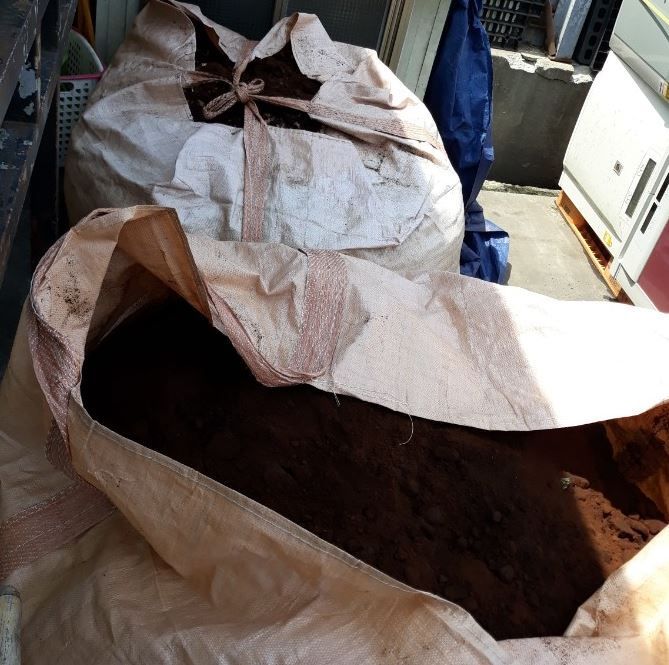
The collected coffee grounds are temporarily stored at Heukseok Jeokhwanjang and then recycled into eco-friendly compost through an agricultural cooperative that has signed a business agreement with the district.
To ensure smooth project implementation, the district also provides ▲ project guidance when new cafes and restaurants register their business ▲ promotes the project through resource circulation leaders ▲ and offers guidance on recycling disposable items generated at stores.
Additionally, in accordance with the total volume control system for landfill sites in the metropolitan area, the district is implementing a 10% reduction plan for household waste across two sectors: general waste and recyclable waste.
For 15 business sites producing more than 300kg of waste per day, the district is shifting from public to self-processing of business-generated household waste and establishing a ‘block-type joint management system’ for recyclable waste to reduce mixed waste disposal in residential areas, among other various initiatives.
Kwangjung Lee, Head of the Cleaning Administration Division, said, “We will actively promote the 10% reduction of household waste through this project,” adding, “We will continue to build a virtuous cycle of resources to create a pleasant and eco-friendly city for residents.”
© The Asia Business Daily(www.asiae.co.kr). All rights reserved.
![Clutching a Stolen Dior Bag, Saying "I Hate Being Poor but Real"... The Grotesque Con of a "Human Knockoff" [Slate]](https://cwcontent.asiae.co.kr/asiaresize/183/2026021902243444107_1771435474.jpg)
















