If Jeonse Lease House Passes Auction or Tax Sale, National Taxes Take Priority Over Deposit
Tenants May Lose Deposit If Landlord's Tax Delinquency Not Checked
Unpaid National Tax Inquiry System Exists but Rarely Used
'Landlord Tax Obligation Verification' Amendment Proposed but Failed
Strong Opposition from Landlords and Realtors... Tenant Protection Remains Uncertain
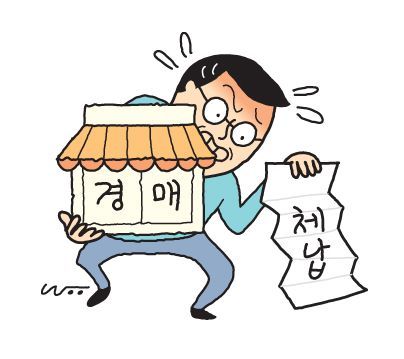
[Asia Economy Reporter Moon Jiwon] The number of tenants losing their jeonse deposits due to landlords' unpaid taxes is increasing. Under current law, when a house goes up for auction or public sale, the landlord's taxes are deducted first from the winning bid amount, and the remaining money is given to the tenant.
Although there is a system that allows tenants to check the landlord's delinquency status before signing a jeonse or monthly rent contract, it is rarely used and is practically ineffective. The National Assembly proposed amendments to the National Tax Collection Act and other laws last year to prevent such incidents, but the bills were scrapped due to opposition from landlords and licensed real estate agents.
According to the Basic National Tax Act on the 24th, when a house or commercial property goes up for auction or public sale, taxes often take priority over the tenant's deposit. For example, if a landlord's house is seized due to unpaid taxes and goes to public sale, even if the tenant has obtained a confirmed date to establish priority rights, the tenant's claim is subordinated to the tax claim, potentially causing the tenant to lose part of the jeonse deposit.
Tax claims determine priority by comparing the statutory due date and the tenant's confirmed date, but national and local taxes imposed directly on the real estate itself, called "danghaese," always take precedence over other securities such as lease deposits under the Basic National Tax Act and the Local Tax Basic Act.
According to the Korea Asset Management Corporation, from 2016 to 2018, a total of 1,008 cases nationwide involved houses going to public sale due to landlords' tax delinquencies, of which 373 cases (37%) involved tenants not receiving their full deposits. The amount lost totaled 8 billion won.
Therefore, before signing a jeonse or monthly rent contract, tenants should check the landlord's delinquency status and avoid contracts if the amount is worryingly high. However, unlike mortgages or jeonse rights, tax claims cannot be verified through real estate registration documents, so many cases are overlooked.
Although there is a system to check unpaid national taxes, it is not well known and requires the landlord's consent, making it difficult for tenants, who are clearly in a subordinate position, to request it. This is why incidents occur where tenants sign contracts believing the property is safe because there are no mortgages or other liens, only to face losses later.
To resolve this issue, Rep. Yoo Seung-hee of the Democratic Party of Korea proposed amendments to the National Tax Collection Act, Local Tax Collection Act, and Licensed Real Estate Agents Act in October last year, but the bills did not pass the standing committee in the 20th National Assembly. The amendments would have allowed not only tenants but also licensed real estate agents to access landlords' unpaid national tax information and required agents to explain the landlord's tax status to tenants.
According to sources in the National Assembly, the proposed amendments faced strong opposition from real estate agents and landlords during discussions. A National Assembly official said, "Landlords strongly opposed the idea of having to disclose their tax details every time they sign a jeonse or monthly rent contract," and "Real estate agents also opposed the amendments because they need to maintain good relationships with property owners."
In particular, during discussions, concerns were raised that if real estate agents obtained landlords' tax information, there could be side effects such as personal information leaks. The National Assembly official added, "To provide tax information to someone other than the concerned party, the National Tax Collection Act and related laws would also need to be amended, making the process complicated," and "It is unlikely to proceed smoothly in the 21st National Assembly either."
Within the industry, there are criticisms that despite this being a problem repeated for decades, the lack of a system to protect tenants reflects insufficient attention from both the National Assembly and the government.
In fact, the National Assembly Research Service stated in a December report last year that "the current use of the unpaid national tax inquiry system is very insufficient," and analyzed that "it is necessary to consider relaxing the current requirement for landlord consent and imposing an obligation on real estate agents to provide explanations."
© The Asia Business Daily(www.asiae.co.kr). All rights reserved.


















