Number of Juvenile Offenders (Aged 14-18) in 2018: 66,142
Diverse Types of Youth Crime... Methods Becoming More Sophisticated
Citizens "Stricter Punishment Needed," "Juvenile Law Must Be Revised" Anger
Experts "Educational Treatment Needed for Youths with Criminal Tendencies"
 As it was revealed that two teenage youths confined and assaulted their peer friends, public opinion is growing to increase the severity of punishment for the offending youths. Photo by Yonhap News
[Asia Economy Reporter Kim Su-wan] "Are kids these days even ordinary kids?", "They are more brutal than adult criminals."
As it was revealed that two teenage youths confined and assaulted a peer, public opinion is growing for tougher punishment of juvenile crimes. Although the methods and brutality are at the level of adult crimes, the punishments are weak, leading to repeated occurrences of the same crimes.
On the 20th, the Seoul Gwanak Police Station announced that on the 9th, high school students A (16) and B (16) were booked on charges of special assault and confinement. A and B are accused of tying peer C to a chair with duct tape and assaulting him in a one-room apartment in Gwanak-gu, Seoul, around 7 p.m. on the 8th.
They confined peer C until 6 a.m. the next day, and during this time, A is also accused of threatening C with a weapon.
The problem lies in the fact that juvenile offenders are classified as juvenile crimes due to being minors, resulting in light punishments.
According to the "Crime Phenomena and Criminal Policy in Korea" report released by the Korea Institute of Criminology in April, over the past 10 years, among juvenile crime cases handled by the prosecution, 34.7% (21,044 individuals) were given "prosecution suspension" in 2016, the highest proportion, and the proportion of juveniles sent to juvenile protection was similarly 33.9% (21,044 individuals).
Following that, juveniles processed as △"no prosecution" accounted for 10.3% (6,240 individuals), △"no charges" for 7.9% (4,815 individuals), △"formal trial" for 6.2% (3,755 individuals), and △"summary order" for 3.9% (2,358 individuals).
This means that more than half of juvenile offenders are not prosecuted, and about 30% are sent to juvenile protection cases. In particular, the prosecution rate among juvenile cases is only about 10%.
"Because of lenient punishments" Anger over peer confinement and assault news
Citizens are expressing outrage, saying things like "Another student assault case? This is all because of lenient punishments," and "The National Assembly should revise the Juvenile Act."
D, a worker in their 20s, said, "Are kids these days even ordinary kids? They commit heinous crimes without fear of the world, and I wonder if such criminals should be protected just because they are young," adding, "Thinking about what the victim must have gone through makes me very angry. Please strengthen the law."
Another worker, E, raised their voice, saying, "They all should be sent to prison. Punish the perpetrators' parents as well, who are no different from bystanders."
Meanwhile, there are over 60,000 juvenile offenders, and among them, 5% have committed heinous crimes such as robbery and sexual violence.
According to the "2020 Youth Statistics" released last month by Statistics Korea and the Ministry of Gender Equality and Family, the number of juvenile offenders (aged 14?18) as of 2018 was 66,142. This accounts for 3.8% of all offenders (1,738,000) that year.
The types of crimes are diverse and methods are becoming more sophisticated. By crime type, △property crimes such as theft, receiving stolen goods, and fraud account for 40.1%, △violent crimes such as extortion, assault, and injury 29.8%, △others such as traffic violations or copyright infringement 24.8%, and △heinous crimes such as murder, robbery, arson, and sexual violence 5.3%.
In particular, according to Ministry of Justice data from 2016, the recidivism rate of juveniles under probation over the past five years averaged 10.9%, more than twice the adult recidivism rate of 4.5% during the same period.
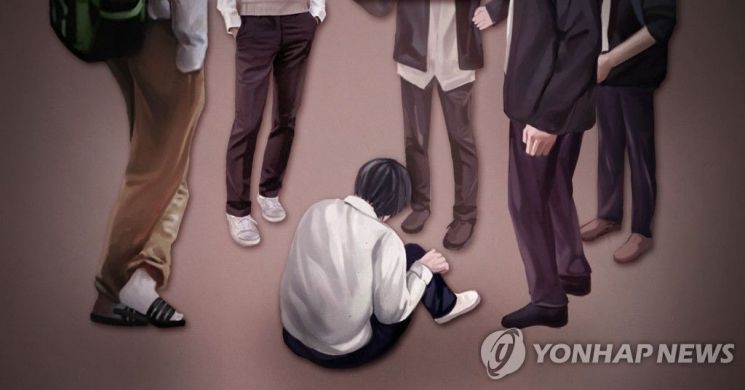 Despite the methods and brutality being comparable to adult crimes, the current law imposes lighter punishments on juveniles committing the same crimes as adults, leading to criticism that the penalties are merely slap-on-the-wrist level. Photo by Yonhap News
Juvenile Act's Purpose of Rehabilitating Juvenile Offenders Undermined, 'Strengthening Needed'
As such, calls for revising the Juvenile Protection Act are growing louder. This is because the purpose of the Juvenile Act?to protect juveniles so they can grow up healthily through protective measures rather than criminal punishment?has been undermined.
The Juvenile Act is a law that treats juveniles who commit crimes differently from adults, considering their future prospects.
The current Juvenile Act prohibits criminal punishment for those under 14 years old and limits sentences to a maximum of 20 years for those aged 14 to under 19.
Given this situation, the Blue House's public petition board is flooded with petitions titled "Please revise the Juvenile Act," and "Request to abolish the Juvenile Act for violent crimes such as murder, robbery, and rape."
The petitioner cited Article 59 of the Juvenile Act, stating, "The current Juvenile Act not only undermines awareness of juvenile crime and growth as law-abiding citizens but also inflicts further pain on victims due to disproportionately light punishments compared to the crimes committed. Age should not be a free pass. Please revise the Juvenile Act so that juvenile offenders receive punishments commensurate with their crimes."
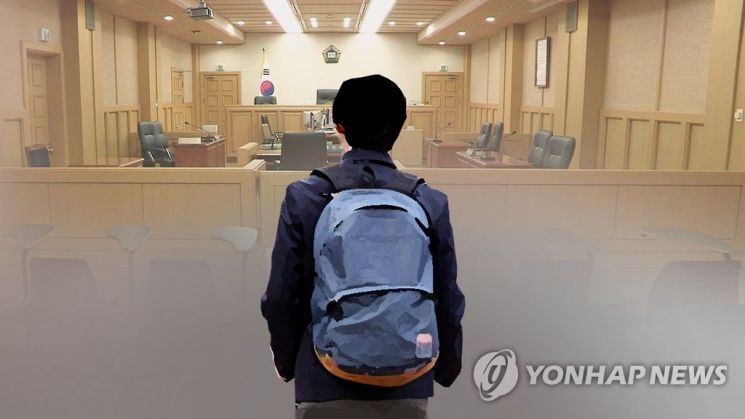 Experts suggested that educational treatment is necessary for adolescents with criminal tendencies. Photo by Yonhap News
Expert: Educational Treatment Needed for Juveniles with Criminal Tendencies
Experts suggest that juveniles with criminal tendencies require educational treatment.
Professor Gong Jeong-sik of the Department of Criminal Psychology at Kyonggi University said, "For juveniles, there is a greater possibility of change (rehabilitation) compared to adults, so enhanced educational programs are very important," adding, "While increasing sentences is important, juveniles with criminal tendencies need educational treatment to prevent further crimes."
Meanwhile, discussions on juvenile crime punishment are also emerging in the political sphere. The People's Party announced ten policies in February to strengthen child and youth safety.
The "Ten Reforms and Policy Initiatives for Teens" specifically include △introduction of a child primary care physician system △lowering the age of criminal responsibility for juveniles △maximum life imprisonment for child and youth sex offenders △establishment of grooming prevention provisions △strengthening punishment for digital sex crimes △revision of laws allowing the 'Sweety Project' △blocking recidivism of heinous criminals △specifying justifiable defense requirements for victims of domestic violence △post-protection system for children affected by domestic violence △expansion of child safety education targets.
© The Asia Business Daily(www.asiae.co.kr). All rights reserved.
![Clutching a Stolen Dior Bag, Saying "I Hate Being Poor but Real"... The Grotesque Con of a "Human Knockoff" [Slate]](https://cwcontent.asiae.co.kr/asiaresize/183/2026021902243444107_1771435474.jpg)

















