Support for Litigation Costs in Exchange for Shares of Two-Way Video Company Echo
[Asia Economy Reporter Naju-seok] Activist fund Elliott Management has entered the copyright litigation battle over video streaming services. As contactless-related technologies began to gain attention due to the spread of the novel coronavirus infection (COVID-19), Elliott stepped forward to support litigation costs in exchange for shares of the company filing the copyright lawsuit.
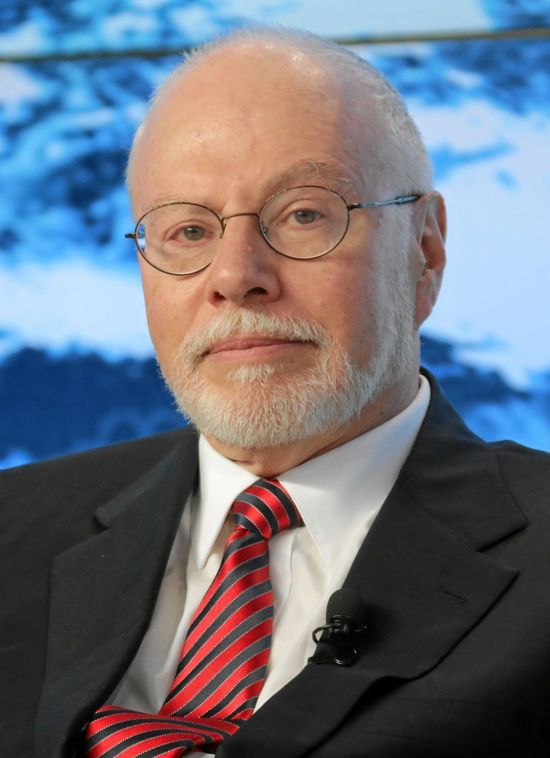 Paul Singer, Chairman of Elliott Management
According to the Wall Street Journal (WSJ) on the 3rd (local time), Elliott has started supporting the copyright litigation costs of Echo, an interactive video company. Echo filed a lawsuit in March at the U.S. District Court in Los Angeles, claiming that Quibi, a rising competitor to Netflix, had unauthorizedly copied its core technology called 'Turnstyle.' Elliott agreed to cover the litigation costs in exchange for shares of Echo. WSJ reported that the amount of shares Elliott will receive for participating in this lawsuit has not been disclosed.
Quibi is a video service company founded by Jeffrey Katzenberg, co-founder of DreamWorks and former chairman of Walt Disney Studios, and Meg Whitman, former CEO of eBay. The company promoted Turnstyle as its competitive edge, a technology that provides different types of videos depending on how the phone is held. Turnstyle is a method where videos are set to match whether the phone is viewed horizontally or vertically. In general video services, videos are optimized for horizontal viewing, leaving blank spaces at the top and bottom when held vertically, but Turnstyle provides full-screen viewing even in vertical mode. As a result, viewers can watch videos from multiple angles through Turnstyle.
Echo demands that Quibi either stop providing the related service or bear the copyright fees concerning the Turnstyle technology. Quibi counters that it has not violated any copyrights and considers this lawsuit to be worthless.
WSJ pointed out that although Elliott has previously invested by supporting litigation costs, it is unusual for the fund to participate in a lawsuit against Quibi. Elliott, managing assets worth $40 billion, is the world's largest activist hedge fund, and its involvement in copyright issues between IT companies is notable.
Wall Street views the involvement in this lawsuit as related to the Jewish network. Paul Singer, chairman of Elliott, is Jewish, and Echo is a company established in Israel.
Despite high attention, Quibi has yet to achieve significant market success. Since launching its service on the 6th of last month, Quibi has focused on providing 10-minute videos designed for viewing during commutes, but due to stay-at-home orders amid COVID-19 reducing the number of commuters, it has not performed well.
As contactless companies gain prominence due to COVID-19, related lawsuits are also being filed one after another. Semiconductor manufacturer Broadcom filed a lawsuit in March against video streaming service Netflix, claiming unauthorized use of data transmission-related copyrights.
Zoom, which provides online video conferencing services, was also sued by shareholders over security-related technology. Zoom had introduced its encryption as a method that prevents outsiders from eavesdropping during transmission. However, in reality, the service provider Zoom was able to eavesdrop.
© The Asia Business Daily(www.asiae.co.kr). All rights reserved.
![Clutching a Stolen Dior Bag, Saying "I Hate Being Poor but Real"... The Grotesque Con of a "Human Knockoff" [Slate]](https://cwcontent.asiae.co.kr/asiaresize/183/2026021902243444107_1771435474.jpg)














