[Hidden Business Story] Netflix: From a 1997 DVD Rental Store to the World's Largest OTT
Watch Over 10,000 Titles for $7.99 a Month
Leading OTT Company with Recommendation Algorithms and Original Productions 'Netflix Originals'

[Asia Economy Reporter Shinwon Yoon] 183 million people, accounting for 2.3% of the global population and 4.6% of internet users, pay to subscribe to Netflix. Assuming all of them subscribe to the basic membership ($7.99), Netflix earns approximately $146 million (about 180 billion KRW) per month from simple calculations. Recently, the number of paid subscribers has been increasing due to the rise of contactless cultural activities amid the COVID-19 pandemic.
Netflix, the global trendsetter in online video streaming (OTT) services, was actually founded in 1997. It started as a service delivering videos and DVDs by mail. At that time, CEO Reed Hastings operated it like an ordinary video rental store, but frequent late returns led to the removal of late fees and a shift to a subscription fee model. Customers could rent unlimited videos but had to return all previously rented videos before borrowing new ones, which began to attract attention. In fact, Netflix applied the concept of the 'subscription economy' to its business as early as the 1990s.
The current form of Netflix took shape starting in 2007. OTT stands for 'Over The Top,' meaning a service that allows watching TV over the internet without a separate set-top box. Since the advent of smartphones, movies and various broadcast programs can be watched anywhere, but in the past, content could only be viewed in front of a TV with a set-top box. Especially, cable pay TV typically cost about $50 per month. Therefore, Netflix initially offered OTT services only as an additional feature.
From 2009 onwards, Netflix pushed OTT services as its main business. The affordable monthly flat rate, ad-free viewing, and the ability to watch anytime and anywhere received positive responses from consumers. In 2013, Netflix surpassed the subscriber count of HBO, the largest cable broadcaster in the U.S., and after exceeding 100 million subscribers in 2017, it is now approaching 200 million.
 [Source - Asia Economy DB]
The Secret Behind Netflix's 'Content Recommendation'
The biggest reason Netflix has been loved worldwide is its 'recommendation algorithm.' Amazon and domestic IPTV services usually have 80,000 to 100,000 types of content, but Netflix has about 10,000 (as of 2017). Despite the smaller quantity, Netflix maintains its top position by providing personalized content. This can be seen as a result of satisfying the needs of individual members.
In the early days of Netflix, viewers rated each video with stars, and recommendations were made based on analyzing the viewer’s preferred video patterns from these ratings. Now, the method is more advanced, filtering based on both content and user behavior. People with similar behaviors are grouped, and other content is recommended based on characters, stories, and more from the watched content. Even if a user stops watching a drama after 2-3 episodes, they are grouped with users showing similar patterns. In other words, groups are created by segmenting not only the watched content but also rewatch rates, whether viewing was stopped, dates, and even points where users rewinded or fast-forwarded during playback.
Moreover, Netflix uniquely 'tags' all 10,000 pieces of content. Infinite tags exist, from the region where the content was produced, genre, adjectives describing the mood of the video, to the historical background. For example, if a user likes horror movies, the screen may simply classify it as 'horror,' but in reality, Netflix recommends the horror content best suited to that user. Thumbnails are also adjusted according to regional or national cultures.
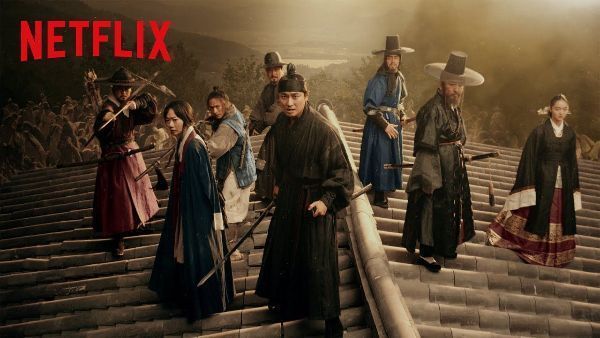
Exclusively on Netflix... 'Netflix Originals'
Netflix has also ventured into content production. Starting with the U.S. political drama 'House of Cards,' first released on Netflix in February 2013, it has been producing its own content known as 'Netflix Originals.' In fact, Netflix Originals are produced based on big data obtained from recommending content to users. They consider users’ preferred directing styles and actors. Another feature of Netflix Originals is releasing all episodes of a season at once, based on the analysis that 'users binge-watch dramas over the weekend and then spread word of mouth.'
Since then, Netflix has succeeded as a 'content producer' by releasing titles like 'Orange Is the New Black' and 'Marco Polo.' Especially, Marco Polo is a blockbuster with a production cost exceeding 100 billion KRW. The zombie series 'Kingdom' by writer Kim Eun-hee is also a work produced with Netflix’s investment.
© The Asia Business Daily(www.asiae.co.kr). All rights reserved.


















