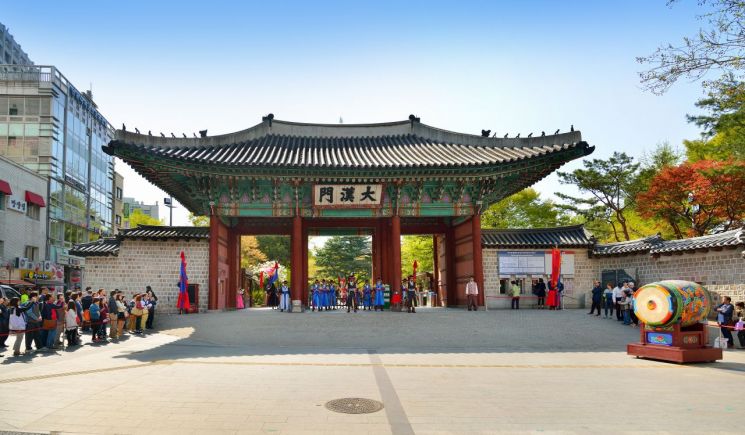
[Asia Economy Reporter Lee Jong-gil] The Woldae (Moon Platform) that was located at the main gate of Deoksugung Palace will be restored. The Cultural Heritage Administration's Palace and Royal Tombs Division announced on the 8th that construction work to rebuild the Woldae will be carried out by next year to restore the appearance of Deoksugung, the imperial palace of the Korean Empire. The Woldae is a wide pedestal-like platform installed in front of important buildings such as the main halls of palaces. It was frequently used during royal court ceremonies such as congratulatory rites (Harye), wedding rites (Garye), and sacrificial rites (Jerye). Currently, it can be seen at the main halls of Jongmyo Shrine and Gyeongbokgung Palace, both designated as national treasures.
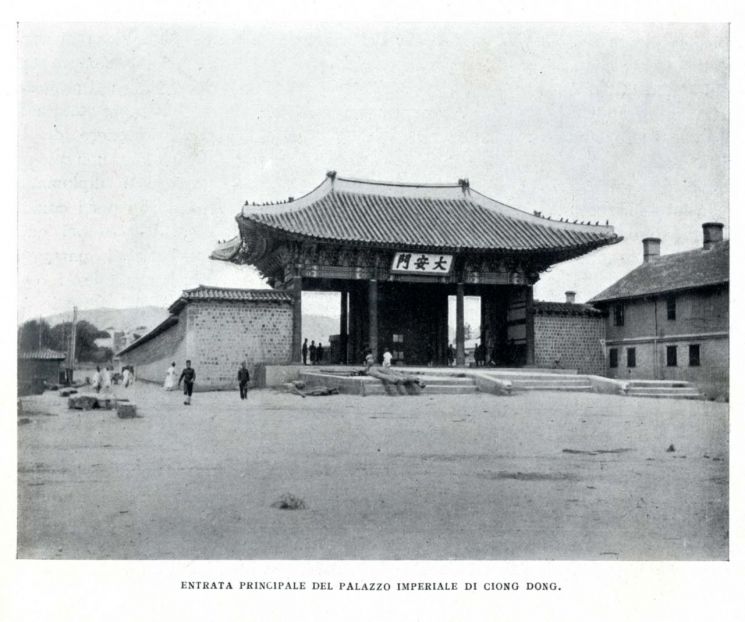 Deoksugung Daehanmun Woldae (Photographed around 1902~1903) Included in the Korea e Koreani Photo Commentary Panel
Among palace main gates, Changdeokgung's Donhwamun has a Woldae. Restoration projects are underway for Gwanghwamun at Gyeongbokgung Palace. The Woldae at Deoksugung is believed to have disappeared during the Japanese colonial period in the 1910s. It can be confirmed from photos taken at the time, but it is not visible in the 1919 photo of Emperor Gojong's state funeral. Only the stone beasts (Seoksu), animal-shaped stone sculptures installed at the ends of the Woldae, remain.
Originally, the main gate of Deoksugung was Inhwamun, facing south. However, with the construction of a large road to the east and the establishment of Hwangudan, an altar from the Korean Empire period, the east gate, Daehanmun, took on the role of the main gate. The original name of Daehanmun was Daeanmun, meaning "great peace." It is estimated to have been built around 1898. It was not destroyed in the 1904 fire at Deoksugung, and after repairs, its name was changed in 1906 to its current one, meaning "Hanyang prospers." When Taepyeongno was expanded, it was relocated about 33 meters back from its original position in 1970.
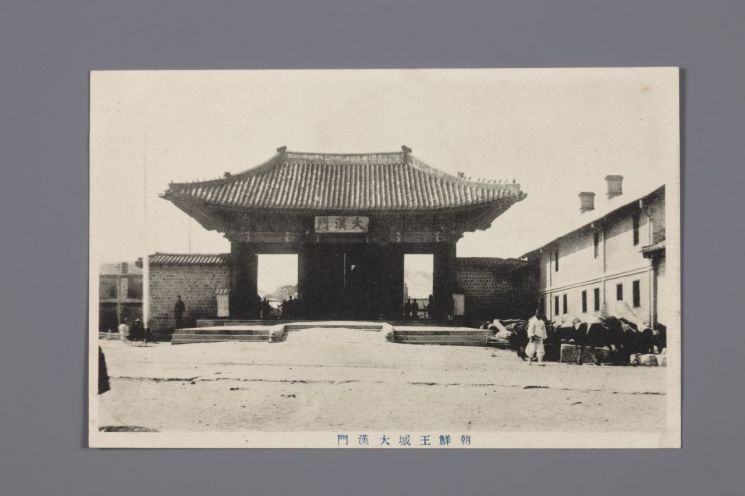
The Palace and Royal Tombs Division judged that restoring Daehanmun and the Woldae to their original locations is practically impossible. Therefore, they decided to build the Woldae at the current site of Daehanmun based on original historical evidence. An official stated, "Daehanmun was the passage used by Emperor Gojong when visiting Hwangudan or royal tombs," adding, "The restoration of the Woldae is meaningful in reclaiming our history."
© The Asia Business Daily(www.asiae.co.kr). All rights reserved.
![Clutching a Stolen Dior Bag, Saying "I Hate Being Poor but Real"... The Grotesque Con of a "Human Knockoff" [Slate]](https://cwcontent.asiae.co.kr/asiaresize/183/2026021902243444107_1771435474.jpg)

















