"Signals to the Market Should Be Given Through Traditional Quantitative Easing Methods"
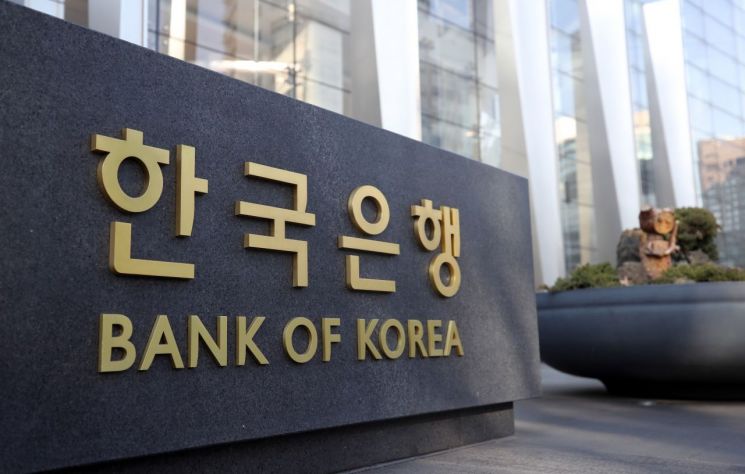
[Asia Economy Reporter Eunbyeol Kim] As the real economy slowdown caused by the novel coronavirus infection (COVID-19) is expected to worsen, there are calls for the Bank of Korea to introduce a 'genuine' quantitative easing (QE). Experts advise that not only should the base interest rate be further lowered, but also that the Bank of Korea should send signals to the market through traditional quantitative easing methods.
On the 6th, Hyunju Kang, a research fellow at the Korea Capital Market Institute, stated, "Although the full allotment liquidity support system introduced by the Bank of Korea on the 26th of last month was reported as 'Korean-style quantitative easing,' this system differs from quantitative easing where the central bank purchases government bonds." He added, "It is a method of supplying liquidity to financial institutions through repurchase agreement (RP) purchases and is similar in nature to the U.S. Federal Reserve's Primary Dealer Credit Facility (PDCF) for Treasury securities."
Researcher Kang pointed out that additional measures by the Bank of Korea are necessary to mitigate the COVID-19 shock. He said, "If a large-scale fiscal support plan is prepared after the general election, government bond issuance will need to be expanded to secure funding." He continued, "Considering this possibility, Korea's government bond yields have been rising despite the 'Big Cut' in the base interest rate. Therefore, Korea should also introduce quantitative easing to stabilize the corporate bond and bank bond markets." Earlier, the Bank of Korea conducted simple purchases of government bonds on the 19th of last month to respond to such market trends.
Korea is not a key currency country, and its government bond market is not large relative to the size of the real economy, making it difficult to influence the market through large-scale government bond purchases like advanced countries. It is unlikely to ease credit constraints by increasing liquidity supply to the financial market or to expect an impact on private portfolios. As of the end of last year, Korea's outstanding government bond issuance stood at 696 trillion won, equivalent to 36.4% of nominal gross domestic product (GDP). In comparison, European asset sizes have expanded to about 25% of GDP, and Japan's have increased to 77%.
Nevertheless, Researcher Kang believes that merely declaring the introduction of quantitative easing sends a clear signal to the market that the central bank will maintain long-term interest rates stably. He said, "Like the base interest rate, if government bond yields fall, it will lower the floor for corporate bonds and bank bonds." He added, "It is worth referring to the yield curve control policies introduced by the Bank of Japan (BOJ) and the Reserve Bank of Australia (RBA)." Yield curve control policies differ from quantitative easing, which sets the scale of government bond purchases, by setting purchase prices to manage government bond yields so they do not deviate from target levels.
Along with this, Researcher Kang stated that the Bank of Korea should also lower the base interest rate to near 0%. Although many people question the effectiveness of interest rate cuts and there is the issue of the effective lower bound, he argues that additional rate cuts are necessary. He said, "Considering that decisions on large-scale fiscal expansions, including the second supplementary budget, are unlikely to be made promptly, interest rate cuts are the only macro-stabilization tool that can respond immediately to domestic and external shocks." He added, "Since the base interest rate acts as a floor for short-term credit instruments such as commercial paper (CP), lowering the base rate can also contribute to stabilizing corporate financing."
Researcher Kang emphasized, "In Japan's case, repeated passive policy responses have greatly expanded national debt and the scale of the central bank's quantitative easing, providing important lessons." He concluded, "I hope that resolute monetary and fiscal policies can serve as a bridge to safely guide our households and companies into the post-COVID-19 world."
© The Asia Business Daily(www.asiae.co.kr). All rights reserved.

















