Whole-of-Government Establishes Principles for Selecting Support Recipients
Same Household Based on Resident Registration ... High-Value Asset Holders Excluded
[Asia Economy Reporter Jo In-kyung] The government has decided to use the existing health insurance premium payment amount to select the 'bottom 70% income bracket,' which is the eligibility criterion for receiving the emergency disaster relief fund. If the health insurance premium burden for a four-person household is 237,000 KRW or less, they can receive the disaster relief fund. However, the government will additionally discuss methods to exclude individuals who own high-priced real estate or large financial assets from receiving the disaster relief fund.
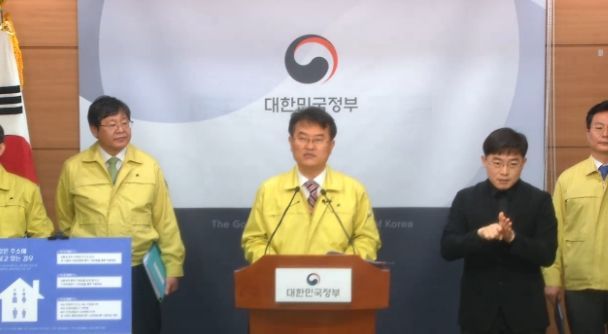
On the morning of the 3rd, the government held a 'Government-wide TF for Emergency Disaster Relief Fund' meeting chaired by Yoon Jong-in, Vice Minister of the Ministry of the Interior and Safety, to discuss and announce the principles for selecting recipients of the emergency disaster relief fund.
The government first decided to use the health insurance premium burden of eligible recipients by summing all health insurance premiums imposed on applicants as of March 2020 and support the bottom 70% income bracket.
The selection criteria will be prepared by distinguishing between households with workplace subscribers, regional subscribers, and those with both workplace and regional subscribers. For workplace subscribers, the total health insurance premium burden thresholds for eligibility are approximately 88,000 KRW for a single-person household, 150,000 KRW for two persons, 195,000 KRW for three persons, and 237,000 KRW for four persons. For regional subscribers, the threshold for a four-person family is 254,000 KRW, and for households paying a mix of workplace and regional insurance premiums, the threshold is about 242,000 KRW.
Using health insurance premiums as the standard allows the government to select recipients relatively easily using the latest data, and citizens can also easily estimate whether they qualify.
The health insurance premium burden, which is the eligibility criterion, can be checked through the payslip for workplace subscribers and the health insurance payment notice for regional subscribers. It can also be verified online via the National Health Insurance Service website (www.nhis.or.kr) or the call center (1577-1000).
However, even if one falls within the bottom 70% income bracket, high-asset individuals will be excluded from the emergency disaster relief fund, with the criteria to be established later through additional review.
For households, the unit of payment, those registered together in the resident registration table under the Resident Registration Act as of the 29th of last month will be considered the same household and supported accordingly. Among dependents of health insurance subscribers, spouses and children are considered the same household even if their addresses differ.
Also, it was decided that overlapping receipt is possible with the consumption coupon support project temporarily provided by the central government to preserve the income of low-income groups. However, for support projects by local governments, confirmation with each local government is required.
For small business owners and self-employed households whose income has recently dropped sharply but is not reflected in the health insurance premium, local governments will prepare various supplementary measures to allow final judgment on support eligibility by reflecting income status at the time of application according to regional conditions.
The government plans to prepare the supplementary budget bill as quickly as possible and submit it to the National Assembly, as this disaster relief fund is an urgent support that must reach the people promptly.
Yoon Jong-in, Vice Minister of the Ministry of the Interior and Safety and head of the government-wide TF, said, "Based on these principles for selecting recipients, we will closely coordinate with related ministries and local governments to prepare detailed implementation plans for the emergency disaster relief fund," and added, "We ask for the National Assembly's special attention and active cooperation to ensure the supplementary budget bill is promptly reviewed and passed."
© The Asia Business Daily(www.asiae.co.kr). All rights reserved.
![Clutching a Stolen Dior Bag, Saying "I Hate Being Poor but Real"... The Grotesque Con of a "Human Knockoff" [Slate]](https://cwcontent.asiae.co.kr/asiaresize/183/2026021902243444107_1771435474.jpg)















