Mass Layoffs Due to COVID-19 Impact
Rent and Loan Repayment Confusion Inevitable
Risk Possible if COVID-19 Crisis Prolongs Despite Government Deferral Measures
Past US Economic Crisis Linked to Housing Market Collapse
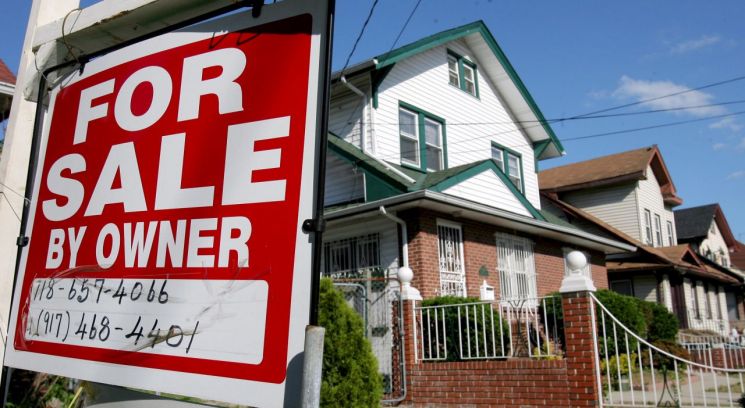
[Asia Economy New York=Correspondent Baek Jong-min] Unemployment caused by the novel coronavirus infection (COVID-19) is rapidly increasing, heightening the sense of crisis in the U.S. real estate market. Past experiences where real estate market crises led to financial market instability are also fueling the crisis narrative.
Bloomberg News reported on the 2nd (local time), citing Mark Zandi, Chief Economist at Moody's, that if the COVID-19 situation prolongs, 30% of the 15 million U.S. mortgage borrowers will face difficulties in repaying principal and interest. This reflects concerns about the severe negative impact on the real estate market amid the occurrence of 10 million unemployed people in just two weeks.
Susan Wachter, a professor at the Wharton School of the University of Pennsylvania’s Real Estate Department, expressed concern, saying, "This was completely unexpected. Past financial crises were cumulative phenomena over several years, but this happened in just a few weeks."
The crisis in the U.S. real estate market is being observed in both residential and commercial buildings. Until February, real estate transactions were on the rise, but they have sharply declined, and mortgage borrowers and tenants are being pushed into situations where they cannot pay costs due to unemployment and business shutdowns.
Tenjai Kappiche, Chief Economist at lending company LendingTree, predicted, "If home foreclosures occur, the impact on the financial market will be so severe that the government will have no choice but to take protective measures."
Regarding this, Bloomberg News reported, citing sources, that the U.S. government considered using $2.2 trillion in economic stimulus funds to address housing issues but decided to wait and observe the effects of other policies before implementing such measures.
As the 1st, a day when rent payments are concentrated, coincided with the time of massive unemployment, social dissatisfaction is spreading mainly among tenants. There is even a movement to not pay rent or lease fees until the COVID-19 crisis ends. Tenants participating in this movement are increasing in major key residential areas such as New York, Chicago, and San Diego.
It is estimated that 40 million people in the U.S. live in rented housing. It is also estimated that 30 million small and medium-sized business owners rent commercial buildings.
Some property owners have reduced rent or monthly fees, but most resist, saying that if they do not receive rent, they cannot repay their mortgage loans. The Washington Post reported that warnings are emerging among real estate owners that if rent is not received on time, chaos similar to the 2008 financial crisis could occur.
Until just February, the U.S. economy was booming, and with mortgage interest rates falling, home purchases using loans were spreading, making it difficult to overcome the sudden crisis. In fact, the savings and loan crisis of the 1980s and the 2008 financial crisis, which caused severe recessions in the U.S., both started from mortgage loan crises.
Federal and state governments, sensing the crisis, have introduced rent payment deferral policies, but these are also criticized as temporary measures. Even if the approximately three-month deferral period ends, if the COVID-19 crisis continues, it is uncertain whether tenants' ability to pay will recover.
As the situation worsened, Treasury Secretary Steven Mnuchin declared at the COVID-19 task force briefing that "cash will be deposited into people's accounts within two weeks." Previously, Secretary Mnuchin had stated that cash payments would be made within two weeks after the law's enactment, but this was moved up by one week.
Concerns about market collapse are spreading even in the U.S. real estate industry, which had been enjoying a boom. According to real estate information company Realtor.com, as of the week of March 28, the number of new real estate listings in the U.S. decreased by 34% compared to the same period last year. The situation is similar for those intending to buy real estate. Google searches for "real estate purchase" in 50 major U.S. regions have also turned downward, signaling a future decline in real estate purchases.
Daniel Hale, Chief Economist at Realtor.com, expressed concern, saying, "The impact of COVID-19 on the real estate market is rapidly spreading."
© The Asia Business Daily(www.asiae.co.kr). All rights reserved.
![Clutching a Stolen Dior Bag, Saying "I Hate Being Poor but Real"... The Grotesque Con of a "Human Knockoff" [Slate]](https://cwcontent.asiae.co.kr/asiaresize/183/2026021902243444107_1771435474.jpg)
















