Lee Ju-yeol, Governor of the Bank of Korea, Hints at Direct Loans to Securities Firms
[Asia Economy Reporter Kim Eun-byeol] The Bank of Korea (BOK) announced on the 2nd that it would consider directly lending to non-bank financial institutions in emergencies, drawing attention to past cases where the BOK provided loans in a similar manner.
According to the BOK, the only cases applying Article 80 of the Bank of Korea Act (Loans to For-Profit Enterprises) were loans to Korea Securities Finance Corporation (KRW 2 trillion) and the Credit Management Fund (KRW 1 trillion) in 1997. At that time, the BOK provided liquidity support as the financial crisis led to the suspension of operations of mutual savings banks and a freeze in the call market.
Article 80 of the Bank of Korea Act states that "when significant difficulties in raising funds from financial institutions occur or are likely to occur, loans may be extended to for-profit enterprises engaged in financial business that are not financial institutions."
However, the BOK has never applied Article 80 to support specific companies. The BOK draws a clear line, stating that it is difficult to apply Article 80 to provide loans to particular companies.
How about other countries? During the 2008 global financial crisis, the U.S. Federal Reserve (Fed) provided emergency loans to Bear Stearns, AIG, Citigroup, and others to prevent the failure of large financial institutions from spreading throughout the financial system. However, after the enactment of the Dodd-Frank Act in July 2010, loans to specific financial institutions were restricted.
The Fed’s related law states that funds can be provided "exceptionally and urgently for the purpose of supplying liquidity to the financial system while protecting taxpayers from losses."
The European Central Bank (ECB) regulations and the Bank of Japan (BOJ) Act do not contain provisions regarding loans to for-profit enterprises. Neither the ECB nor the BOJ has cases of loan support to companies. In the UK, on the 17th of last month, when the Bank of England (BOE) introduced a commercial paper (CP) purchase scheme, the Treasury provided credit guarantees.
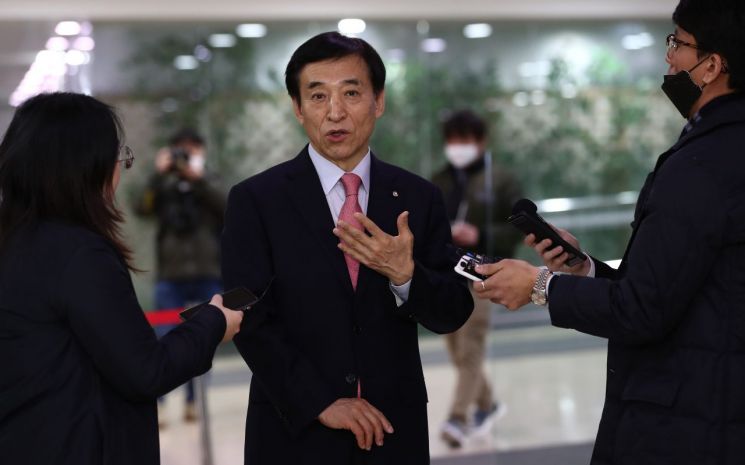
On the afternoon of the same day, Governor Lee convened an executive meeting and said, "The BOK basically supports market stability through banks or open market operations," but added, "If the situation worsens, we may consider lending to non-bank financial institutions under Article 80 of the Bank of Korea Act to stabilize the corporate bond market." This statement appears to have been made in response to the severe tightening of the short-term funding market caused by the novel coronavirus disease (COVID-19).
However, Governor Lee added a caveat, saying, "There will be no support beyond the authority granted by law to the Bank of Korea or preferential support to specific companies." This means that, for now, the loan target will be limited to non-bank financial institutions, and the BOK will not directly lend to specific companies. In a similar context, the BOK explained that it will not directly purchase corporate bonds or CPs of specific companies without government guarantees.
© The Asia Business Daily(www.asiae.co.kr). All rights reserved.
![Clutching a Stolen Dior Bag, Saying "I Hate Being Poor but Real"... The Grotesque Con of a "Human Knockoff" [Slate]](https://cwcontent.asiae.co.kr/asiaresize/183/2026021902243444107_1771435474.jpg)















