Daesun Flour to Raise Prices by 15% from April... Samyangsa and CJ CheilJedang Also Face Cost Pressures
Australian Wheat Production Down and COVID-19 Variables... Price Increases Expected for Ramen, Bread, and More
[Asia Economy Reporter Lee Seon-ae] Due to panic buying caused by the COVID-19 pandemic, international grain prices are on the rise. Prices of wheat, raw sugar, corn, and soybeans are all increasing, with wheat prices soaring to record highs, showing a significant rise. Domestic flour milling companies (wheat flour import suppliers) are raising their selling prices, which is expected to lead to price increases in processed foods such as snacks, ramen, and bread that use wheat as a main ingredient, thereby impacting domestic food prices.
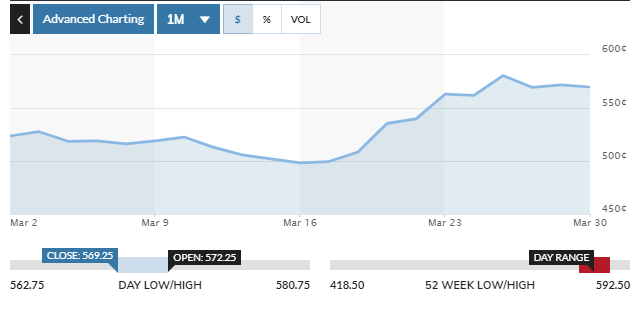
As of the 30th, the price of wheat traded on the Chicago Board of Trade is 569.25 cents per bushel (27.2 kg). On the 25th, it was traded at 580 cents. Compared to a week ago, this is a surge of over 10%. The average price this month is 513.4 cents, which is higher than the average price of 453.3 cents in March last year.
The surge in wheat prices is due to poor crop yields combined with supply-demand imbalances intensified by the COVID-19 pandemic. Currently, sales of pasta, bread, ramen, and other products are soaring mainly in the US, UK, and France. The poor crop yields originated from severe drought in Australia, one of the largest producers. Australia's wheat production has been below the average level of 25 million tons for the past three years, with 21 million tons in 2017, 18 million tons in 2018, and 15 million tons last year.
The Korea Flour Milling Association stated, "Australia's wheat crop situation is severe, and international wheat prices are expected to continue rising." Moreover, as COVID-19 cases rapidly increase in the US, flour milling companies are significantly increasing wheat purchases to meet the sudden surge in consumer demand.
Grain export bans are also contributing to price instability. Vietnam, the world's third-largest rice exporter, recently halted rice exports due to panic buying amid the COVID-19 crisis. Russia also stopped exporting all grains, including rice and wheat, due to domestic grain shortages. Kazakhstan has banned rice and wheat exports as well. Previously, Russia combined drought and ruble depreciation to ban exports for nearly a year, destabilizing wheat prices. The United Nations Food and Agriculture Organization (FAO) expressed concerns that "supply shocks may occur due to difficulties in cross-border movement of goods caused by the COVID-19 situation." The Ministry of Agriculture, Food and Rural Affairs stated, "Although some rice is imported, most is domestically produced with a self-sufficiency rate exceeding 100%, but delays in wheat import shipments cannot be ruled out."
South Korea, which relies entirely on imports for wheat, imports an average of 2.3 million tons annually, with nearly half coming from the US and Australia respectively, and some from Canada. Australian wheat is mainly used for noodle flour production such as for Chinese noodles and ramen, while US wheat is used for confectionery, baking, and multipurpose uses. Therefore, if flour prices rise, it is feared that prices of ramen, convenience foods, snacks, bread, as well as Chinese cuisine and street food restaurants will be affected, leading to increased food prices.
Domestic flour milling companies are already showing signs of price hikes. Daesun Flour Milling sent official letters to trading companies notifying a 15% price increase for medium gluten wheat flour grades 2 and 1.5. Daesun imports flour and supplies it to food companies through business-to-business (B2B) transactions. The price of 20 kg medium gluten wheat flour grade 2 will rise from 5,500?6,000 KRW to 6,500?7,000 KRW. Other companies such as Daehan Flour Milling, Samyang Corporation, and CJ CheilJedang are also under severe cost pressure and are closely monitoring market conditions.
© The Asia Business Daily(www.asiae.co.kr). All rights reserved.
![Clutching a Stolen Dior Bag, Saying "I Hate Being Poor but Real"... The Grotesque Con of a "Human Knockoff" [Slate]](https://cwcontent.asiae.co.kr/asiaresize/183/2026021902243444107_1771435474.jpg)















