Bank of Korea Monetary Policy Committee "Concerns Over Global Economic Slowdown Deepen"
Base Rate 1.25% → 0.75%
50bp 'Big Cut' Following US Fed
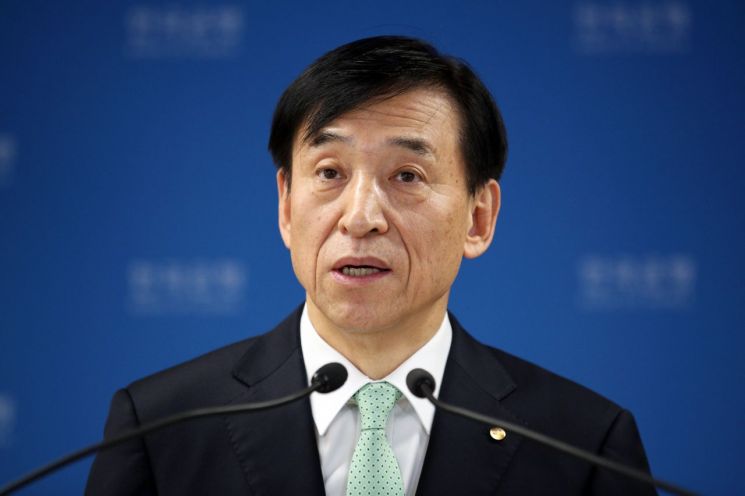
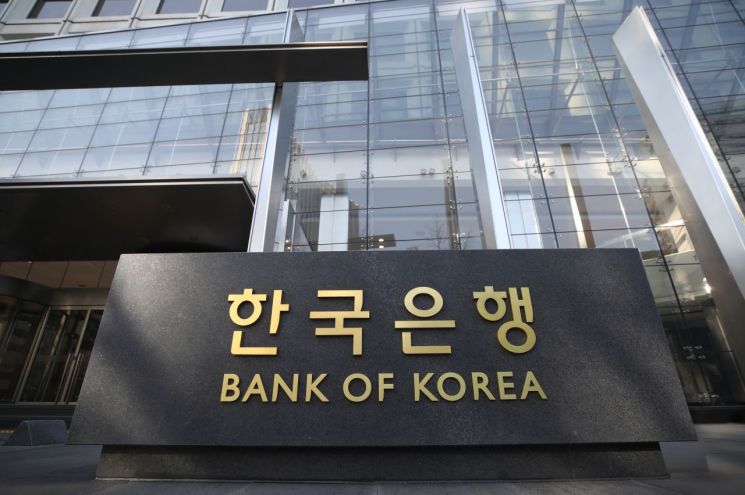
[Asia Economy Reporters Eunbyeol Kim, Sehee Jang] The Bank of Korea announced on the afternoon of the 16th that it held an emergency Monetary Policy Committee meeting and lowered the base interest rate from the existing annual 1.25% to 0.75%, a 0.50 percentage point cut.
This significant cut was made to minimize the economic damage caused by the novel coronavirus infection (COVID-19). As a result, the base interest rate dropped sharply into the 0% range. The Bank of Korea is treading a path it has never taken before. This decision will take effect from the 17th.
In the monetary policy direction statement, the Monetary Policy Committee said, "Since the last monetary policy direction decision, COVID-19 has spread globally, intensifying concerns about a global economic slowdown," and "As a result, volatility in major price variables such as stock prices and exchange rates in domestic and international financial markets has greatly increased, and international oil prices have sharply declined." It added, "Accordingly, the Monetary Policy Committee judged that it is necessary to expand the degree of monetary policy easing to alleviate volatility in financial markets and reduce the ripple effects on growth and inflation."
It also emphasized, "Given the very high uncertainty in domestic and international financial and economic conditions, the Monetary Policy Committee will continue to operate monetary policy in an accommodative manner to mitigate downside risks to the macroeconomy and volatility in financial markets."
The emergency Monetary Policy Committee was initially expected to be held around the 17th or 18th, but as the U.S. Federal Reserve (Fed) used an additional emergency rate cut card to lower the base interest rate to near zero, the Bank of Korea appears to have advanced its rate cut. The Bank of Korea has only held emergency Monetary Policy Committee meetings to cut rates twice before: in September 2001 (0.50 percentage point cut) right after the '9/11 terrorist attacks' and in October 2008 (0.75 percentage point cut) during the financial crisis.
On the same day, the Bank of Korea's Monetary Policy Committee also decided to lower the interest rate on the Financial Intermediation Support Loan (FISL) from an annual 0.50-0.75% to 0.25%. The FISL is a system where the Bank of Korea provides low-interest funds to financial institutions to support loans to small and medium-sized enterprises (SMEs). The Bank of Korea had previously increased the limit from 25 trillion won to 30 trillion won to help SMEs facing operational difficulties due to the spread of COVID-19.
The Bank of Korea stated, "This measure is expected to enhance banks' incentives to lend to SMEs and contribute to reducing the interest burden and improving the financial conditions of borrowing companies." It explained that since the support interest rate for local SMEs and COVID-19 affected companies has been lowered more significantly (from 0.75% to 0.25% annually), the financial support effect for these companies is expected to increase.
To manage liquidity, bank bonds will also be included in the securities eligible for open market operations. The Bank of Korea explained the reason for expanding the securities eligible for open market operations, saying, "With increased volatility in domestic and international financial markets, there is a possibility that financial institutions will face difficulties in raising funds due to heightened credit risk." It added, "In a situation where the shock to the real economy is gradually increasing, it is necessary to expand channels for financial institutions to quickly secure required funds to support affected companies."
Currently, the Bank of Korea's repurchase agreement (RP) eligible securities include government bonds, government-guaranteed bonds, monetary stabilization bonds, and mortgage-backed securities (MBS) issued by the Korea Housing Finance Corporation. The new inclusion will be bank bonds issued under the Banking Act, industrial finance bonds, SME finance bonds, agricultural finance bonds, fisheries finance bonds, and export-import finance bonds (hereafter referred to as bank bonds). The Bank of Korea plans to apply differentiated margin rates according to the credit rating and remaining maturity of the newly added bank bonds.
The Bank of Korea stated, "This will expand the collateral capacity of institutions eligible for Bank of Korea RP transactions, enabling smoother liquidity supply," and "It is also expected to have the effect of increasing demand and liquidity for bank bonds." The implementation date is the 1st of next month. The securities newly added to the RP eligible list will be included for one year after the implementation date.
Meanwhile, Governor Lee Ju-yeol of the Bank of Korea plans to hold a press briefing around 6 p.m. on the same day to explain the background of the interest rate cut and the economic impact of COVID-19. The briefing will be conducted via live broadcast on YouTube.
© The Asia Business Daily(www.asiae.co.kr). All rights reserved.
![Clutching a Stolen Dior Bag, Saying "I Hate Being Poor but Real"... The Grotesque Con of a "Human Knockoff" [Slate]](https://cwcontent.asiae.co.kr/asiaresize/183/2026021902243444107_1771435474.jpg)
















