Most Development Companies Are Foreign Firms
Judged to Bring Little Benefit to the Local Economy
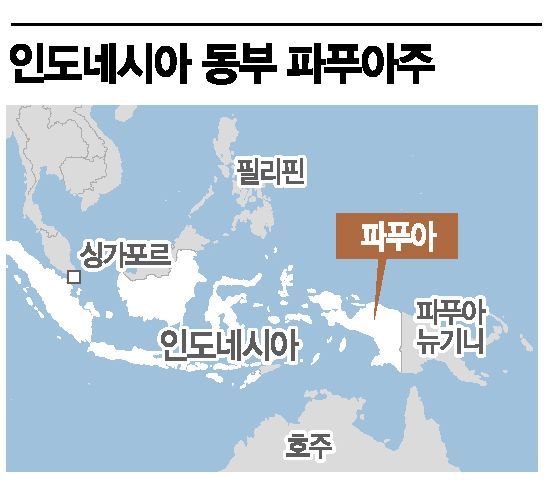
[Asia Economy Jakarta Correspondent Sujin Choi] Indonesia's Maritime Investment Coordinating Board is halting all permits for palm oil plantations in the Papua region. The move aims to prevent indiscriminate development, but with as many as 20 million people employed in the palm oil industry in Indonesia, attention is focused on whether the export suspension will have a significant impact.
According to CNN Indonesia on the 10th, Luhut Panjaitan, Minister of Indonesia's Maritime Investment Coordinating Board, said in an interview with the outlet, "Palm oil projects in Papua should no longer proceed," adding, "We will completely stop official palm oil projects and strongly restrict additional development permits." This decision by Minister Luhut is interpreted as an effort to protect Indonesia's environment from foreign capital. Currently, most palm oil developers in the western Papua region are foreign multinational corporations, and the local government believes their investments do not bring significant benefits to Papua's economy. Minister Luhut also stated, "The intention is to ensure that massive capital does not destroy our forests."
According to the 'Papua Atlas,' a plantation and road development map of the Papua region developed by the international forestry research organization CIFOR, the area where palm oil project permits are banned covers approximately 18,099 square kilometers. Currently, seven foreign multinational corporations lead one-fifth of the palm oil plantation development in Papua, including undeveloped primary forests.
Indonesian civic groups have expressed skepticism about the government's change in stance. Day Sutrisno, Executive Director of 'TUK,' a nonprofit legal organization for social justice in agriculture, raised doubts, saying Minister Luhut's attitude has changed 180 degrees. Minister Luhut has been a prominent advocate for the palm oil industry. He has strongly criticized the European Union's decision to exclude palm oil from bioenergy by 2030 and to completely ban imports. He is also known to own family farms. Indonesia is the world's largest palm oil producer, with 20 million people employed in the related industry.
However, President Joko Widodo's green investment policy has put brakes on palm oil production. President Jokowi has emphasized, "Indonesia must take a leading role in protecting Papua, the world's third-largest tropical rainforest region after the Amazon and Congo, to prevent global environmental changes." In this regard, Minister Luhut announced plans to intensively develop competitive agricultural resources in Papua such as nutmeg, coffee, cocoa, and seaweed.
As Papua shifts from palm oil investment to green investment, interest from foreign companies such as Starbucks is increasing. Recently, POSCO International expressed its active commitment to the 'no logging, no development' policy related to palm oil development in the Papua region. The company has been operating a local bioenergy plant and palm oil plantation in Merauke, Papua since 2011.
© The Asia Business Daily(www.asiae.co.kr). All rights reserved.
![Clutching a Stolen Dior Bag, Saying "I Hate Being Poor but Real"... The Grotesque Con of a "Human Knockoff" [Slate]](https://cwcontent.asiae.co.kr/asiaresize/183/2026021902243444107_1771435474.jpg)
















