[Hidden Business Story] Listed on NASDAQ 9 Months After Startup... Surpassed Yahoo to Become No.1 Portal
Once Valued at $12.5 Billion... Company Value Dropped to 1/100 After Dot-com Bubble Burst
Provides Basic Services Like Search, News, Weather but Low Chances of Recovery
[Asia Economy Reporter Shinwon Yoon] There is a nostalgic portal site that left behind a catchphrase still remembered 20 years later and disappeared from Korea after 4 years. That is 'Lycos'. In 1999, singer Uhm Jung-hwa and a black Labrador Retriever appeared in a commercial that created the era's top catchphrase, "Well done, Lycos!" So, what is Lycos doing now?
Lycos began as a search engine project by computer scientist Michael Loren Mauldin at Carnegie Mellon University in the United States. In 1994, the project was named 'Lycos' and commercialized. In 1995, Bob Davis was appointed as Lycos's first CEO, and just nine months after its founding, in 1996, it became the fastest company to be listed on the NASDAQ in New York Stock Exchange history. By 1999, Lycos ranked first in internet search engines in over 40 countries and fiercely competed with Yahoo until the early 2000s.
At the time, Lycos started as a web document search engine but transitioned into a portal site generating revenue through advertisements by offering services such as people search, email, shopping malls, and news. In 1999, the average daily page views exceeded 200 million, monthly visitors surpassed 30 million, and annual revenue reached $130 million (approximately 160 billion KRW), showing tremendous growth. Lycos entered the Korean market in July 1999, attracting domestic internet users' attention with the slogan "Well done, Lycos," and rose to become one of the top three portal sites alongside Yahoo and Daum.
Just before the dot-com bubble burst in May 2000, Lycos's valuation skyrocketed, and Spanish telecommunications company Telef?nica acquired Lycos for $12.5 billion (approximately 15 trillion KRW). This price was calculated at $97.55 per share, which was a 70% premium over Lycos's stock price at the time, which was around $57 per share.

Telef?nica, which merged its subsidiary internet company Terra Networks with Lycos to continue business expansion, collapsed when the dot-com bubble burst. In fact, 1999 was Lycos's first and last heyday, and profitability deteriorated entering the 2000s. Competitors such as Google, Yahoo, and Microsoft (MS), which emerged in 1997, focused on improving services, but Lycos obsessed over business expansion and advertising revenue, causing its market share to plummet and eventually turning to losses in 2001.
Unable to sustain Lycos, Telef?nica put Lycos back on the M&A market in 2004, four years after acquisition. Daum (now Kakao), which launched Korea's first webmail service under the name 'Hanmail,' acquired Lycos for a bargain price of $95 million (approximately 115 billion KRW). This was less than one percent of the amount Telef?nica had invested in Lycos. In just four years, the company's value had decreased by 99%. For reference, Lycos Korea, which operated domestically, was merged into Nate, operated by SK Communications, in 2002. Nate provided email services under the Lycos domain until October 2016.
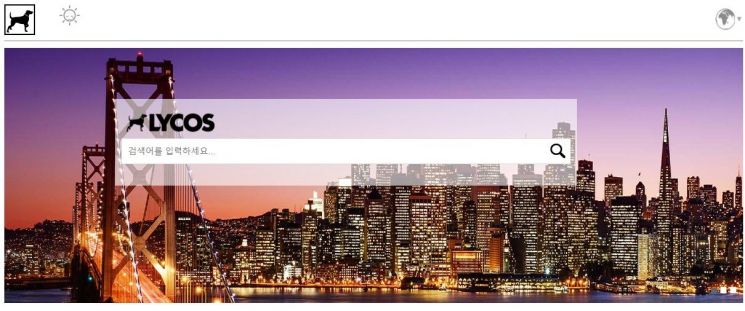
Various media outlets evaluated Daum as having "picked up Lycos at a bargain price," but they overlooked the fact that there is a basement below the floor. Daum restructured Lycos's business and worked to reduce losses in its overseas operations, achieving a profit of 1.2 billion KRW in the third quarter of 2009, the first in eight years, but there was still an accumulated loss of 1.5 billion KRW. Eventually, Daum announced in 2010 that it would exit overseas business and decided to sell Lycos. Lycos was sold to Indian advertising agency Ybrant for $36 million (approximately 43.8 billion KRW), less than half the amount Daum had paid. During this process, Daum and Ybrant engaged in legal disputes. It is still known that Daum has not received $16 million of the sale proceeds from Ybrant.
Ybrant filed for bankruptcy due to legal disputes related to Lycos. Ybrant changed its name to Brightcom and is making efforts to revive Lycos, but recent visitor rankings place it 78th worldwide, casting doubt on its chances of recovery.
© The Asia Business Daily(www.asiae.co.kr). All rights reserved.
![Clutching a Stolen Dior Bag, Saying "I Hate Being Poor but Real"... The Grotesque Con of a "Human Knockoff" [Slate]](https://cwcontent.asiae.co.kr/asiaresize/183/2026021902243444107_1771435474.jpg)

















