31 Patients Reported Today Alone... 49 Confirmed Cases in TK Over Three Days
Mass Outbreak at Shincheonji Becomes a Reality
Among About 1,000 Church Members,
90 Reported Having Symptoms
Hospitals Must Establish Diagnostic Systems Like During the Novel Flu
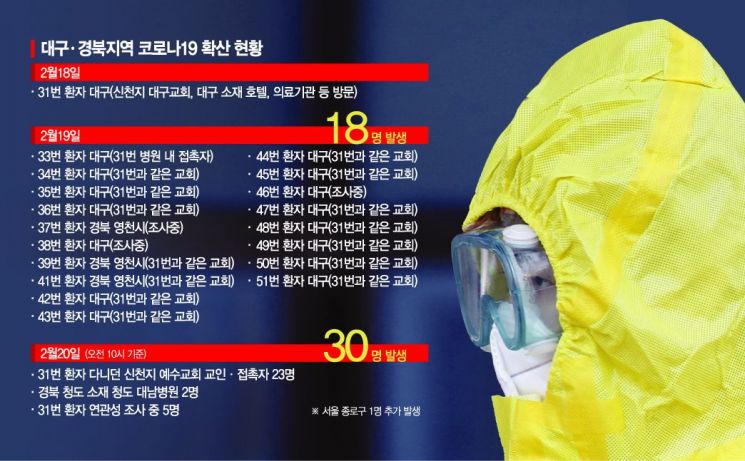
[Asia Economy Reporters Choi Dae-yeol, Kim Heung-soon, Daegu=Reporter Lee Jung-yoon] On the 20th, with 30 additional confirmed cases of the novel coronavirus infection (COVID-19) in the Daegu and Gyeongbuk regions, quarantine authorities have been put on high alert. In the Daegu and Gyeongbuk areas, where cluster infections centered around churches have occurred, the number of confirmed cases reached 49 in just three days. Among the total 82 confirmed cases, 38, accounting for 46%, were cluster infections at the Daegu Shincheonji Church of Jesus.
This Time a Church... Another Cluster Outbreak
Among About 1,000 Church Members, 90 Reported Having Symptoms
The newly confirmed COVID-19 patients on this day numbered 31 (as of 9 a.m.), the highest daily count since the first patient was reported on the 20th of last month. With over 1,000 tests conducted daily, the number is expected to increase by the afternoon. Most of the newly confirmed patients are linked to the Shincheonji Church of Jesus, which patient number 31 had visited, indicating that cluster infections have become a reality.
According to Daegu City, a full survey of about 1,000 church members revealed that 90 reported having symptoms. Similar to the Middle East Respiratory Syndrome (MERS) outbreak in 2015 and the novel influenza in 2009, cases of cluster infections in specific locations have reoccurred, deepening the concerns of quarantine authorities. During MERS, infections occurred in hospital emergency rooms, and in the case of novel influenza, dozens were exposed at a language institute, leading to secondary and tertiary infections.
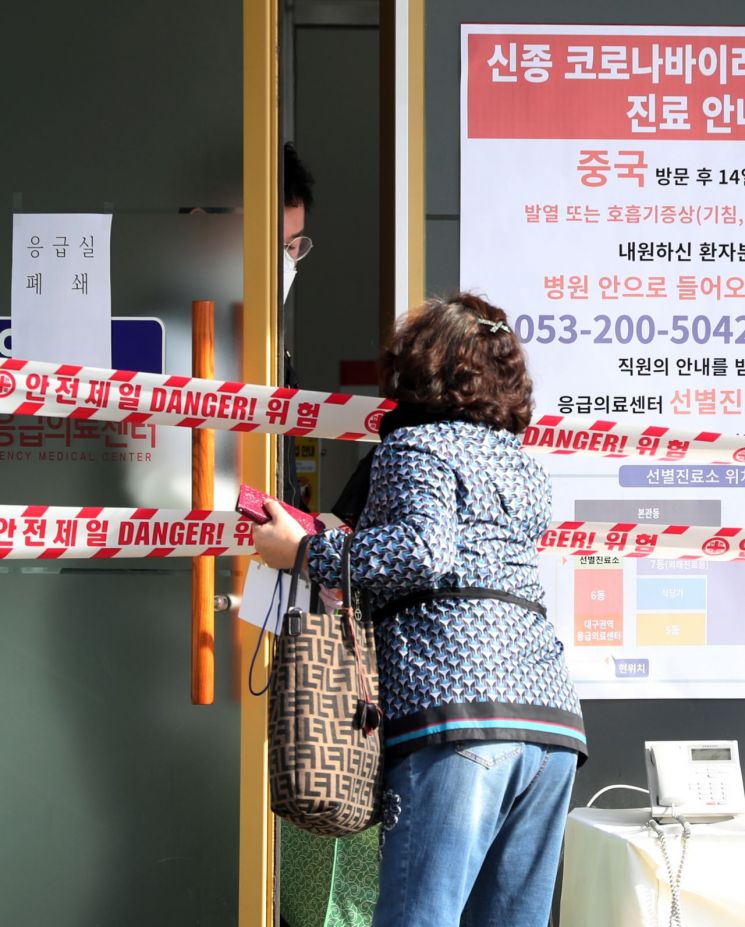
Emphasis on Rapid Diagnosis and Treatment but Regional Disparities Exist
The fact that community-level outbreaks have become full-fledged means that the possibility of patients emerging anywhere at any time has increased. The basic plan of quarantine authorities is to detect suspected patients early and provide treatment as quickly as possible. However, there are differences in response capabilities among regions and local governments, and since quarantine authorities cannot concentrate their efforts on specific areas, limitations have been pointed out.
The government has applied a revised COVID-19 response guideline starting today to clarify the criteria for diagnostic testing. Patients hospitalized with pneumonia of unknown cause are now required to undergo diagnostic testing, and medical personnel, caregivers, and those who have had prolonged contact with existing patients are mandated to undergo diagnostic testing at the time of quarantine release. Additionally, plans are being considered to establish a separate outpatient treatment system for patients exhibiting suspected symptoms such as fever and cough. However, since this period coincides with the seasonal flu and common cold, which have similar symptoms, there is concern that a surge in patients could prolong the time required to screen for COVID-19 patients.
Experts emphasize the need to further expand screening clinics to identify patients more quickly. Since community outbreaks like the Daegu cluster have already begun, it is crucial to find patients faster to prevent their condition from worsening. Professor Cheon Eun-mi of the Respiratory Medicine Department at Ewha Mokdong Hospital said, "A system should be introduced where hospitals can conduct tests and interviews at screening clinics, similar to the novel flu, to effectively filter patients."
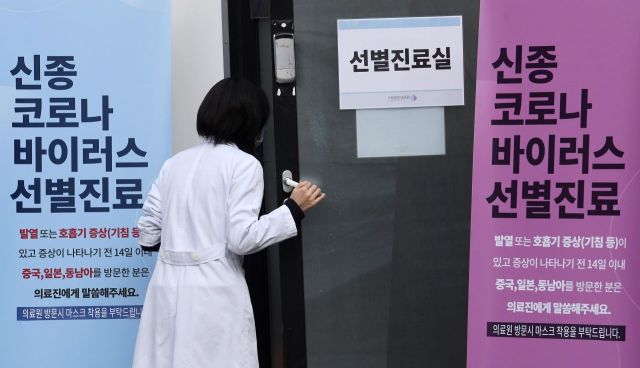 Medical staff are busy working at the screening clinic of the National Medical Center in Jung-gu, Seoul. Photo by Hyunmin Kim kimhyun81@
Urgent Need to Further Expand Screening Clinics
Hospitals Must Establish Diagnostic Systems Like During the Novel Flu
According to the Quarantine Headquarters, as of the 18th, there are 549 screening clinics nationwide. This is about twice the number compared to the end of January (288), and the number of places capable of specimen collection has also increased. However, considering that hundreds of thousands of patients occurred during the 2009 novel flu, there are calls for more proactive measures. In Daegu, where cases continue to occur daily, only 13 places are capable of specimen collection. The Korean Medical Association has argued that public medical institutions such as public health centers and local medical centers should temporarily take charge of COVID-19 related symptoms, considering that many clinics and small to medium-sized hospitals cannot perform screening. This is due to concerns about in-hospital infections if COVID-19 patients visit and transmit the virus to other patients.
In the event of a large-scale outbreak with hundreds of new patients, there may be issues with hospital bed availability for treatment. Currently, 29 medical institutions nationwide operate government-designated inpatient treatment beds. There are 161 negative pressure rooms (facilities that prevent airborne viruses from escaping the room by maintaining pressure differences) and 198 beds available for COVID-19 patients. To prepare for the possibility of a new infectious disease outbreak, negative pressure rooms held by regional base hospitals and private medical institutions can also be mobilized. However, even nationwide, there are only 755 negative pressure rooms and 1,027 beds (as of December last year).
© The Asia Business Daily(www.asiae.co.kr). All rights reserved.